

C0050 on 2004-2012 Volvo S40: Right Rear Wheel Speed Sensor Circuit Fault Causes and Fixes
Code C0050 on a Volvo S40 means a fault in the right rear wheel speed sensor circuit. This usually triggers the 'Anti-Skid Service Required' message. The most common fix is replacing the right rear ABS sensor itself, but a damaged wheel bearing or a failing ABS module are also frequent culprits on this platform.
- C0050 means your S40 has a problem with the right rear wheel speed sensor circuit, which disables your ABS and stability control.
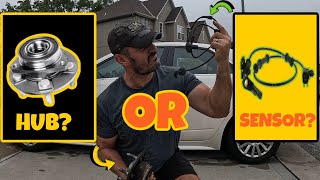
- Start your diagnosis by checking live data with a scanner. If the right rear wheel speed reads zero, the problem is likely the sensor, wiring, or wheel bearing.
- Before replacing parts, visually inspect the sensor's wiring for damage and clean any metallic debris off the magnetic ring on the wheel bearing.
- Be aware that a faulty ABS control module is a common issue on these cars and can cause a C0050 code even if the sensor and wiring are good.
What's Unique About the 2004-2012 Volvo S40
The second-generation Volvo S40 (and its P1 platform siblings like the V50, C30, and C70) has a widely documented issue with the ATE Teves Mk60 ABS control module. While a C0050 code often points to a bad sensor, it can also be a misleading symptom of an internal ABS module fault, specifically a failure of the internal brake pressure sensor or processing circuits. Owners should be aware that if replacing the sensor and checking the wiring doesn't solve the problem, the ABS module itself is a very likely cause, a common pitfall for this specific vehicle range.
Generation note: The 2004 model year was a transition. This guide applies to the second-generation S40, built on the Volvo P1 platform, which began production in mid-2004 (often referred to as 2004.5) and ran through 2012. It does not apply to the first-generation S40 sold in early 2004.
Symptoms You May Notice
- "Anti-Skid Service Required" or "Brake Assist Service Required" message on the dashboard
- ABS warning light is illuminated
- Traction control/DSTC warning light is illuminated
- Wheels may lock up and skid during hard braking
- Inaccurate or dead speedometer (less common)
- Car may go into limp mode (reduced power)
- In rare cases, the car may not start or may stall, especially if the underlying cause is a broader electrical issue affecting the ABS module
- Replacing the ABS module when the actual fault is a simple wiring break near the wheel.
- Repeatedly replacing the wheel speed sensor when the underlying cause is a failing ABS module sending false codes or a damaged wheel bearing encoder ring.
- Overlooking a weak battery or failing alternator as the root cause of the electronic fault message.
Most Likely Causes
- Failed Right Rear Wheel Speed Sensor 🔴 High Probability → Shop ABS Wheel Speed Sensor The sensor is exposed to water, salt, and road debris, leading to corrosion and electronic failure over time. The wiring leading to the sensor is also vulnerable to damage.
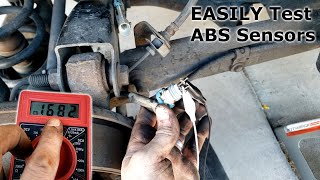
How to confirm: Use a diagnostic scanner that can read live data to monitor all four wheel speeds while driving. The right rear sensor will typically read 0 MPH or show an erratic signal compared to the others. A multimeter can also be used to check the sensor's resistance against specifications. On this platform, the sensor is an active type, requiring a 12V supply to operate.
Typical fix: Replace the right rear wheel speed sensor. The sensor is usually held in by a single bolt. The OEM part is often made by ATE.
Est. part cost: $40-$120 - Damaged Wheel Bearing / Encoder Ring 🟡 Medium Probability The ABS sensor reads a magnetic encoder ring that is integrated into the wheel bearing assembly. This ring can become contaminated with metallic brake dust, or the bearing itself can develop play, causing a bad signal. Premature wheel bearing wear is a noted issue on this platform.
How to confirm: After removing the wheel and brake rotor, visually inspect the surface of the wheel hub/bearing that the sensor reads. Look for heavy rust, metallic debris, or cracks. Check for any play or roughness when spinning the hub by hand.
Typical fix: The wheel bearing assembly must be replaced. This requires pressing the old bearing out and a new one in, or replacing the entire hub assembly.
Est. part cost: $100-$250 - Wiring or Connector Damage 🟡 Medium Probability The wiring harness runs near the suspension and wheel, making it vulnerable to chafing, stretching, or damage from road debris. The connector pins can also corrode, especially in wet or salty climates.
How to confirm: Visually inspect the entire length of the wiring from the sensor to where it enters the cabin. Unplug the connector and check for green or white corrosion on the pins. Use a multimeter to check for continuity (no open circuits) and shorts (no continuity to ground) in the harness.
Typical fix: Repair the broken/chafed section of wire or replace the pigtail connector. In some cases, a section of the harness may need to be replaced.
Est. part cost: $15-$50 - Failing ABS Control Module ⚪ Low Probability → Shop ABS Control Module The ATE Teves Mk60 ABS module used on this platform is known for internal electronic failures, particularly related to its internal brake pressure sensor and processing circuits. These failures can generate false wheel speed sensor codes.
How to confirm: This is typically diagnosed by exclusion. If a new sensor, clean encoder ring, and verified wiring do not fix the code, the module is the prime suspect. A professional may also find other codes like BCM-0130 (Brake Pressure Sensor) or communication faults stored. No communication with the ABS module via a scanner is a strong indicator of failure.
Typical fix: The ABS module must be replaced or sent to a specialist for rebuilding. Rebuilding is often preferred to avoid costly dealership programming for a new unit. Companies like Xemodex or ACtronics specialize in this repair.
Est. part cost: $200-$500 (for rebuild service), $800+ (for new OEM part)
Rare But Worth Checking
- Low Battery Voltage:
- Faulty Central Electronic Module (CEM):
Diagnosis Steps
- Connect a Volvo-compatible OBD-II scanner (like VIDA) to read fault codes from the Brake Control Module (BCM). Confirm C0050 is present and check for any other codes (e.g., BCM-0130).
- Check Battery Voltage. Before diving into ABS components, ensure the battery voltage is above 12.4V with the car off and that the alternator is charging correctly (around 14V) when running.
- Use the scanner's live data function to view the speeds of all four wheels while driving slowly in a straight line. Observe if the right rear wheel speed is 0, erratic, or significantly different from the others.
- Safely raise and support the vehicle. Remove the right rear wheel.
- Visually inspect the ABS sensor for physical damage or corrosion. Follow its wire harness as far as possible, looking for cuts, chafing, or melting. Pay close attention to where the harness flexes with the suspension.
- Disconnect the sensor's electrical connector. Inspect the pins on both sides for corrosion or damage. Clean if necessary with electrical contact cleaner.
- Remove the single bolt holding the ABS sensor and carefully pull it out of the wheel hub. It may be seized and require gentle persuasion.
- Inspect the magnetic encoder ring on the wheel bearing where the sensor was pointed. Clean any metallic debris or rust from its surface with a soft brush and brake cleaner. Check for visible cracks or damage.
- If the visual inspection reveals no obvious faults, test the wiring harness. Check for the correct reference voltage (approx. 12V) and ground at the connector coming from the ABS module.
- If the wiring, encoder ring, and power/ground are all good, the wheel speed sensor itself is the most likely failure. Replace it with a quality part (ATE, Bosch, or Genuine Volvo are recommended).
- If a new sensor does not resolve the code, the fault likely lies with the ABS control module itself, a known issue on this platform. Consider sending the module for a rebuild.
Parts You'll Likely Need
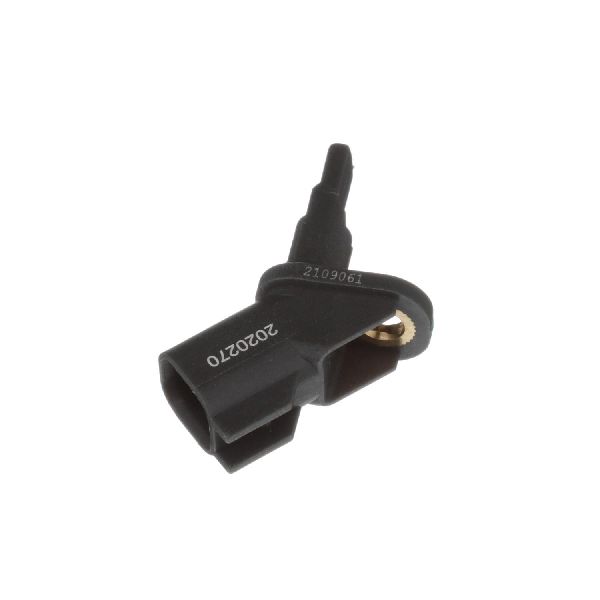
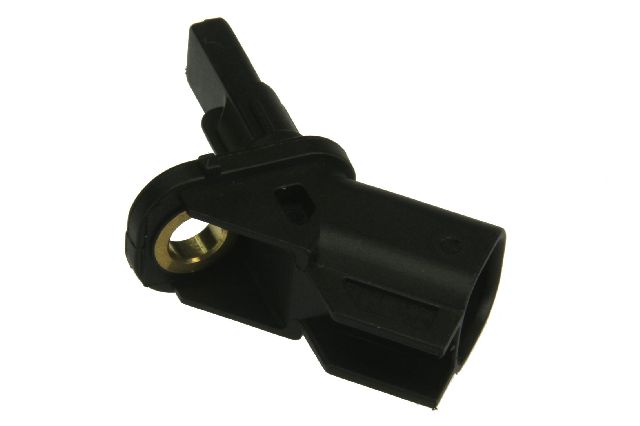
- Rear ABS Wheel Speed Sensor
(OEM #30748149)— This is the most common component to fail in the circuit, triggering the C0050 code. The front and rear sensors are often the same part number on this platform.
Trusted brands: ATE, Bosch, URO Parts, Genuine Volvo
OEM price range: $90-$150
Aftermarket price range: $40-$90 - Rear Wheel Bearing & Hub Assembly
(OEM #31340686 (FWD), 31277045 (AWD))— The magnetic encoder ring is part of the hub assembly. If the ring is damaged or the bearing fails, it will corrupt the sensor's reading, requiring replacement of the entire hub. Note that FWD and AWD models use different bearings.
Trusted brands: SKF, FAG, MOOG, Genuine Volvo
OEM price range: $180-$300
Aftermarket price range: $100-$250
Related Codes That Often Appear With This One
- BCM-0130 — This code for the internal Brake Pressure Sensor is a strong indicator that the entire ATE Mk60 ABS module is failing, which can also trigger false wheel speed sensor codes like C0050.
- C0037 — This code corresponds to the Left Rear Wheel Speed Sensor circuit. It's common to see faults for multiple sensors when the ABS module itself is the root cause.
Platform-Specific Known Issues
- The ATE Teves Mk60 ABS control module is known to fail on 2004.5-2012 S40 models, often causing various ABS/DSTC-related codes, including wheel speed sensor faults.
- Owners report that restarting the car can sometimes temporarily clear the 'Anti-Skid Service Required' message, only for it to return later, especially during high-speed driving or in certain weather conditions.
Mechanic-Grade Diagnostic Values
- Wheel Speed Sensor Supply Voltage — expected: ~11.5-12V with key on, engine off.. Failure: Significantly lower or no voltage indicates a wiring or ABS module power supply issue.
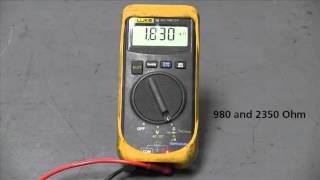
- Passive Wheel Speed Sensor Resistance (General Reference) — expected: Typically between 800 and 2000 Ohms, but varies by manufacturer.. Failure: An open circuit (infinite resistance) or a short (0 ohms) indicates a failed sensor coil. A reading far outside the expected range is also a sign of failure.
- Passive Wheel Speed Sensor AC Voltage Output (General Reference) — expected: At least 100mV AC when spinning the wheel by hand.. Failure: No voltage or very low voltage suggests a weak sensor or a problem with the tone ring/air gap.
Scan Tool Commands That Help
- Volvo VIDA/DiCE: Read Fault Trace / Live Data — This is the first step. A Volvo-specific scanner like VIDA is crucial because generic OBD-II readers often can't access the Brake Control Module (BCM). VIDA can pull specific codes like C0050 and monitor live wheel speed data from all four sensors simultaneously to confirm the fault.
- Volvo VIDA/DiCE: BCM Activations / Component Tests — After confirming the code, VIDA may allow for specific component activations to test the ABS pump motor and solenoids. This helps differentiate between a sensor circuit fault and a broader module failure, although it's less direct for a C0050 code.
Wiring & Ground Locations
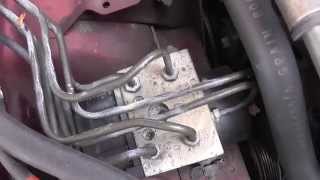
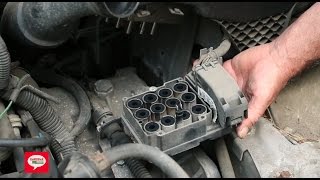
- ABS/BCM Module — Located on the driver's side of the engine bay, attached to the ABS hydraulic pump assembly, typically below the air filter box.. This is the control unit that receives the signal from the right rear wheel speed sensor. All wiring from the sensor terminates at this module's main connector. Internal failures of this module are a common cause of C0050.
- ABS/BCM Main Connector — A large, hinged, lever-actuated connector on the ABS module.. This is the primary point for testing continuity of the sensor wiring back from the wheel. Corrosion or loose pins here can cause the C0050 fault. The two large pins are for power and ground to the module.
- Central Electronic Module (CEM) — Located in the passenger-side footwell, under the glove compartment.. The CEM is the main body computer and communicates with the ABS module. In rare cases of widespread electrical issues, a faulty CEM (often due to water damage) can disrupt communication and trigger ABS faults.
Real Owner Repair Stories
- Volvo Forums user (2005 S40) — "Anti-skid service required" message, car would not start.
❌ Tried (didn't work) Replacing the battery.
✅ What actually fixed it The user had the car towed to a mechanic who diagnosed a bad engine computer (ECM/CEM), which was then replaced by the dealership for $2000. This highlights that while the symptom points to ABS, it can be part of a larger module failure. - Mr-Fix YouTube Channel (Volvo V50 (P1 Platform sibling)) — "Anti-skid service required", "SRS airbag service urgent", immobilizer warnings, no wipers, no central lock.
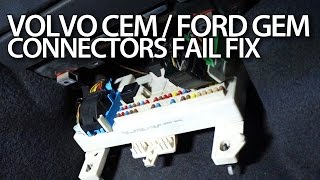
✅ What actually fixed it The issue was traced to corroded pins on the Central Electronic Module (CEM) connectors, likely from moisture. The fix was to disconnect the battery, remove the CEM from the passenger footwell, and thoroughly clean all connector pins and ports with an alcohol-based circuit cleaner. This restored communication between modules and cleared the faults.
Documented NHTSA Reports
While the C0050 code is most frequently associated with wheel speed sensors on the Volvo P1 platform, it is important to note how this code is interpreted across the industry. For example, NHTSA ODI #10763888 describes a case where a C0050 code was used to identify a faulty power steering control module (PSCM) in a different manufacturer's vehicle, requiring a full steering column replacement. Additionally, NHTSA ODI #11228687 notes the code appearing alongside multiple other communication faults (such as U0126 and U0415) during suspension-related diagnostics. In some braking system contexts, as seen in NHTSA ODI #11649367, the code may be set when extra brake fluid is required to return caliper piston contact to the brake pad after service. Furthermore, NHTSA ODI #11693418 reports the code appearing when rotors, rear brake pads, and adapter plates required replacement. These records highlight that while the sensor is the primary suspect on your S40, the code can sometimes be triggered by broader mechanical or electronic module failures.
OEM Part Supersession History
Unknown→30748149— Standard part evolution and consolidation.
Heads up: Part number 30748149 is widely listed for the front and/or rear on many P1 platform cars (S40, V50, C30) and even other Volvo models. However, it's critical to verify fitment with a VIN as there can be chassis splits or variations.30748149→32301800— Part number update/revision.
Heads up: Some suppliers list 32301800 as a supersession for 30748149. They appear to be interchangeable for the specified applications.30667461→30746040— Part number update for the wiring harness.
Heads up: This is for the ABS sensor wiring harness, not the sensor itself. It's listed for front applications but illustrates the part number changes over time.
Model Year Variations Within This Range
- 2004.5-2012: The core ABS system on the P1 platform, the ATE Teves Mk60, remained largely the same throughout the production run. However, software updates for the ABS module (BCM) and Central Electronic Module (CEM) were released over the years. A dealership with VIDA may be able to apply software updates that could address certain communication-related glitches, though it will not fix an internal hardware failure in the module.
Diagnostic Flowchart
Other Known Issues on This Vehicle
Issues unrelated to this code that are worth knowing about as an owner of this generation:
- Clogged PCV/Breather System 🔴 High — Very common, especially on 5-cylinder engines. Often manifests as a loud whistling or howling noise at idle that disappears when the oil dipstick is pulled.
- Leaking Sunroof Drains 🟠 Medium — Extremely common. The drain tubes clog or disconnect, causing water to leak into the front footwells, potentially damaging the CEM or other electronics.
- Central Electronic Module (CEM) Failure 🟠 Medium — A known weakness, often caused by water intrusion from leaking sunroof drains or windshield seals. Symptoms are varied and electrical, including random warning lights, non-starting, and accessory failure.
- Worn Engine Mounts 🟡 Low — The front and upper engine mounts, particularly the hydraulic mounts, can wear out, leading to excessive vibration in the cabin at idle.
- Failing Fuel Pressure Sensor 🟠 Medium — A common issue on the 5-cylinder engines that can cause hard starting, stalling, hesitation during acceleration, and poor fuel economy.
Used vs. New Parts: Buying Guide for This Vehicle
When a used part is the smart pick: A used wheel speed sensor or a complete used wheel hub/bearing assembly from a low-mileage donor car can be a cost-effective repair. These are not electronically complex parts tied to the vehicle's VIN.
Donor-vehicle mileage cap: roughly under 75000 miles for the part to have meaningful remaining life.
What to inspect on the donor part:
- For a wheel bearing, check for zero play or roughness when spinning by hand.
- For a sensor, ensure the wiring pigtail is not brittle, cracked, or damaged.
- Visually inspect the magnetic encoder ring on the bearing for any signs of cracks, heavy rust, or physical damage.
OEM-only on this vehicle (don't cheap out):
- ABS Control Module (BCM): A used module will NOT work without being reprogrammed or 'cloned' to your car's VIN. It is strongly recommended to send your original module to a specialist like Xemodex or ACtronics for rebuilding. This avoids all programming issues as it returns to you ready to plug and play.
Aftermarket brands forum-validated for this vehicle:
- ABS Sensor: ATE (Original Equipment Manufacturer), Bosch
- Wheel Bearing: SKF, FAG (Often OEM suppliers)
- ABS Module Rebuild Service: Xemodex, ACtronics
Brands owners have reported issues with on this vehicle:
- Ultra-cheap, unbranded wheel speed sensors and hub assemblies from online marketplaces are known to have high failure rates, either out of the box or shortly after installation, leading to the same C0050 code returning.
Real Owner Stories
Aggregated from forums and TSBs cited above. Mileages and costs reflect what owners reported in those sources.
Volvo S40
Symptoms: The 'Anti-Skid Service Required' warning light appeared intermittently, specifically showing up at highway speeds and then disappearing after the car was restarted.
What fixed it: The issue was traced to the wheel bearing sensor rings or general electrical issues.
Source hint: Reddit r/CarTalkUK: 'Volvo S40 Anti Skid Service Warning light'
Volvo S40
Symptoms: The anti-skid message appeared on the dashboard and was accompanied by a condition where the car would not start.
What fixed it: The root cause was identified as low voltage resulting from a bad battery or alternator.
Source hint: Volvo Forums: 'Anti-skid service required' - Car won't start
Volvo S40 (P1 Platform)
Symptoms: The dashboard displayed 'Anti-skid service required' and 'Brake assist service required' messages.
What fixed it: Repairs discussed included replacing sensors, addressing ABS module internal failures, or fixing wiring issues.
Source hint: Swedespeed Forums: 'Anti-skid service required' message
Related OBD-II Codes
Frequently Asked Questions
My 2005 Volvo S40 shows 'Anti-Skid Service Required' but it goes away when I restart the car. Is it actually fixed?
Can a bad battery cause the C0050 code and 'Anti-Skid' message on my S40?
I replaced the right rear sensor but the C0050 code persists. What else could be wrong on this specific car?
Is the ABS sensor on the 2004-2012 S40 a simple passive type I can test with just resistance?
Do I need to replace the whole hub if the ABS encoder ring is damaged?
Which brands are recommended for a replacement right rear wheel speed sensor on my Volvo?
Helpful Videos
We Have This Part in Stock


The information in this article is provided for general reference and educational purposes only. Vehicle specifications, procedures, and part compatibility can vary by production date, trim level, and region. Always consult your vehicle's factory service manual and verify part numbers before purchasing or performing repairs. Safety-critical components such as airbags, seat belts, and braking systems should be installed by a qualified professional.
- Volvo S40:
- 🧭 Diagnostic Flowchart
- 🎬 Helpful Videos
- 🛍️ Shop This Part
- What's Unique About the 2004-2012 Volvo S40
- Symptoms You May Notice
- Most Likely Causes
- Rare But Worth Checking
- Diagnosis Steps
- Parts You'll Likely Need
- Related Codes That Often Appear With This One
- Platform-Specific Known Issues
- Mechanic-Grade Diagnostic Values
- Scan Tool Commands That Help
- Wiring & Ground Locations
- Real Owner Repair Stories
- Documented NHTSA Reports
- OEM Part Supersession History
- Model Year Variations Within This Range
- Other Known Issues on This Vehicle
- Used vs. New Parts: Buying Guide for This Vehicle
- Real Owner Stories
- Volvo S40
- Volvo S40
- Volvo S40 (P1 Platform)
- Related OBD-II Codes
- Frequently Asked Questions
- 🎟️ Get 5% Off