

P0500 on 2014-2018 Mazda 3: Vehicle Speed Sensor Fault Explained
On a 2014-2018 Mazda 3, code P0500 is almost always caused by a faulty ABS wheel speed sensor or its wiring, not a traditional speed sensor. The front sensors are common culprits. Expect to pay $40-$80 for an aftermarket sensor and replace it yourself in about an hour after confirming the cause.
- P0500 on a 2014-2018 Mazda 3 means there is a problem in the ABS system, usually a single wheel speed sensor or its wiring.
- Do not waste time looking for a speed sensor on the transmission; it does not exist on this car.
- You need a scan tool that can read ABS codes (C-codes) to find the real problem.
- The most likely fix is replacing one of the four ABS wheel speed sensors, with the front sensors being common culprits.
- Always inspect the wiring to the sensor for damage, especially for rubbing/chafing against the suspension, before replacing the part.
What's Unique About the 2014-2018 Mazda 3
The key difference for this generation of Mazda 3 is its reliance on the ABS system for vehicle speed. Many owners and even some technicians waste time looking for a transmission-mounted Vehicle Speed Sensor (VSS) that doesn't exist on this car. The P0500 code in the engine module is a secondary fault; the primary fault, which identifies the specific problem, will be stored as a 'C' code in the ABS module. Diagnosing this code correctly requires a scan tool that can read ABS codes.
Symptoms You May Notice
- Check Engine Light is on
- ABS warning light is on
- Traction Control/DSC warning light is on
- TPMS warning light may be on
- Speedometer may work erratically or not at all
- Cruise control will not function
- Automatic transmission may exhibit harsh or incorrect shifting
- Electric parking brake warning light may be on
- Replacing a non-existent Vehicle Speed Sensor (VSS) on the transmission.
- Replacing the PCM (Powertrain Control Module) when the fault lies in the ABS system.
- Replacing a wheel speed sensor without first checking the wiring for damage.
Most Likely Causes
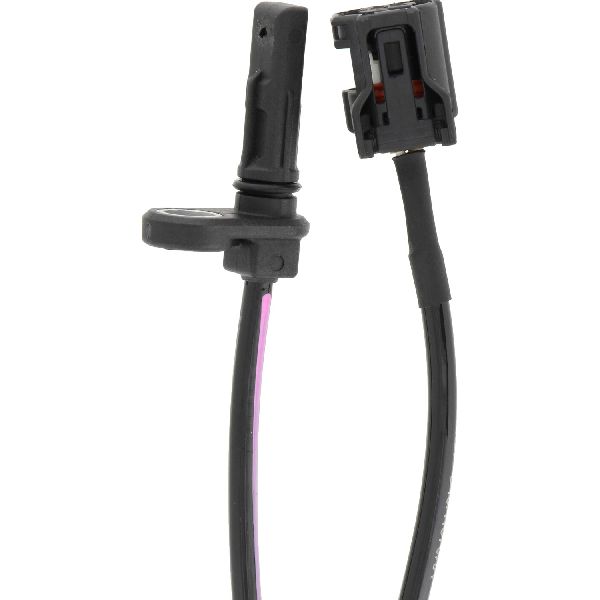
- Failed ABS Wheel Speed Sensor 🔴 High Probability → Shop ABS Wheel Speed Sensor These sensors are exposed to the elements at the wheel hub and can fail due to corrosion, contamination, or internal electronic failure over time. The front sensors, particularly the front passenger side, are commonly reported failure points in owner forums.
How to confirm: Scan the ABS module for codes (e.g., C0031, C0034, C0037, C003A) which will point to a specific wheel sensor circuit. Use a scan tool to monitor live data from all four wheel speed sensors while driving; the faulty sensor will show a reading of zero or one that doesn't match the others.
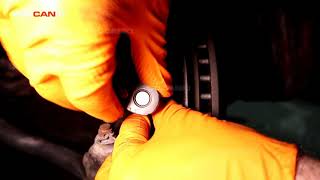
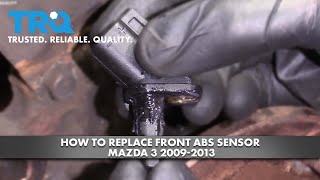
Typical fix: Replace the faulty wheel speed sensor. It is a single bolt-on part with a wiring connector. Ensure the mounting hole in the hub is clean of rust and debris before installing the new sensor. 🎬 See this wheel speed sensor replacement walkthrough
Est. part cost: $40-$120 - Damaged Wiring or Connector for Wheel Speed Sensor 🟡 Medium Probability → Shop ABS Wheel Speed Sensor The wiring harness runs down the suspension strut to the wheel hub and is susceptible to damage. A common failure point is the harness rubbing against the strut or wheel, chafing through the insulation and causing a short.
How to confirm: Visually inspect the entire wiring harness leading to the suspect wheel speed sensor for any signs of breaks, chafing, or corrosion, paying close attention to where it is secured to the strut and suspension arms. Perform a continuity and resistance test on the wires between the sensor connector and the ABS module connector.
Typical fix: Repair the damaged section of wire with solder and heat shrink tubing. Secure the harness correctly away from any moving parts or sharp edges, using zip ties if necessary, to prevent future rubbing.
Est. part cost: $5-$30 - Damaged or Corroded ABS Tone Ring ⚪ Low Probability The tone ring, which the sensor reads, is part of the wheel hub/bearing assembly. Rust and debris can accumulate, or the ring can crack, leading to an erratic signal. A failing wheel bearing can sometimes damage the tone ring or the sensor itself.
How to confirm: After removing the wheel speed sensor, visually inspect the tone ring through the sensor mounting hole. Look for missing teeth, cracks, or heavy rust buildup. This often requires removing the brake rotor for a clear view.
Typical fix: The tone ring is integrated into the wheel hub bearing assembly. The entire hub bearing must be replaced.
Est. part cost: $100-$250
Rare But Worth Checking
- Faulty ABS Control Module: → Shop ABS Control Module If all four wheel speed sensors and their wiring have been tested and are confirmed to be good, the ABS module itself could be the source of the problem. This is an expensive part and should only be considered after all other possibilities are exhausted.
- Missing Sensor Retaining Bolt: In at least one documented case, the bolt holding the wheel speed sensor in place was missing, allowing the sensor to back out of the hub and lose its signal. This resulted in a P0500 code.
Diagnosis Steps
- Connect a scan tool capable of reading codes from the ABS module.
- Retrieve all codes from both the PCM (Engine) and ABS modules.
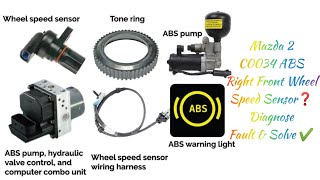
- Note the specific ABS code (e.g., C0034 - Right Front Wheel Speed Sensor Circuit). This will tell you which wheel to focus on. 🎬 Watch: Step-by-step C0034 diagnostic guide
- Use the scan tool's live data function to view the speed of all four wheels while driving slowly. Confirm that the sensor identified by the code is not reading or is reading erratically.
- Raise and secure the vehicle. Remove the wheel in question.
- Crucially, perform a thorough visual inspection of the wheel speed sensor's wiring harness. Look for chafing where it runs along the suspension strut, breaks, or corrosion.
- If the wiring looks good, remove the single bolt holding the sensor and check that it was secure. Pull the sensor from the hub.
- Inspect the sensor for damage and the tone ring (inside the hub) for debris or cracks.
- If no visual faults are found, the most probable cause is an internal failure of the sensor.
- Replace the suspect wheel speed sensor.
- Ensure the new sensor's wiring is routed correctly and secured away from the wheel and any moving suspension parts.
- Clear all codes from the PCM and ABS modules and perform a test drive to confirm the fix.
Parts You'll Likely Need
- ABS Wheel Speed Sensor
(OEM #Front: BJS7-43-70XA; Rear: B45G-43-71Y)— This is the most common failure point for a P0500 code on this vehicle, as confirmed by numerous owner experiences.
Trusted brands: Bosch, NTK, Delphi, Standard Motor Products (SMP), Mazda (OEM)
OEM price range: $50-$100
Aftermarket price range: $30-$80
Related Codes That Often Appear With This One
- C0031-C003A — These are ABS-specific codes that identify a fault in the circuit of a particular wheel speed sensor (e.g., C0031 for Left Front, C0034 for Right Front). A P0500 will almost always be accompanied by one of these codes in the ABS module.
- U0415 — This code indicates 'Invalid Data Received From Anti-Lock Brake System Control Module'. It often appears alongside P0500, confirming the PCM is flagging the bad data coming from the ABS system.
Platform-Specific Known Issues
- ABS Sensor Wire Chafing: The wiring for the front ABS sensors can be improperly routed, causing it to rub against the suspension strut or the inside of the wheel. Over time, this chafing wears through the wire's insulation, leading to a short circuit that triggers the P0500 code and associated ABS/TCS lights. This issue can be misdiagnosed as a failed sensor. The fix is to repair the wire and carefully re-secure the harness away from moving components.
Mechanic-Grade Diagnostic Values
- ABS Wheel Speed Sensor Type — expected: Active (Magneto-resistive or Hall Effect), 2-wire.. Failure: These sensors cannot be accurately tested with a simple ohmmeter. They require checking for a square wave signal with an oscilloscope or monitoring live data with a scan tool. A static resistance test is not a valid diagnostic procedure.
- Sensor Clearance to Tone Ring — expected: 2.1 mm (0.082 in) or less. Failure: A gap larger than specified, often caused by rust buildup under the sensor's mounting point or a bent bracket, will result in a weak or non-existent signal.
- Continuity Test from DSC/ABS Module Connector — expected: Continuity (less than 1.0 ohm) between the sensor connector pins and the corresponding pins at the module connector.. Failure: High resistance or an open circuit (OL) indicates a broken wire. Continuity to ground on either signal wire indicates a short circuit.
Scan Tool Commands That Help
- FORScan: Live Data PIDs: WSPD_LF, WSPD_RF, WSPD_LR, WSPD_RR — This is the primary method to confirm a faulty sensor. While driving slowly, monitor the live data from all four sensors. The sensor that reads 0 MPH or has an erratic reading compared to the others is the faulty one.
- FORScan: Service Function: 'ABS Service Bleed' — This bidirectional command is necessary after replacing the ABS hydraulic unit (control module) to properly bleed air from the system. It is not required for just replacing a wheel speed sensor.
- FORScan: Module Configuration: 'As-Built' programming — If the entire ABS control module is replaced with a new or used unit, it must be programmed with the vehicle's original 'As-Built' data to function correctly. This data can be downloaded from Mazda's service site.
Wiring & Ground Locations
- DSC HU/CM (ABS Module) — In the engine compartment, on the driver's side, mounted to the firewall/strut tower area. It is a metal block with brake lines and a large electrical connector.. This is the central point for all wheel speed sensor inputs. Testing for continuity and shorts should be done between the sensor connector and this module's connector to verify the integrity of the wiring harness.
- DSC HU/CM Connector Pins (Example: Right Front Sensor) — On the main connector for the ABS module.. For a C0034 (Right Front Sensor), you would test for continuity between Pin B at the sensor and Pin F at the module connector, and between Pin A at the sensor and Pin C at the module connector. This allows precise fault isolation.
- Front Wheel Speed Sensor Connector — Behind the plastic fender liner in the wheel well. You must remove a few clips and pull the liner back to access it.. This is the first point of disconnection for testing. It's a common area for corrosion or damage due to its exposed location.
Real Owner Repair Stories
- Mazda3Revolution Forum (2014 Mazda 3) — ABS, TCS, TPMS lights on, P0500 and C0034 codes stored.
❌ Tried (didn't work) Replacing the right front ABS wheel speed sensor. The codes and lights returned immediately.
✅ What actually fixed it A hidden break was found in one of the wires leading to the sensor connector. The wire looked fine visually, but a continuity test while wiggling the harness revealed an intermittent open circuit. The break was inside the insulation near the connector. Repairing the broken wire solved the problem permanently. - Reddit r/MechanicAdvice (2014 Mazda 3) — Check Engine, ABS, and Traction Control lights on. Code P0500 present.
❌ Tried (didn't work) Initial scan with a basic OBD-II reader only showed P0500, leading to confusion about a transmission VSS.
✅ What actually fixed it Using a scanner that could read ABS codes revealed a C-code pointing to a specific wheel speed sensor. Replacing that individual sensor and clearing the codes resolved all warning lights and the P0500 code. - NHTSA ODI #10895729 — An owner of a platform-mate vehicle reported a long list of codes including U0121, P0500, and P0685, many of which were connected to a loss of communication. In this instance, the dealer was initially unable to find the problem after two hours of diagnostics.
OEM Part Supersession History
BJS7-43-70X→BJS7-43-70XA— Standard part revision by the manufacturer.
Heads up: The parts are interchangeable. BJS7-43-70XA is the current part number for the front left/right sensor for Mexico-built vehicles in this range.
Model Year Variations Within This Range
- 2017-2018: These models include Mazda's G-Vectoring Control (GVC) system, which uses steering angle and wheel speed data to make subtle engine torque adjustments for smoother cornering. While the P0500 diagnosis is the same, a faulty wheel speed sensor on a GVC-equipped car can lead to more pronounced or unusual handling behavior as the system may react to faulty data. Using high-quality OEM or equivalent sensors is more critical to ensure proper GVC function.
Diagnostic Flowchart
Other Known Issues on This Vehicle
Issues unrelated to this code that are worth knowing about as an owner of this generation:
- Infotainment 'Ghost Touch' and Delamination 🟠 Medium — Very common. The touchscreen may register phantom inputs or become unresponsive. The screen can also delaminate, creating a spiderweb-like appearance. (Ref: Mazda issued a warranty extension (SSPB6/SSPB9 for related models) for this issue on some vehicles.)
- Premature/Noisy Rear Brakes 🟡 Low — Common complaint. Owners report premature wear of rear brake pads and squeaking noises during light braking. (Ref: TSB 04-004/19 was issued for the related CX-5 to address squeak noise by adding adhesive tape between the guide plate and mounting support, indicating a known design issue in the brake assembly.)
- Failing Engine/Transmission Mounts 🟠 Medium → Shop Transmission Mount — Reported as a common issue for this generation. The rubber in the mounts can tear or the bonding can fail, leading to clunking noises on acceleration/deceleration or when shifting into gear.
- Cracked Skyactiv-G Cylinder Head 🔴 High — Less common, but a severe potential issue. A TSB exists for some Skyactiv engines describing coolant leaks from cracks forming in the cylinder head near the exhaust manifold. (Ref: TSB exists, but number may vary. Check with dealer.)
- Broken Rear Coil Springs 🟠 Medium — Mentioned as a common problem, especially in regions with harsh weather or salted roads. Can result in a lower ride height on one side and a clunking noise.
Used vs. New Parts: Buying Guide for This Vehicle
When a used part is the smart pick: Rarely. Given that new, high-quality aftermarket ABS sensors are relatively inexpensive ($40-$80), the risk of a used sensor failing prematurely often outweighs the small cost savings. The labor to replace it is the same, so doing the job twice is not economical. A used part might be considered for a temporary fix while waiting for a new part to arrive.
Donor-vehicle mileage cap: roughly under 50000 miles for the part to have meaningful remaining life.
What to inspect on the donor part:
- Inspect the wiring pigtail for any signs of cracking, brittleness, or previous repairs.
- Check the plastic sensor body for cracks or heat damage.
- Ensure the mounting bolt hole is intact and not stripped or damaged.
- If possible, choose a donor vehicle from a dry, non-salt-belt region to minimize corrosion risk.
OEM-only on this vehicle (don't cheap out):
- ABS Control Module/Hydraulic Unit. Due to the need for precise 'As-Built' data programming and safety-critical function, using a new OEM module is strongly recommended if it needs replacement.
Aftermarket brands forum-validated for this vehicle:
- Bosch
- NTK
- Delphi
- Standard Motor Products (SMP)
Brands owners have reported issues with on this vehicle:
- Unbranded, low-cost sensors from online marketplaces. Forum users frequently report intermittent issues or premature failure with these parts, especially on 2017+ models with the sensitive G-Vectoring Control system.
Real Owner Stories
Aggregated from forums and TSBs cited above. Mileages and costs reflect what owners reported in those sources.
2014 Mazda 3
Symptoms: Check engine light on with code P0500 and a dashboard full of other warning lights. A dealer previously misdiagnosed the issue.
What fixed it: Replacing the front passenger side ABS sensor.
Source hint: Reddit r/mazda - A 2014 Mazda 3 owner with P0500 and a dash full of warning lights confirmed the fix was replacing the front passenger side ABS sensor. URL: https://www.reddit.com/r/mazda/comments/e0j9g8/code_p0500_2014_mazda_3/
2014 Mazda 3
Symptoms: P0500 fault code where the sensor itself was not the problem.
What fixed it: Repairing and re-routing sensor wires that had rubbed raw against the suspension components.
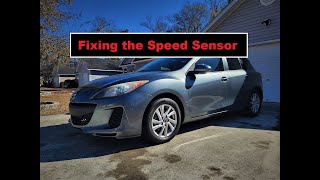
Source hint: YouTube - A video titled 'Fixing a P0500 fault code' on a Mazda 3 demonstrates a case where the code was caused by sensor wires that had rubbed raw against the suspension. URL: https://www.youtube.com/watch?v=s-n_A-a5-vY
2015 Mazda CX-5
Symptoms: P0500 code accompanied by TPMS, TCS, and ABS lights. Encountered difficulty with corroded sensors during the repair.
What fixed it: Drilling out corroded old sensors and ensuring the hub was clean before installing new sensors.
Source hint: Mazdas247 Forum - A Mazda CX-5 owner (platform mate) details their troubleshooting saga with a P0500 code. URL: https://www.mazdas247.com/forum/index.php?threads/2015-cx-5-p0500-tpms-tcs-abs-light-saga.123871253/
Related OBD-II Codes
Frequently Asked Questions
Why are my ABS, Traction Control, and TPMS lights all on at the same time as the P0500 code?
Is there a specific wheel sensor that usually fails on the 2014-2018 Mazda 3?
Could my P0500 code be caused by a wiring issue instead of a broken sensor?
Do I need to replace the whole wheel hub to fix a P0500 code?
Does the Mazda CX-5 have the same P0500 issues as my Mazda 3?
My infotainment screen is acting strange and 'ghost touching' while I have this P0500 code; are they related?
Helpful Videos
We Have This Part in Stock


The information in this article is provided for general reference and educational purposes only. Vehicle specifications, procedures, and part compatibility can vary by production date, trim level, and region. Always consult your vehicle's factory service manual and verify part numbers before purchasing or performing repairs. Safety-critical components such as airbags, seat belts, and braking systems should be installed by a qualified professional.
- Mazda 3:
- 🧭 Diagnostic Flowchart
- 🎬 Helpful Videos
- 🛍️ Shop This Part
- What's Unique About the 2014-2018 Mazda 3
- Symptoms You May Notice
- Most Likely Causes
- Rare But Worth Checking
- Diagnosis Steps
- Parts You'll Likely Need
- Related Codes That Often Appear With This One
- Platform-Specific Known Issues
- Mechanic-Grade Diagnostic Values
- Scan Tool Commands That Help
- Wiring & Ground Locations
- Real Owner Repair Stories
- OEM Part Supersession History
- Model Year Variations Within This Range
- Other Known Issues on This Vehicle
- Used vs. New Parts: Buying Guide for This Vehicle
- Real Owner Stories
- 2014 Mazda 3
- 2014 Mazda 3
- 2015 Mazda CX-5
- Related OBD-II Codes
- Frequently Asked Questions
- 🎟️ Get 5% Off