

P0500 on 2013-2020 Subaru BRZ: Vehicle Speed Sensor Malfunction Causes and Fixes
On a 2013-2020 Subaru BRZ, code P0500 is almost always caused by a faulty wheel speed sensor or the magnetic ring on the wheel bearing it reads. Expect to replace one of the four ABS/wheel speed sensors. A single sensor costs about $100-$185 for an OEM part.
- P0500 on a BRZ means there's a problem with a wheel speed signal, not a transmission sensor.
- You need a scanner that can read ABS codes (C-codes) to know which wheel to inspect.
- The most likely cause is a bad wheel speed sensor at one of the four corners.
- If a new sensor doesn't fix it, the magnetic ring on the wheel bearing is likely damaged, requiring a new hub assembly.
- Be extra careful during any suspension or hub work to avoid damaging the sensor, its wiring, or the magnetic ring on the hub.
What's Unique About the 2013-2020 Subaru BRZ
Unlike older cars with a single speed sensor on the transmission, the BRZ (and its twins, the Toyota 86 and Scion FR-S) relies entirely on the ABS wheel speed sensors for vehicle speed data. The magnetic encoder ring that the sensor reads is integrated directly into the wheel bearing/hub assembly. This means that issues often arise not just from sensor failure, but also from damage to the wheel bearing's encoder ring, sometimes occurring during unrelated jobs like suspension work, wheel stud replacement, or even from running tires with a significantly different diameter.
Symptoms You May Notice
- Check Engine Light is on
- ABS warning light is on
- Traction/Stability Control light is on
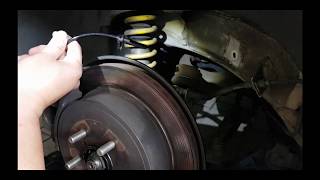
- Speedometer reads 0 mph or behaves erratically 🎬 Watch: Fixing a dead speedometer and ABS sensor
- Cruise control is inoperative
- Harsh or erratic shifting (on automatic transmission models)
- Power steering feels heavy or is disabled
- Vehicle enters limp mode, limiting RPM
- Replacing a wheel speed sensor without checking the wheel bearing's magnetic ring. A new sensor will not fix a problem caused by a damaged encoder ring.
- Only using a basic code reader. A generic P0500 code doesn't tell you which wheel is the problem. A scanner that can read ABS C-codes is needed to avoid guessing and replacing the wrong part.
- Assuming the sensor itself is bad when the wiring was simply stretched or unplugged during suspension work.
Most Likely Causes
- Faulty Wheel Speed Sensor 🔴 High Probability → Shop ABS Wheel Speed Sensor The sensors are exposed to the elements at the wheel hubs and can be damaged by road debris, or fail due to age and contamination. They can also be damaged during suspension work if the wiring is stretched or the sensor is not removed before separating suspension components.
How to confirm: Use an OBD-II scanner capable of reading ABS codes (C-codes) to identify which specific wheel sensor is reporting a fault (e.g., C0040). Monitor live data from all four sensors while driving or spinning the wheels; the faulty sensor will show an erratic or zero reading. You can also test sensor resistance with a multimeter. While specific OEM values are not published, a typical passive sensor reads between 800-2000 ohms. An open circuit (OL) or a short (near 0 ohms) indicates a bad sensor.
Typical fix: Replace the faulty wheel speed sensor. 🎬 Watch: Step-by-step wheel speed sensor replacement guide They are sold individually for each corner of the vehicle.
Est. part cost: $80-$190 - Damaged Wheel Bearing / Magnetic Encoder Ring 🟡 Medium Probability The magnetic encoder ring is part of the wheel bearing seal. It is easily damaged during suspension work, axle removal, or when pressing in new wheel studs if proper care is not taken. A failing wheel bearing with excessive play can also damage the ring or cause an inconsistent signal. Using an aftermarket bearing of poor quality can also cause this code.
How to confirm: After confirming the sensor is good, visually inspect the magnetic ring on the back of the wheel hub for physical damage, cracks, or heavy metallic contamination. This requires removing the wheel speed sensor. One owner reported that a mechanic bent the ring while replacing wheel studs, which caused the P0500 code. Another owner had a shop replace the bearing, which fixed the issue temporarily, suggesting an initial misdiagnosis or a faulty new part.
Typical fix: Replace the entire wheel bearing and hub assembly. 🎬 See how to replace the rear wheel hub bearing It is a single, bolt-on unit.
Est. part cost: $130-$250 - Damaged Wiring or Connector ⚪ Low Probability The wiring harness to each wheel speed sensor is routed along the suspension and can be snagged, stretched, or corroded, especially if clips are broken or it was rerouted incorrectly during a previous repair, such as a coilover installation.
How to confirm: Visually inspect the wiring harness from the sensor back to the main chassis harness for any signs of breaks, chafing, or corrosion in the connector pins. Wiggle the wiring while monitoring live data on a scan tool to check for signal dropouts. A user on Reddit noted their issue was a bent end link that damaged the ABS sensor wiring after suspension work.
Typical fix: Repair the damaged section of wire or replace the pigtail connector.
Est. part cost: $15-$50
Rare But Worth Checking
- Faulty ABS Control Module: → Shop ABS Control Module If all sensors, wiring, and hub encoders check out, the module itself could be the issue. This is rare and should be professionally diagnosed, as it's an expensive part.
- Incorrect Tire Size: A user on ft86club.com reported that running a tire with a sidewall that was too thick caused it to rub against the inner fender liner and wiring, triggering the P0500 code. A significant mismatch in tire diameters between axles can also confuse the ABS module.
Diagnosis Steps
- Connect an OBD-II scanner that can read ABS/Chassis codes.
- Read codes from both the Engine Control Module (ECM) and the ABS Control Module.
- Note the generic P0500 code from the ECM and any specific C-codes from the ABS module. The C-code will point to the specific wheel causing the issue (e.g., Right Front Wheel Speed Sensor Circuit).
- Raise the vehicle safely and remove the wheel identified by the C-code.
- Visually inspect the wheel speed sensor and its wiring harness for any obvious damage, like cut wires, a broken connector, or signs of rubbing.
- If the wiring looks good, remove the 10mm bolt holding the sensor and carefully pull the sensor out of the knuckle.
- Inspect the sensor tip for damage or heavy metallic debris.
- Inspect the magnetic encoder ring on the wheel bearing/hub assembly through the sensor hole. Use a flashlight and rotate the hub to look for cracks, warping, or significant rust/debris buildup.
- If no visual faults are found, use the scan tool's live data function to monitor the speed of all four wheels while spinning them by hand or driving slowly. The faulty wheel will show an erratic or '0' reading.
- Based on findings, replace the faulty component (sensor, wiring, or wheel bearing assembly). After replacement, clear all codes from the ECM and ABS modules.
Parts You'll Likely Need
- ABS Wheel Speed Sensor (Rear)
(OEM #27540CA020 (Right), 27540CA030 (Left))— This is the most common failure point. The sensors are exposed and electronically sensitive. Part numbers differ for left and right sides.
Trusted brands: Subaru (OEM), Standard Motor Products, Holstein
OEM price range: $180-$230
Aftermarket price range: $80-$120 - ABS Wheel Speed Sensor (Front)
(OEM #SU003-02120 (Right), 27540CA010 (Left))— This is the most common failure point. The sensors are exposed and electronically sensitive. Part numbers differ for left and right sides.
Trusted brands: Subaru (OEM), Standard Motor Products, Holstein
OEM price range: $180-$230
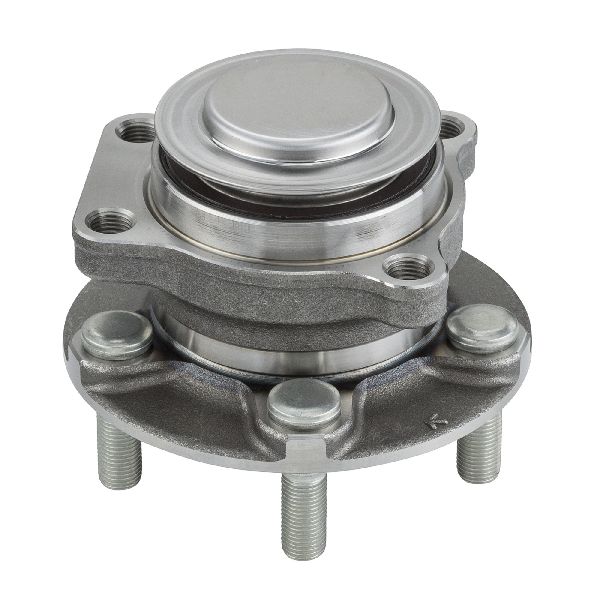
Aftermarket price range: $80-$120 - Wheel Bearing and Hub Assembly (Front)
(OEM #28373CA000)— Required if the integrated magnetic encoder ring is damaged. The front hub is the same for left and right.
Trusted brands: Subaru (OEM), SKF, Timken, NTN, Moog (513352)
OEM price range: $180-$250
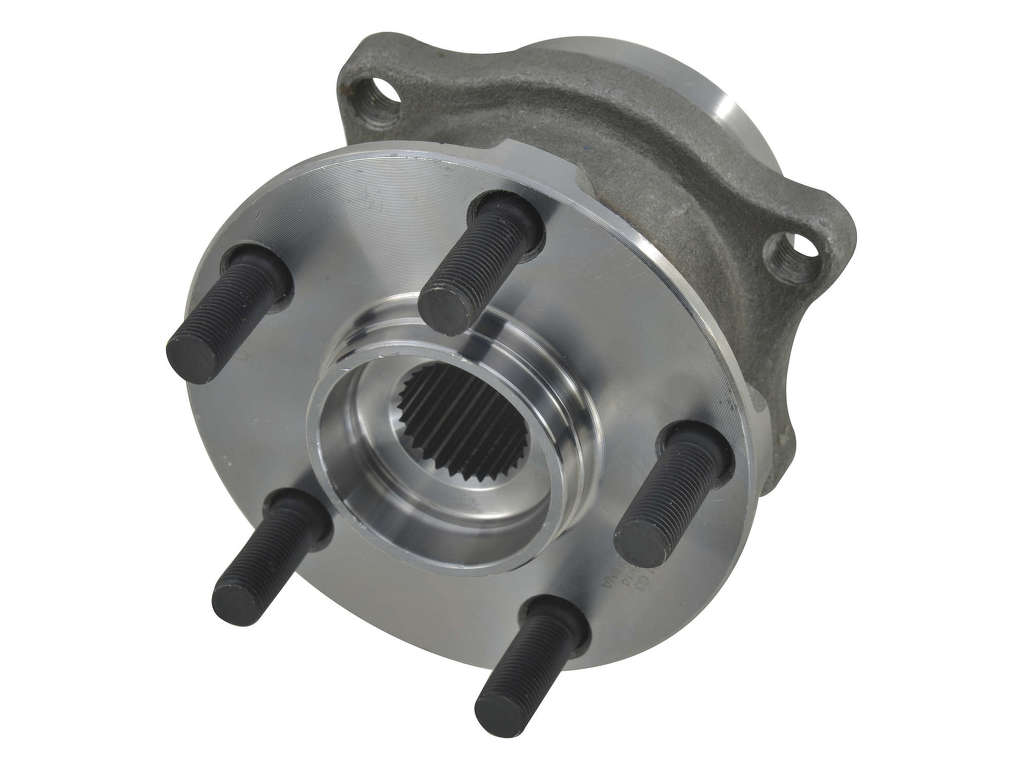
Aftermarket price range: $130-$200 - Wheel Bearing and Hub Assembly (Rear)
(OEM #28473FL021)— Required if the integrated magnetic encoder ring is damaged. The rear hub is the same for left and right. This part number supersedes previous versions like 28473FL020 and 28473FG000.
Trusted brands: Subaru (OEM), SKF, Timken, NTN
OEM price range: $180-$250
Aftermarket price range: $130-$200
Related Codes That Often Appear With This One
- C0040, C0045, C0050, C0055 — A 'C' code (Chassis) will often be stored in the ABS module, specifying which wheel speed sensor circuit is malfunctioning (e.g., Right Front, Left Front, Right Rear, Left Rear). The P0500 is the generic code the ECM sets as a result of the ABS fault.
Platform-Specific Known Issues
- The code frequently appears after suspension work (e.g., coilover installs) or wheel stud replacement due to accidental damage to the sensor, its wiring, or the wheel bearing's magnetic encoder ring.
- A forum user reported a case where a mechanic installed the 'outer joint assembly baffle' backwards after a wheel stud job, which then damaged the ABS sensor and triggered the code.
Mechanic-Grade Diagnostic Values
- Wheel Speed Sensor Resistance — expected: 900 - 2000 Ohms (Typical for passive sensors; some sources state 1200-2700 Ohms). Failure: Reading of OL (Open Line/infinite resistance) or near 0 Ohms (short circuit).
- Wheel Speed Sensor AC Voltage Output — expected: Minimum of 0.2 Volts AC while spinning the wheel by hand at about half a revolution per second.. Failure: Voltage below 0.2V AC indicates a weak or failed sensor, or an excessive air gap.
- Wheel Speed Sensor Power Supply (at harness connector) — expected: Approximately 12V (Battery Voltage) with key on.. Failure: Low or no voltage indicates a problem with the wiring or the ABS module, not the sensor itself.
Scan Tool Commands That Help
- Advanced OBD-II Scanner (e.g., Autel, Foxwell, etc.): Read Codes from ABS/VSC Module — This is critical. The generic P0500 in the ECM is triggered by a more specific 'C' code in the ABS module. You must read the ABS module to know which wheel corner is faulting (e.g., C0040 - Right Front). A basic code reader will not see these codes.
- Advanced OBD-II Scanner: Clear Codes from ABS/VSC Module — After replacing a component, codes must be cleared from the ABS module specifically. One owner replaced both the sensor and bearing but the fault persisted until they used a capable scanner to clear the historic and current DTCs from the ABS module itself.
Wiring & Ground Locations
- Engine/Transmission Ground Straps — There are three primary engine/transmission grounds: one on each side of the front bottom of the engine to the frame rail, and one from the passenger side top-rear of the transmission to the transmission tunnel.. Poor grounds can cause a host of electrical issues, including low voltage to modules and sensors, which can lead to erroneous fault codes like P0500. While not a primary cause, they should be checked if multiple electrical faults are present.
- ABS Sensor Connectors — Front sensor wires route up into the engine bay near the strut towers. Rear sensor wires route up and connect inside the trunk.. These connectors are common points for corrosion or damage. Knowing their location allows for testing resistance and voltage without having to remove the sensor from the hub initially.
- ABS Control Module Connector — The ABS pump and module assembly is located in the engine bay on the driver's side (LHD).. This is the final point to test wiring continuity from the sensors. A wiring diagram is needed to identify the correct pins for each wheel speed sensor circuit.
Real Owner Repair Stories
- ft86club.com user 'slockin' (2014 Subaru BRZ 6-speed) — Intermittent loss of power steering, ABS, traction control, and speedometer, triggering P0500.
❌ Tried (didn't work) Replacing the wheel speed sensor., Replacing the wheel bearing/hub assembly.
✅ What actually fixed it The problem was not resolved by parts replacement. The fix was using a higher-level scan tool (Autel MaxiLink ML629) to specifically clear both 'current' and 'previous' DTCs from the ABS control module. A basic OBD-II reader was not sufficient to clear the underlying fault codes that were causing the P0500 to reappear. - ft86club.com user 'DemonRawr' (2014 BRZ Limited 6M) — Cluster lit up, speedometer dropped to 0, car entered limp mode, and power steering was lost, with a P0500 code.
❌ Tried (didn't work) Initial thought was a bad sensor.
✅ What actually fixed it The cause was oversized rear tires rubbing against the plastic inner fender liner, which presumably damaged the sensor wiring. The owner diagnosed this because the code would only appear after about 20 minutes of driving. Clearing the code and swapping to a different set of wheels confirmed the issue was tire/wheel related. - Reddit user on r/subaru (2014 Crosstrek (similar hub/sensor design)) — P0500 and multiple dash lights (ABS, TCS, etc.) immediately after replacing a front wheel bearing with an aftermarket unit.
❌ Tried (didn't work) Replacing a rusty brake backing plate that was thought to be causing a sensor gap issue., Cleaning rust off the knuckle and magnetic ring., Clearing the code with a basic reader.
✅ What actually fixed it The user concluded the only remaining possibilities were that they damaged the original sensor during the bearing replacement (using heat) or that the aftermarket bearing's magnetic ring was faulty/incompatible. This highlights the risk of using non-OEM hub assemblies.
Documented NHTSA Reports
- While not specific to the BRZ, a report for another Subaru model (NHTSA ODI #11724365) describes a vehicle entering limp mode due to an associated P0500 code, where the driver had to shut off the car and wait five minutes before restarting to restore functionality.
OEM Part Supersession History
28473FG000, 28473SC000, 28473FL020→28473FL021— Standard part evolution and consolidation for multiple vehicle platforms.
Heads up: These part numbers are for the rear wheel bearing and hub assembly. While they are listed as superseded, they fit a range of Subaru models. The key is ensuring the replacement part is for the correct 5x100mm bolt pattern and has the integrated magnetic encoder for the ABS system.
Model Year Variations Within This Range
- 2017-2020: Models with the optional Performance Package feature Brembo brakes. While the fundamental ABS system is the same, some part numbers for components like dust shields or specific sensor brackets may differ. For example, OEM part listings for sensor 27540CA030 sometimes note 'Without brembo'. This is a minor variation but important to note when ordering parts.
Diagnostic Flowchart
Other Known Issues on This Vehicle
Issues unrelated to this code that are worth knowing about as an owner of this generation:
- Valve Spring Failure (2013 Models) 🔴 High — Common enough to trigger a major recall (WTY-84 / NHTSA 18V-772) for 2013 model year vehicles. Failure can cause engine stalling or catastrophic failure. (Ref: Recall WTY-84)
- High-Pressure Fuel Pump 'Cricket' Noise 🟡 Low — Very common across all years, especially on a hot day at idle. Subaru states the noise is non-detrimental, but issued a TSB to address customer complaints. (Ref: TSB 09-54-12R)
- Tail Light Condensation/Water Leak 🟡 Low — Extremely common issue due to a poor gasket design between the tail light housing and the car body. Water can leak into the trunk. (Ref: TSB 07-88-14R (addresses updated gasket))
- Throwout Bearing Failure (Manual Transmission) 🟠 Medium — A known weak point on manual transmission cars, often failing prematurely and causing a chirping/squeaking noise when the clutch is depressed.
- Post-Recall Engine Failure (Valve Spring) 🔴 High — A significant number of owners reported engine failures (e.g., rod knock) shortly after having the valve spring recall work performed, leading to a class-action lawsuit. (Ref: Recall WTY-84 (related issue))
Used vs. New Parts: Buying Guide for This Vehicle
When a used part is the smart pick: A used part is generally not recommended for the key components in this repair (sensor, wheel bearing). However, a used wiring harness pigtail from a junkyard is a perfectly acceptable and cost-effective fix if only the connector is damaged.
Donor-vehicle mileage cap: roughly under 80000 miles for the part to have meaningful remaining life.
What to inspect on the donor part:
- For a wiring pigtail, ensure there are no cuts or abrasions on the wires.
- Check that the connector's locking tab is intact and not brittle.
- Look for any signs of corrosion (green crust) on the pins inside the connector.
OEM-only on this vehicle (don't cheap out):
- Wheel Bearing and Hub Assembly: This is highly recommended. The magnetic encoder ring is critical and some aftermarket units have been reported to be faulty out of the box or have incompatible rings, leading to an immediate P0500 code.
- ABS Wheel Speed Sensor: While some aftermarket brands are reliable, OEM is the safest bet to ensure correct signal output and fitment. Given the labor involved, avoiding a potential repeat job by using a known-good OEM part is wise.
Aftermarket brands forum-validated for this vehicle:
- For Wheel Bearings: Timken, SKF, NTN, Moog are generally considered high-quality, OEM-equivalent brands.
- For Sensors: Standard Motor Products (SMP), Holstein.
Brands owners have reported issues with on this vehicle:
- Unnamed, 'white-box' or suspiciously cheap wheel bearing assemblies found on online marketplaces. The risk of a faulty magnetic encoder ring is too high.
Real Owner Stories
Aggregated from forums and TSBs cited above. Mileages and costs reflect what owners reported in those sources.
2013 Subaru BRZ
Symptoms: After a wheel stud replacement, the CEL, ABS, and Slip indicator lights came on during a test drive.
What fixed it: Corrected the installation of the stainless ring (outer joint assembly baffle) which had been installed backwards and was rubbing against the rear-left ABS sensor.
Source hint: ft86club.com: 'CEL P0500 Vehicle Speed Sensor Malfunction'
2013-2020 Subaru BRZ
Symptoms: P0500 and 'crap lights' appeared on the dash immediately following a coilover installation.
What fixed it: Repairing or replacing the ABS sensor wiring that was damaged during the suspension work.
Source hint: ft86club.com: 'Crap lights on my dash after installing coilovers.'
2013-2020 Subaru BRZ
Symptoms: Intermittent P0500 code that persisted even after the speed sensor was replaced.
What fixed it: Replacement of the wheel bearing/hub assembly due to a damaged magnetic encoder ring.
Source hint: ft86club.com: 'P0500, speed sensor issue, weird case.'
Subaru Owner Report
Symptoms: An owner reported their vehicle entered limp mode and they had to pull off the road. After waiting five minutes and restarting, the car worked again, but a P0500 code was present.
Source hint: NHTSA ODI #11724365
Related OBD-II Codes
Frequently Asked Questions
Why did my speedometer stop working and my power steering feel heavy on my BRZ?
I just installed coilovers on my BRZ and now I have a P0500 code. What happened?
Can replacing wheel studs on my BRZ cause a P0500 code?
Does the 2013 Subaru BRZ valve spring recall (WTY-84) relate to the P0500 code?
My BRZ is in 'limp mode' and won't rev high. Is this related to the speed sensor?
Is there a TSB for the 'cricket' noise I hear while diagnosing my BRZ?
Helpful Videos
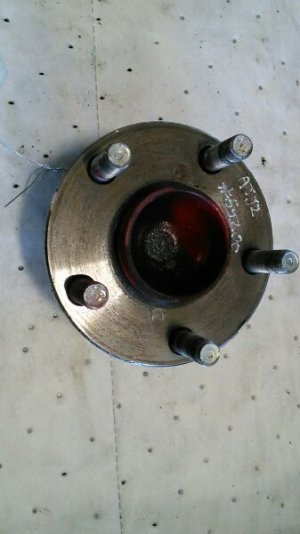
Used OEM Parts in Stock
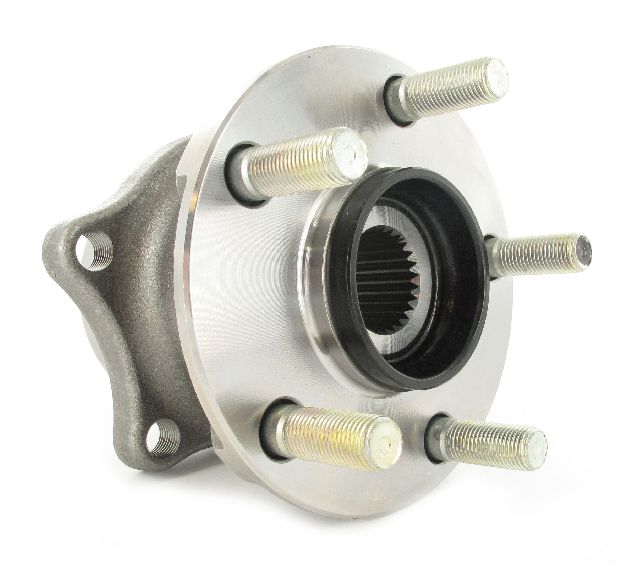
New Aftermarket Parts Available


The information in this article is provided for general reference and educational purposes only. Vehicle specifications, procedures, and part compatibility can vary by production date, trim level, and region. Always consult your vehicle's factory service manual and verify part numbers before purchasing or performing repairs. Safety-critical components such as airbags, seat belts, and braking systems should be installed by a qualified professional.
- Subaru BRZ:
- 🧭 Diagnostic Flowchart
- 🎬 Helpful Videos
- 🛍️ Shop This Part
- What's Unique About the 2013-2020 Subaru BRZ
- Symptoms You May Notice
- Most Likely Causes
- Rare But Worth Checking
- Diagnosis Steps
- Parts You'll Likely Need
- Related Codes That Often Appear With This One
- Platform-Specific Known Issues
- Mechanic-Grade Diagnostic Values
- Scan Tool Commands That Help
- Wiring & Ground Locations
- Real Owner Repair Stories
- Documented NHTSA Reports
- OEM Part Supersession History
- Model Year Variations Within This Range
- Other Known Issues on This Vehicle
- Used vs. New Parts: Buying Guide for This Vehicle
- Real Owner Stories
- 2013 Subaru BRZ
- 2013-2020 Subaru BRZ
- 2013-2020 Subaru BRZ
- Subaru Owner Report
- Related OBD-II Codes
- Frequently Asked Questions
- 🎟️ Get 5% Off