

P0732 on 2020-2023 Lincoln Aviator: Gear 2 Incorrect Ratio Causes and Fixes
On a 2020-2023 Aviator, P0732 almost always indicates a serious internal issue with the 10R80 transmission. The most likely causes are a faulty main control valve body (per TSB 20-2403) or a failed CDF clutch drum. This is not a DIY fix and requires professional diagnosis, with costs ranging from $1,500 to over $7,000.
- P0732 on a 2020-2023 Aviator indicates a serious internal transmission problem, not a simple sensor fault.
- The two most likely causes are a faulty main control valve body (per TSB 20-2403) or a failed CDF clutch drum, both known issues with the 10R80 transmission.
- This is not a DIY repair. Professional diagnosis is required to differentiate between the two main causes and perform the complex repair.
- Do not continue to drive the vehicle, as you risk complete transmission failure and a potential on-road safety hazard.
- Ensure the repair shop is aware of TSB 20-2403 and the common 10R80 failure patterns to avoid misdiagnosis.
What's Unique About the 2020-2023 Lincoln Aviator
The Lincoln Aviator in this year range uses the 10R60 or 10R80 10-speed automatic transmission, which is known for specific, widespread issues. Unlike many vehicles where a gear ratio code might point to low fluid or a simple solenoid, on this platform, P0732 is strongly linked to two well-documented mechanical/hydraulic failures: sticking valves in the main control valve body or a design flaw in the CDF clutch drum. In the CDF drum, a bushing can 'walk' or slide out of position, uncovering hydraulic passages and causing a major pressure leak. Ford has issued multiple Technical Service Bulletins (TSBs), such as TSB 22-2428 and the newer TSB 24-2254, that supersede earlier ones and address these exact failure modes across many of its vehicles using this transmission.
Symptoms You May Notice
- Harsh, delayed, or jerky shifting, especially into 2nd gear but can also affect 1-3 and 3-5 shifts
- Transmission slipping, shuddering, or flaring between shifts
- Check Engine Light or Wrench Light illuminated
- Vehicle enters 'limp mode' (stuck in one gear)
- Sudden loss of acceleration or failure to move from a stop
- A loud bang or clunk when shifting from Park to Drive, especially when cold
- Replacing only the input or output speed sensors. These sensors are correctly reporting the slip; they are not the cause of it.
- Replacing a single shift solenoid. The issue is almost always with the entire valve body assembly or the CDF drum, not an individual solenoid.
- Performing only a software update. A software update or adaptive learning reset cannot fix a significant internal hydraulic leak or mechanical failure like a migrated bushing.
Most Likely Causes
- Faulty Main Control Valve Body 🔴 High Probability → Shop Transmission Valve Body TSB 20-2403 and its successors (like TSB 22-2428) specifically call out sticking valves in the main control valve body as a cause for P0732 and other shift issues on the 2020 Aviator. This is a known weak point due to manufacturing debris or valve wear.
How to confirm: A technician will follow the diagnostic procedure in the relevant TSB. For vehicles 🎬 Watch: A professional walkthrough of the 10R80 diagnostic process. over 5,000 miles, if a scan tool-led 'Transmission Accelerated Main Control Break-In' routine fails to correct the issue, the valve body is deemed faulty.
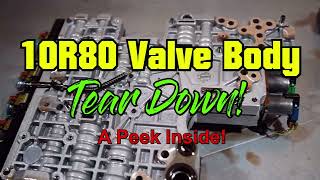
Typical fix: Replacement of the main control valve body assembly, which includes all new solenoids, 🎬 See inside: A detailed teardown of the 10R80 valve body. followed by an adaptive learning drive cycle.
Est. part cost: $750-$1300 - Internal Failure of the CDF Clutch Drum 🔴 High Probability → Shop Transmission Clutch Pressure Plate This is a widely documented design flaw in the 10R80 transmission. A bushing/sleeve inside the CDF clutch drum assembly can move ('walk') out of position, uncovering hydraulic passages and causing a severe pressure loss to the clutch pack responsible for 2nd gear. This is a physical design failure, not a software issue.
How to confirm: This requires advanced diagnostics, including transmission pressure tests as outlined in TSB 24-2254. Ultimately, it is confirmed by removing and disassembling the transmission to inspect the CDF drum for a migrated sleeve.
Typical fix: The transmission must be removed and overhauled. The fix involves replacing the faulty CDF drum with an updated OEM part (Part No. JL3Z-7H351-B) that has a machined lip to prevent the sleeve from moving. Alternatively, a more robust repair is installing an aftermarket kit like the Sonnax CDF Drum Saver Kit (129910-01K), which adds a stepped, locking sleeve.
Est. part cost: $300-$1800 for the drum assembly; $4000-$8000 for a remanufactured transmission. - Low or Contaminated Transmission Fluid ⚪ Low Probability → Shop Transmission Assembly
How to confirm: Check the transmission fluid level and condition. This transmission does not have a traditional dipstick, so the check must be performed by a technician from a fill plug on the transmission case with the vehicle at a specific temperature (206–215°F).
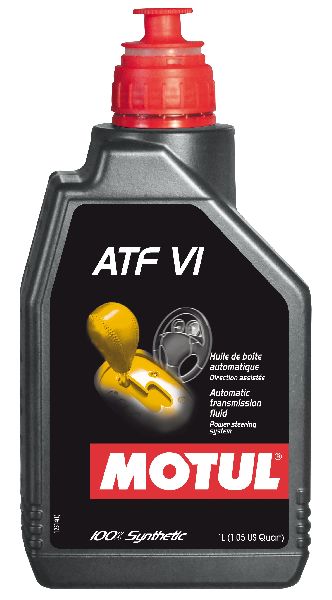
Typical fix: Perform a transmission fluid drain and fill or flush using the correct Motorcraft MERCON ULV fluid. However, this is rarely the root cause for this specific code on this platform and is more likely a symptom of internal damage creating debris.
Est. part cost: $100-$250
Diagnosis Steps
- Verify the code with a professional OBD-II scanner.
- Check for and review any related Technical Service Bulletins (TSBs), especially TSB 22-2428 and the superseding TSB 24-2254.
- Check the vehicle's mileage. Per TSB 20-2403, if under 5,000 miles, the issue may resolve with driving. If over 5,000 miles, proceed with diagnostics.
- Check the transmission fluid level and condition. This must be done by a professional as there is no dipstick. The fluid must be at operating temperature (206-215°F) for an accurate reading.
- Follow the diagnostic procedure outlined in the latest TSB (e.g., TSB 24-2254). This may start with a scan tool routine like the 'Transmission Accelerated Main Control Break-In'.
- If the break-in procedure does not resolve the issue, the TSB may recommend hydraulic pressure testing to check for a leak in the CDF drum circuit before component replacement.
- If a valve body is suspected, replacement of the main control valve body is the next step.
- If pressure tests indicate an internal leak or if other diagnostics point to the CDF drum, the transmission must be removed and disassembled for inspection and repair of the CDF clutch drum and any related damaged components.
Parts You'll Likely Need
- Main Control Valve Body Assembly
(OEM #L1MZ-7A100-F (supersedes L1MZ-7A100-B))— This is a primary cause of P0732 as identified in TSB 20-2403 and subsequent bulletins for the 2020 Aviator due to sticking internal valves.
Trusted brands: Motorcraft
OEM price range: $550-$1300
Aftermarket price range: $400-$800 (Remanufactured) - CDF Clutch Drum Assembly (Updated)
(OEM #JL3Z-7H351-B)— This updated part corrects the design flaw where a bushing moves and causes a hydraulic leak. The new design features a machined lip to prevent the sleeve from walking.
Trusted brands: Ford
OEM price range: $150-$500 - Sonnax CDF Drum Saver Kit
(OEM #129910-01K)— A robust aftermarket solution that permanently fixes a non-updated CDF drum by installing a new, improved sleeve with a locking set screw, preventing future movement. This is often preferred by transmission specialists over a new OEM drum.
Trusted brands: Sonnax
Aftermarket price range: $100-$200 (Requires special tool kit 129910-TK for installation) - Automatic Transmission Fluid
(OEM #XT-12-QULV)— This specific Motorcraft MERCON ULV fluid is required for any service on the 10R80 transmission. Using the wrong fluid will cause damage.
Trusted brands: Motorcraft
OEM price range: $10-$15 per quart
Related Codes That Often Appear With This One
- P0733 — Stands for 'Gear 3 Incorrect Ratio'. The underlying hydraulic or mechanical issue, such as the CDF drum or valve body, often affects multiple gear circuits.
- P0729, P0731, P0734, P0735, etc. — These are all gear ratio error codes for other gears. TSB 22-2428 and TSB 24-2254 list a full range of these codes as being caused by the same faulty valve body or CDF drum issue.
- P2700-P2705 — These codes relate to Transmission Friction Element Apply Time Range/Performance for various clutches. They are also listed in TSBs like 22-2428 as being related to the sticking valve body or CDF drum failure.
Technical Service Bulletins (TSBs) & Recalls
- TSB 20-2403: Addresses harsh engagement, harsh shifts, delayed shifts, and various DTCs including P0732 on 2020 Aviator/Explorer. Points to sticking valves in the main control valve body and provides a diagnostic procedure based on vehicle mileage.
- TSB 22-2428: Supersedes TSB 20-2403 and others. Expands the list of affected vehicles and provides a comprehensive diagnostic tree for harsh shifts and DTCs, acknowledging both the valve body and CDF drum sleeve movement as potential causes.
- TSB 24-2254: Further supersedes previous TSBs for some models, focusing diagnostics on verifying the CDF clutch cylinder hydraulic leak as the primary cause for a long list of DTCs, including P0732.
Platform-Specific Known Issues
- A known issue with sticking valves in the main control valve body is documented in TSB 20-2403 for the 2020 Aviator.
- The 10R80 transmission used in this vehicle is subject to a widely known design flaw in the CDF clutch drum, leading to hydraulic leaks and gear ratio codes like P0732.
- TSB 22-2428 and TSB 24-2254 supersede many earlier TSBs and consolidate the diagnostic procedure for a wide range of 10-speed transmission issues, including P0732, across multiple Ford and Lincoln models.
Mechanic-Grade Diagnostic Values
- Shift Solenoid (A-F) Coil Resistance — expected: 5.0 - 5.4 Ohms at 20°C (68°F). Failure: A reading outside this range, or an open (infinite) reading, indicates a faulty solenoid coil. However, the fault is more often in the valve body or drum, not a single solenoid.
- Line Pressure Control (LPC) Solenoid Current — expected: Low/no current (50 mA) = full pressure; High current (850 mA) = very low pressure (inversely proportional).. Failure: Incorrect pressure response relative to commanded current indicates a faulty LPC solenoid or valve body issue.
- Torque Converter Clutch (TCC) Solenoid Current — expected: Low/no current (50 mA) = very low pressure; High current (850 mA) = high pressure (proportional).. Failure: Incorrect pressure response relative to commanded current indicates a faulty TCC solenoid or valve body issue.
- Transmission Fluid Temperature (for fluid level check) — expected: 206–215°F (96–101°C). Failure: Checking the fluid level outside of this temperature range will result in an inaccurate reading, leading to under-filling or over-filling.
Scan Tool Commands That Help
- Ford IDS/FDRS: PCM - Transmission Accelerated Main Control Break In — This is a specific service routine outlined in TSBs like 22-2428. It's used to attempt to free sticking valves in the main control valve body before resorting to replacement.
- Ford IDS/FDRS: Clear Transmission Adaptive Tables — This must be performed after replacing the valve body or rebuilding the transmission to erase the old learned values. It is the first step before performing the adaptive learning drive cycle.
- Ford IDS/FDRS: Solenoid Body Strategy and ID Entry — This is a mandatory programming step after installing a new transmission or main control valve body. The 12- or 13-digit codes from the new component must be programmed into the TCM for it to operate correctly.
Wiring & Ground Locations
- Main Transmission Case Connector (C175T) — On the exterior of the transmission case, where the main vehicle harness connects to the transmission's internal components.. This 32-pin connector is the single point for all electronic commands and sensor feedback for the transmission. Corrosion, moisture intrusion, or a loose connection here can cause a wide variety of transmission codes, including incorrect ratio faults, by interrupting signals to the solenoids or from the speed sensors.
- TCM/PCM Ground Points — Specific ground locations for the control modules are detailed in the vehicle's official wiring diagrams, typically located on the chassis or engine block.. A poor ground connection for the Transmission Control Module (TCM) or Powertrain Control Module (PCM) can cause erratic voltage, leading to incorrect solenoid operation and false sensor readings, potentially triggering gear ratio codes.
Real Owner Repair Stories
- Ford F150 Forum user (2019 F-150 Lariat 2.7L (shares 10R80 transmission)) — Initial harsh upshifts/downshifts. After a reflash, developed a 2-3 second delay when shifting from Park to Drive/Reverse.
❌ Tried (didn't work) A software reflash and replacement of some parts per a TSB did not fix the issue long-term.
✅ What actually fixed it The delayed engagement was fixed by replacing the CDF drum. However, this was immediately followed by a new symptom of very hard shifts into 3rd gear. The dealer then also had to replace the main valve body assembly to resolve all issues. - Reddit user r/f150 (2018 F-150 5.0L with 148,000 miles) — Wrench light and P0732 code. Truck would not engage 2nd gear and would hesitate before clunking into gear, creating a safety issue.
❌ Tried (didn't work) Initial diagnosis was pending.
✅ What actually fixed it The user updated that the final diagnosis was a faulty solenoid within the valve body, and the fix was a complete valve body replacement. This is an example where the valve body, not the CDF drum, was the root cause.
OEM Part Supersession History
L1MZ-7A100-B→L1MZ-7A100-F— Updated main control valve body assembly to address issues with sticking valves.HL3Z-7H351-A, JL3Z-7H351-A→JL3Z-7H351-B— The updated CDF clutch drum assembly adds a machined lip to prevent the internal sleeve/bushing from 'walking' out of position, which was the primary design flaw causing hydraulic leaks.
Model Year Variations Within This Range
- Late 2022-2023: Vehicles produced after December 23, 2022, are more likely to have the updated CDF drum (part no. JL3Z-7H351-B) installed from the factory, reducing the probability of this specific failure mode. TSB 22-2428 also notes a build date cutoff of 23-Dec-2022 for its procedures.
Diagnostic Flowchart
Other Known Issues on This Vehicle
Issues unrelated to this code that are worth knowing about as an owner of this generation:
- 360-Degree Camera Malfunction / Blue Screen 🟠 Medium — Extremely common across all 2020-2023 models. Multiple recalls have been issued. (Ref: Recalls 23V022, 23V598, 24V368. The issue can be caused by software glitches or electromagnetic interference from cell phones.)
- Rear Axle Mounting Bolt Fracture 🔴 High — Affects 2020-2022 models. A recall was issued due to the risk of the vehicle rolling away while in Park. (Ref: NHTSA Campaign Number 22V-193. The single-bolt design used in some model years can fail, causing the driveshaft to disconnect.)
- Plug-in Hybrid (PHEV) High-Voltage Battery Failure 🔴 High — Affects Grand Touring models. Can result in sudden loss of power or a no-start condition. (Ref: NHTSA Campaign Number 23V-626. Caused by manufacturing defects leading to internal short circuits.)
- Unsecured Wire Harness Contacting A/C Pulley 🔴 High — A fire risk recall was issued for this problem on 2020-2021 models. (Ref: NHTSA Campaign Number 21V-534. The harness can chafe against the A/C compressor pulley, causing a short circuit.)
- Driveshaft Fracture at Weld Seam 🔴 High — Affects certain 2020 models, leading to loss of drive or potential fuel tank damage. (Ref: NHTSA Campaign Number 20V-693. A defective weld can cause the driveshaft to separate.)
Used vs. New Parts: Buying Guide for This Vehicle
When a used part is the smart pick: For this specific repair, sourcing a used part is highly discouraged. A used transmission assembly or valve body from a junkyard is very likely to have the same inherent CDF drum or valve body flaws as the part being replaced.
What to inspect on the donor part:
- If considering a used transmission against advice, you must verify the build date is after December 2022 to ensure it has the updated CDF drum.
- There is no reliable way to visually inspect a used valve body for sticking internal valves without disassembly and testing.
OEM-only on this vehicle (don't cheap out):
- Main Control Valve Body: While remanufactured units exist, a new OEM part (L1MZ-7A100-F) is the safest choice to ensure you have the latest revisions and clean internals.
- CDF Clutch Drum: Only the updated OEM part (JL3Z-7H351-B) or a drum repaired with a quality aftermarket kit like the Sonnax saver should be used.
Aftermarket brands forum-validated for this vehicle:
- Sonnax: Their 'CDF Drum Saver Kit' (129910-01K) is a highly regarded, permanent fix for the drum sleeve issue and is often preferred by transmission specialists.
Brands owners have reported issues with on this vehicle:
- No-name or unverified remanufactured valve bodies or transmissions from online marketplaces, as they may not have addressed the root cause of the common failures.
Real Owner Stories
Aggregated from forums and TSBs cited above. Mileages and costs reflect what owners reported in those sources.
Ford F-150 (10R80 Transmission)
Symptoms: Transmission shutter shift into 3rd.
What fixed it: The repair, guided by TSB 22-2428, took 2 days and involved a PCM reprogram which completely changed the shift behavior for the better.
Source hint: Reddit r/f150 referencing F150Forum.com, 'New May 2023 TSB 22-2428 fixed my Transmission shutter shift into 3rd.'
2020 Lincoln Aviator
Symptoms: Multiple powertrain warnings.
What fixed it: A bad sensor on a front half-shaft.
Source hint: Blue Oval Forums - '2020 Aviator Error Messages'
Related OBD-II Codes
Frequently Asked Questions
My 2020 Lincoln Aviator has a P0732 code and is shifting harshly. Is this a known problem?
What is the 'CDF clutch drum' failure I've heard about on the 10R80 transmission?
Does TSB 22-2428 apply to my 2021 Aviator for this P0732 code?
What is the recommended permanent fix for the CDF drum issue?
My Aviator has under 5,000 miles. Could the P0732 code resolve on its own?
The dealer wants to perform a 'Transmission Accelerated Main Control Break-In'. What is this?
Can simply changing the transmission fluid fix P0732 on my Aviator?
Helpful Videos

We Have This Part in Stock


The information in this article is provided for general reference and educational purposes only. Vehicle specifications, procedures, and part compatibility can vary by production date, trim level, and region. Always consult your vehicle's factory service manual and verify part numbers before purchasing or performing repairs. Safety-critical components such as airbags, seat belts, and braking systems should be installed by a qualified professional.
- Lincoln Aviator:
- 🧭 Diagnostic Flowchart
- 🎬 Helpful Videos
- 🛍️ Shop This Part
- What's Unique About the 2020-2023 Lincoln Aviator
- Symptoms You May Notice
- Most Likely Causes
- Diagnosis Steps
- Parts You'll Likely Need
- Related Codes That Often Appear With This One
- Technical Service Bulletins (TSBs) & Recalls
- Platform-Specific Known Issues
- Mechanic-Grade Diagnostic Values
- Scan Tool Commands That Help
- Wiring & Ground Locations
- Real Owner Repair Stories
- OEM Part Supersession History
- Model Year Variations Within This Range
- Other Known Issues on This Vehicle
- Used vs. New Parts: Buying Guide for This Vehicle
- Real Owner Stories
- Ford F-150 (10R80 Transmission)
- 2020 Lincoln Aviator
- Related OBD-II Codes
- Frequently Asked Questions
- 🎟️ Get 5% Off