

P0733 on 1997-2004 Porsche Boxster: Tiptronic Gear 3 Incorrect Ratio Causes and Fixes
On a 1997-2004 Porsche Boxster with a Tiptronic transmission, code P0733 almost always points to a problem with 3rd gear slipping. The most common and hopeful fix is a transmission fluid and filter change. If that doesn't work, the cause is likely internal, requiring professional diagnosis and potentially a costly transmission rebuild. In many cases, this code appearing alone without other gear ratio errors points to a mechanical failure of the 3rd gear clutch pack.
- P0733 on a 986 Boxster means the Tiptronic transmission is slipping in 3rd gear.
- The very first step is to check the transmission fluid level and condition. A fluid and filter service is the most likely and least expensive potential fix.
- Always use the correct fluid, such as Pentosin ATF-1 or an equivalent meeting the LT 71141 specification. Using the wrong fluid can cause severe damage.
- If a fluid service doesn't fix the issue, the problem is likely internal and will require expensive professional repair, such as a transmission rebuild or replacement.
- Do not continue to drive the vehicle extensively with this code, as you risk turning a repairable problem into a catastrophic transmission failure.
What's Unique About the 1997-2004 Porsche Boxster
The 1997-2004 Porsche Boxster (generation 986) uses a ZF 5HP19 5-speed Tiptronic automatic transmission. While generally robust, these units are highly sensitive to fluid level and condition. Unlike some vehicles where this code might point to a simple sensor issue, on the 986 Boxster, P0733 is very frequently a direct indicator of either fluid degradation or the beginning of a more serious internal mechanical failure. Specifically, the B-clutch (K2) pack is responsible for 3rd gear, and wear or failure of its seals or friction plates is a known issue. Porsche does not sell most internal transmission parts directly, making repairs complex and often leading specialists to source parts from VW/Audi (which also used the ZF 5HP19) or recommend a full rebuild/replacement.
Symptoms You May Notice
- Noticeable slipping or engine revs flaring when shifting into or driving in 3rd gear.
- Harsh or jerky shifting into 3rd gear.
- Transmission warning light illuminated or flashing gear indicator on the dash (e.g., alternating between '4' and 'D').
- Vehicle enters 'limp mode,' often stuck in a single high gear to prevent damage.
- Delayed acceleration or a feeling of power loss.
- Check Engine Light is on.
- Thick, black, or sludgy transmission fluid found during a service.
- Replacing only the speed sensors without checking fluid or internal components. If P0733 is the only code, the issue is likely hydraulic or mechanical, not purely electrical.
- Assuming any ATF fluid will work. Using the wrong fluid type can cause irreversible damage to the Tiptronic transmission. Approved fluids like Pentosin ATF-1, Mobil ATF 3309, or Esso LT 71141 are required.
- Replacing the valve body when the actual failure is a mechanical clutch pack. This can be an expensive and time-consuming misstep.
Most Likely Causes
- Low or Degraded Transmission Fluid and Clogged Filter 🔴 High Probability → Shop Transmission Assembly The ZF 5HP19 Tiptronic transmission is very sensitive to fluid volume and quality. Porsche's 'lifetime fill' recommendation is now widely considered unwise by owners and specialists. Over time, fluid breaks down and the filter can become clogged with clutch material, reducing the hydraulic pressure needed to engage gears properly.
How to confirm: Check the transmission fluid level and condition. The level check is a complex procedure requiring the car to be level and the fluid at a specific temperature (30-40°C), measured with an infrared thermometer on the pan. The old fluid may look dark, burnt, or contain metallic particles ('clutch mud'). If it looks silvery, this indicates severe internal wear.
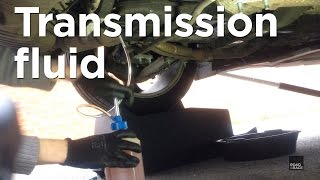
Typical fix: Perform a complete transmission fluid and filter service. 🎬 Watch: Step-by-step guide to changing your transmission fluid and filter. This involves draining the old fluid (only about 3.5-4 liters of the 9-liter total will drain from the pan), dropping the pan, replacing the filter and gasket, and refilling with the correct fluid to the proper level at temperature. Multiple drain-and-fills may be needed to replace a majority of the old fluid.
Est. part cost: $100-$250 - Internal Mechanical Failure (e.g., B-Clutch Pack) 🟡 Medium Probability High mileage, aggressive driving, or prolonged operation with low/bad fluid can cause wear on internal components. For P0733 specifically, the B-clutch pack for 3rd gear is a common failure point. The seals can harden and fail, or the friction plates can wear out, leading to a loss of hydraulic pressure and slippage.
How to confirm: This is a diagnosis of exclusion. If a fluid/filter service does not resolve the issue, the problem is almost certainly internal. Finding significant clutch material or metal debris in the transmission pan during the fluid service is a strong indicator. A transmission specialist will need to disassemble the unit to confirm the specific point of failure.
Typical fix: This requires either a complete transmission rebuild by a specialist or replacing the entire transmission with a used or remanufactured unit. A rebuild involves replacing all seals, gaskets, and worn clutch packs/drums.
Est. part cost: $1300-$4000 - Faulty Valve Body or Shift Solenoid ⚪ Low Probability → Shop Transmission Valve Body The valve body is the hydraulic brain of the transmission. Solenoids are electro-mechanical valves that control fluid flow to engage gears. They can fail electrically or become clogged with debris over time, causing pressure loss and shifting issues.
How to confirm: A diagnostic scan tool with Porsche-specific software (like Durametric) can sometimes test solenoid function. A specialist can also perform resistance checks on the solenoids after removing the transmission pan. In some forum cases, owners have replaced the valve body after a fluid change didn't work, only to find the issue was deeper inside the transmission.
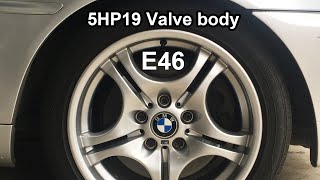
Typical fix: Replace the specific solenoid(s) related to 3rd gear or the entire valve body. 🎬 See this detailed walkthrough of a ZF 5HP19 valve body disassembly. This is less common than a full rebuild for an isolated P0733 code.
Est. part cost: $200-$800
Rare But Worth Checking
- Failing Input/Output Speed Sensors: While possible, a failing speed sensor will typically trigger its own specific trouble code (e.g., P0717, P0722) in addition to or instead of P0733. If P0733 is the only code present, the sensors are less likely to be the root cause.
- Faulty Transmission Control Module (TCM): → Shop Transmission Assembly This is very rare. Before condemning the TCM, all other possibilities, especially wiring and connections to the module, should be thoroughly exhausted. A forum user mentioned a dealer might swap the module as a diagnostic step, but it's an unlikely fix.
Diagnosis Steps
- Scan the TCM for any other stored trouble codes using a Porsche-compatible scanner (e.g., Durametric). Note if P0733 is alone or present with other codes.
- Perform a thorough check of the transmission fluid level and condition. This is the most critical first step. The procedure must be done correctly with the car level and the fluid at 30-40°C.
- If the fluid is low, top it off with the correct fluid type and re-test. If the fluid is old, dark, or burnt, perform a full fluid and filter change.
- Inspect the old fluid and the bottom of the transmission pan for excessive metal shavings or dark, sludgy clutch material, which would indicate severe internal wear.
- If the problem persists after the fluid service, the next step is to investigate the valve body and shift solenoids. This requires removing the transmission pan to access them.
- If solenoids test good and the fluid service had no effect, the cause is almost certainly an internal mechanical failure (like the B-clutch). At this point, the transmission must be removed from the vehicle for inspection and rebuild or replacement. 🎬 Watch: How to remove the Tiptronic transmission for a rebuild.
Parts You'll Likely Need
- Automatic Transmission Fluid and Filter Kit
(OEM #98630740300)— This is the most common and first-line fix. The Tiptronic transmission's health is highly dependent on clean fluid and a non-restrictive filter.
Trusted brands: ZF, Elring, Vaico, Porsche (fluid)
OEM price range: $200-$300
Aftermarket price range: $100-$180 - Automatic Transmission Fluid
(OEM #999-917-545-00)— The correct fluid is essential. Approved types include Pentosin ATF-1, Mobil ATF 3309, or Esso LT 71141. Porsche-branded fluid is often repackaged Pentosin ATF-1.
Trusted brands: Pentosin, Mobil, Ravenol, Fuchs
OEM price range: $30-$40 per liter
Aftermarket price range: $15-$25 per liter - Remanufactured Tiptronic Transmission — If the cause is internal mechanical failure, replacing the entire unit is often the most reliable, albeit expensive, solution. A rebuilt unit can cost around $3,800 plus labor, while a used one might be around $1,300.
Aftermarket price range: $1300-$4000
Related Codes That Often Appear With This One
- P0732 — Incorrect Ratio in Gear 2. Seeing multiple incorrect ratio codes (P0732, P0733, P0734, etc.) together strongly suggests a widespread hydraulic issue like low fluid, a clogged filter, or a failing transmission pump, rather than a single gear's clutch pack.
- P0734 — Incorrect Ratio in Gear 4. Like with P0732, having codes for multiple gear ratio errors points towards a systemic problem within the transmission, such as low fluid pressure affecting multiple clutch circuits.
- P0740 — Torque Converter Clutch Circuit Malfunction. This code appearing with gear ratio errors can point to a failing torque converter or a more widespread hydraulic control problem originating in the valve body or pump.
Platform-Specific Known Issues
- Owner Experience: Fluid Change vs. Rebuild: On the 986forum, a user with a 2000 Boxster S at 142,000 miles experienced 'phenomenal slipping' and code P0733 five months after a fluid/filter change. This indicates that while a fluid service is the correct first step, it is not a guaranteed fix if mechanical wear is already significant. Another user in the same thread noted their issue required a full transmission replacement after both a fluid service and a valve body swap failed to solve the problem.
- Owner Experience: Low Fluid Leading to Failure: A Rennlist user with a 1997 Boxster experienced slipping at only 63,000 miles, which was ultimately diagnosed as failed internal discs due to a lack of lubrication from a slow leak. A transmission service improved the feel but did not fix the slipping, leading to a $15,000 dealer quote for replacement or a $5,700-$7,500 independent shop rebuild cost. This highlights the critical importance of maintaining the correct fluid level.
- DIY Valve Body Removal: → Shop Transmission Valve Body A user on 986forum documented the process of removing the valve body on a 2001 Boxster S to replace a leaking wiring harness o-ring. The process involves carefully disconnecting brittle solenoid connectors and removing 17 T40 Torx bolts. This provides valuable insight for advanced DIYers considering tackling a valve body or solenoid replacement.
Mechanic-Grade Diagnostic Values
- Shift Solenoid (MV1, MV2, MV3) Resistance — expected: 30 - 34 Ω. Failure: Readings significantly outside this range indicate a faulty solenoid coil.
- Pressure Control Solenoid (EDS 1) Resistance — expected: 5.2 - 6.8 Ω. Failure: An out-of-spec reading suggests the main line pressure control solenoid is faulty.
- Pressure Control Solenoid (EDS 2, EDS 3, EDS 4) Resistance — expected: 6.2 - 7.8 Ω. Failure: An out-of-spec reading points to a failure in a clutch pressure control solenoid.
- Turbine Speed Sensor (TSS) / Input Speed Sensor Resistance — expected: 292 - 358 Ω. Failure: A reading outside this range (or open/short) indicates a failed sensor, which can cause ratio codes.
- Output Speed Sensor (OSS) Resistance — expected: 292 - 358 Ω. Failure: An out-of-spec reading indicates a failed sensor, which the TCM uses to calculate gear ratios.
Scan Tool Commands That Help
- PIWIS (Porsche factory tool) or advanced aftermarket (e.g., Durametric): Reset Shift Adaptations — This is critical after a transmission overhaul or valve body replacement. The TCM learns and adapts to wear over time; failing to reset these adaptations can cause rough shifts and downshift clunks even with new parts.
Wiring & Ground Locations
- Tiptronic Control Module (TCM) — Located on the forward bulkhead of the rear trunk, behind a trim panel.. The TCM is the brain of the transmission. Checking its connector for corrosion or oil contamination that may have wicked up the harness is a key diagnostic step.
- Transmission Main Connector — A round, bayonet-lock connector located on the right-hand side of the transmission, sometimes behind the ATF cooler.. This is the primary connection between the car's wiring harness and all internal transmission electronics (solenoids, sensors). Solenoid resistance can be tested from these pins without dropping the pan.
- Ground Point 5 (GP5) — Designated as the primary 'Electronics ground' in technical manuals.. A poor electronics ground can cause unpredictable behavior in control modules, including the TCM. Ensuring this ground is clean and tight is a fundamental step in diagnosing electronic faults.
- Ground Point near Fuse Box — Located adjacent to the interior fuse panel in the driver's footwell, visible after removing the surrounding carpeted trim.. This is a major chassis ground point. While not directly for the transmission, poor grounding here can introduce electrical noise that affects various control units.
Real Owner Repair Stories
- 986 Forum user 'Okanebm' (2000 Boxster S, 142,000 miles) — Phenomenal slipping into 3rd gear, flashing 'D' and '4' lights, P0733 code confirmed with Durametric.
❌ Tried (didn't work) A full transmission fluid and filter flush using the correct Pentosin ATF-1 fluid.
✅ What actually fixed it Another user in the same thread reported that for their similar issue, after a fluid/filter change and a valve body replacement did not work, the final solution was replacing the entire transmission with a different unit. - Rennlist forum user (2002 Boxster, 101,000 miles) — Transmission began to slip during commute.
❌ Tried (didn't work) The owner performed a transmission fluid and filter change.
✅ What actually fixed it The issue was not resolved by the fluid service. Crucially, the owner found metallic particles in the transmission sump during the service, a strong indicator of terminal internal mechanical wear. While the final repair was not stated, this finding points directly to the need for a transmission rebuild or replacement, not a simpler fix.
"I Checked Everything" — The Actual Cause
- A common pattern for the ZF 5HP19 is that a fluid and filter change does not resolve slipping or gear ratio codes. A root cause, often missed, is wear in the main pressure regulator valve bore inside the valve body. Over time, the steel valve wears the softer aluminum bore, preventing stable hydraulic pressure. This can cause pressure spikes that lead to other catastrophic failures like a blown D/G drum or failed torque converter clutch seal. An upgraded valve kit with O-rings (e.g., from Transgo) is designed to fix this, but it requires valve body disassembly.
When the Usual Fixes Don't Work
- While a fluid and filter service is the correct first step, it is often not the final solution for P0733 if the code appeared due to significant mileage and wear. In multiple documented owner experiences, a fluid change provided no improvement or only a very temporary one. The discovery of metallic particles in the pan during the fluid service is a common finding that immediately points to a more severe internal failure, making a transmission rebuild or replacement the actual required fix.
OEM Part Supersession History
Original ZF 5HP19 D/G Clutch Drum→Updated D/G Clutch Drum— The original drum was prone to catastrophic failure where the snap ring groove would break off, causing a loss of reverse. The updated part has a thicker wall and/or a redesigned snap ring groove to prevent this failure.Original EDS2 Solenoid→Higher Calibration EDS2 Solenoid— The original solenoid calibration could contribute to slipping during the 2-3 and 4-5 shifts, even on new vehicles. Replacement solenoids often have a higher calibration to provide more positive clutch engagement.Original Main Pressure Regulator Valve→Transgo Upgraded Pressure Regulator Valve Kit (e.g., 5HP-19-PR)— The OEM valve is steel and runs in an un-sleeved aluminum bore in the valve body, leading to wear and pressure instability. The Transgo kit includes a redesigned valve and adds O-rings to create a positive seal even in a slightly worn bore.
Model Year Variations Within This Range
- 2000-2004: For the 2000 model year, coinciding with the engine updates to 2.7L and 3.2L, the Tiptronic transmission was revised. While still a ZF 5HP19, it received software updates allowing for temporary manual shifting by tapping the steering wheel buttons even while the selector is in 'D' (Drive). Older models required moving the lever to 'M' first.
- 2003-2004: The transmission was sometimes referred to as 'Tiptronic S'. For the base Boxster, this was primarily a software and marketing designation rather than a significant hardware change. The core transmission remained the ZF 5HP19.
Diagnostic Flowchart
Other Known Issues on This Vehicle
Issues unrelated to this code that are worth knowing about as an owner of this generation:
- Intermediate Shaft (IMS) Bearing Failure 🔴 High — Failure rate is debated, but estimated between 1-8%. Most common on 2000-2005 models with a single-row bearing. Failure is catastrophic to the engine.
- Air-Oil Separator (AOS) Failure 🟠 Medium — A common failure item. When it fails, it can cause significant white smoke from the exhaust, a vacuum leak (rough idle), and potentially suck oil into the intake, risking hydrolock.
- Rear Main Seal (RMS) Leak 🟡 Low — A very common oil leak, often more of an annoyance than a critical issue. It's typically addressed when performing a clutch replacement or IMS bearing service due to the labor overlap.
- Cracked Coolant Expansion Tank 🟠 Medium — The plastic coolant tank is prone to developing hairline cracks with age and heat cycles, leading to coolant leaks and potential overheating. A common preventative or necessary repair.
- Water Pump Failure 🔴 High — The water pump is a known weak point. The original plastic impeller can degrade and break apart, leading to a sudden loss of cooling and engine overheating. It's often replaced preventatively.
Used vs. New Parts: Buying Guide for This Vehicle
When a used part is the smart pick: A used transmission is a viable, cost-effective option if a professional rebuild is financially prohibitive. It makes the most sense for DIY-capable owners who can perform the swap themselves, as labor costs can equal or exceed the cost of the used part.
Donor-vehicle mileage cap: roughly under 80000 miles for the part to have meaningful remaining life.
What to inspect on the donor part:
- Obtain proof of mileage from the donor vehicle if possible.
- Ask for any available service history, specifically regarding transmission fluid changes.
- If buying from a dismantler, inquire about their testing process and warranty policy.
- Before installation, drain the fluid from the used unit to inspect for excessive metal shavings or a burnt smell, which are red flags.
OEM-only on this vehicle (don't cheap out):
- Complete Transmission Overhaul Gasket/Seal Kit: For a rebuild, using a comprehensive kit from ZF or a top-tier OEM supplier like Transtec is non-negotiable to ensure all seals are replaced.
- Friction and Steel Plates: Use quality OEM-spec clutch plates. Cheap plates can wear out prematurely.
Aftermarket brands forum-validated for this vehicle:
- Transgo: Known for their valve body repair kits, especially the upgraded pressure regulator valve that addresses a known ZF 5HP19 design flaw.
- Pentosin, Mobil, Ravenol, Fuchs: These brands produce ATF that meets the required Esso LT 71141 / Mobil ATF 3309 specification.
Brands owners have reported issues with on this vehicle:
- Any generic ATF brand that does not explicitly state it meets the Esso LT 71141 or equivalent specification required for the ZF 5HP19. Using the wrong fluid can cause shifting problems and damage internal components.
Real Owner Stories
Aggregated from forums and TSBs cited above. Mileages and costs reflect what owners reported in those sources.
2000 Boxster S — 142000 miles
Symptoms: Owner experienced 'phenomenal slipping' and code P0733 five months after a fluid/filter change.
What fixed it: A full transmission replacement was required after both a fluid service and a valve body swap failed to solve the problem.
Source hint: Owner Experience: Fluid Change vs. Rebuild
1997 Boxster — 63000 miles
Symptoms: Slipping, ultimately diagnosed as failed internal discs due to a slow fluid leak.
What fixed it: A transmission service improved the feel but did not fix the slipping. The ultimate solution was a transmission rebuild or replacement.
Cost: $5700-$15000
Source hint: Owner Experience: Low Fluid Leading to Failure
Related OBD-II Codes
Frequently Asked Questions
Porsche recommended a 'lifetime fill' for my Boxster's transmission. Is it safe to change the fluid?
Will a transmission fluid and filter change definitely fix the P0733 code on my 1997-2004 Boxster?
What should I look for in the old transmission fluid when servicing my Boxster for a P0733 code?
My Boxster is stuck in a high gear and the gear indicator on the dash is flashing. Is this related to P0733?
How is the transmission fluid level checked on a 986 Boxster?
If a fluid service doesn't fix my P0733 code, what is the most likely cause?
Helpful Videos

We Have This Part in Stock


The information in this article is provided for general reference and educational purposes only. Vehicle specifications, procedures, and part compatibility can vary by production date, trim level, and region. Always consult your vehicle's factory service manual and verify part numbers before purchasing or performing repairs. Safety-critical components such as airbags, seat belts, and braking systems should be installed by a qualified professional.
- Porsche Boxster:
- 🧭 Diagnostic Flowchart
- 🎬 Helpful Videos
- 🛍️ Shop This Part
- What's Unique About the 1997-2004 Porsche Boxster
- Symptoms You May Notice
- Most Likely Causes
- Rare But Worth Checking
- Diagnosis Steps
- Parts You'll Likely Need
- Related Codes That Often Appear With This One
- Platform-Specific Known Issues
- Mechanic-Grade Diagnostic Values
- Scan Tool Commands That Help
- Wiring & Ground Locations
- Real Owner Repair Stories
- "I Checked Everything" — The Actual Cause
- When the Usual Fixes Don't Work
- OEM Part Supersession History
- Model Year Variations Within This Range
- Other Known Issues on This Vehicle
- Used vs. New Parts: Buying Guide for This Vehicle
- Real Owner Stories
- 2000 Boxster S — 142000 miles
- 1997 Boxster — 63000 miles
- Related OBD-II Codes
- Frequently Asked Questions
- 🎟️ Get 5% Off