

P0740 on 2008-2016 Chevrolet Malibu: Torque Converter Clutch Circuit Fixes
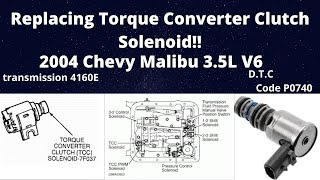
This code indicates an electrical fault in the torque converter clutch (TCC) solenoid circuit. The most common fix is replacing the TCC solenoid inside the transmission, which is a moderately difficult DIY job. Expect to pay around $40 for an ACDelco solenoid.
- P0740 on a 2008-2016 Malibu almost always points to a problem with the Torque Converter Clutch (TCC) solenoid circuit.
- The most likely cause is a failed TCC solenoid, which is a known issue on the 6T40/6T45 transmissions used in these cars.
- Symptoms include poor fuel economy, shuddering, and higher-than-normal RPMs at highway speeds.
- The repair involves dropping the transmission side pan, which is a moderately difficult job best suited for an experienced DIYer or a professional.
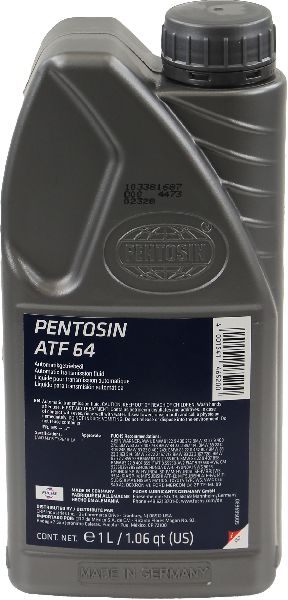
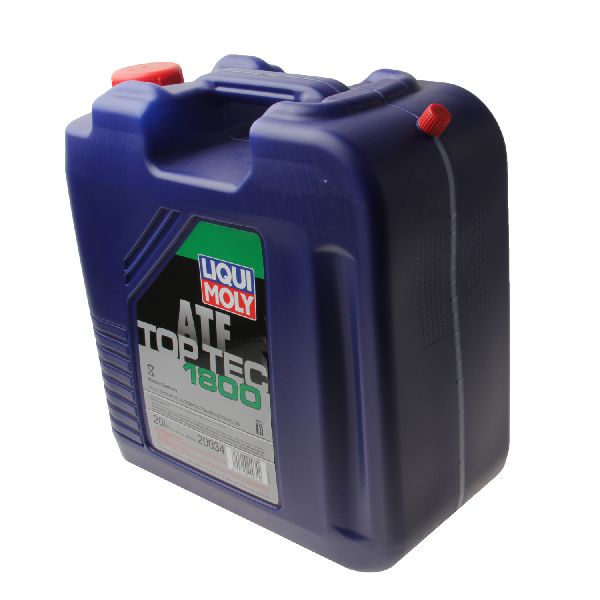
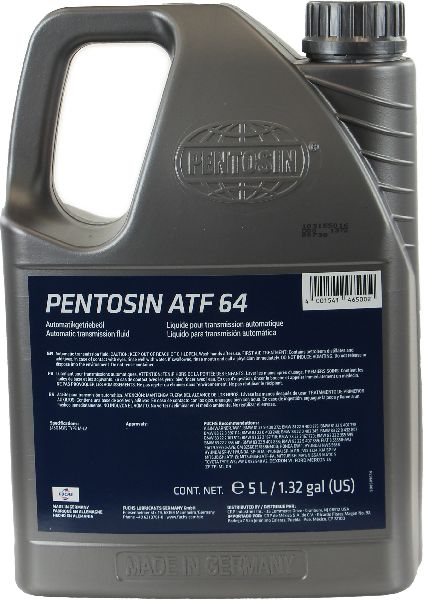
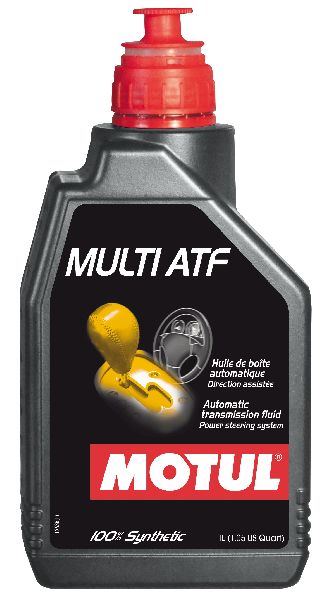
- Always use DEXRON-VI rated transmission fluid when refilling.
What's Unique About the 2008-2016 Chevrolet Malibu
The 2008-2016 Chevrolet Malibu, spanning the 7th and 8th generations, commonly uses the GM 6T30/6T40/6T45 family of 6-speed automatic transmissions. On these specific transmissions, the P0740 code very frequently points to a failure of the TCC solenoid itself, which is located on the valve body inside the side pan of the transmission. While the code definition is generic, the high probability of a specific solenoid failure is a well-documented characteristic of this platform among mechanics and DIYers. In some earlier models, debris from a failing 3-5-R wave plate was a known issue that could clog and destroy the TCC solenoid, leading to this code.
Generation note: This guide covers the 7th generation (2008-2012) and 8th generation (2013-2016) Malibu. Both generations often used the 6T40/6T45 series transmissions, making the causes and fixes for P0740 very similar across this year range. The primary components, like the TCC solenoid, are in the same location on the valve body for both generations of this transmission family.
Symptoms You May Notice
- Check Engine Light is on.
- Reduced fuel economy.
- Engine RPM is higher than normal at highway speeds.
- Vehicle shudders or vibrates at cruising speeds, sometimes feeling like driving over rumble strips.
- Harsh or delayed shifting.
- Engine may stall when coming to a stop (if the solenoid fails in the 'on' position).
- Transmission may feel like it's slipping or not locking into the highest gear.
- Replacing the entire torque converter when only the TCC solenoid is bad. The code P0740 specifically points to an electrical circuit fault, which is most often the solenoid or wiring, not a mechanical failure of the converter itself.
- Replacing the entire valve body or TCM/TEHCM assembly when only a single, replaceable solenoid has failed.
Most Likely Causes
- Defective Torque Converter Clutch (TCC) Solenoid 🔴 High Probability → Shop Automatic Transmission Torque Converter The solenoids used in the 6T40/6T45 transmissions are a known failure point. The internal coil can burn out or the valve can stick mechanically from debris or wear, especially when the transmission fluid gets hot.
How to confirm: Using a multimeter, test the resistance of the solenoid after removing it from the TEHCM. For Gen 1 and Gen 2 6T40 transmissions, the TCC pressure control solenoid should have a resistance between 3-5 ohms. A reading of infinity (OL) indicates an open circuit, while a reading of zero indicates a short. A scan tool can also command the solenoid on/off to check for a response.
Typical fix: Replace the TCC solenoid. This requires removing the transmission side cover/pan.
Est. part cost: $35-$75 - Low or Dirty Transmission Fluid 🟡 Medium Probability → Shop Transmission Assembly Fluid is the lifeblood of the transmission. If it's low, it can't create the pressure needed for solenoids to work. If it's dirty, burnt, or contaminated with debris (e.g., from a failing wave plate), it can clog the fine passages within the solenoids and valve body, causing them to stick or fail.
How to confirm: Check the transmission fluid level and condition. The fluid should be bright red and clear, not brown, black, or smelling burnt. On many Malibus of this era, there is no dipstick, and the level must be checked via a plug on the side of the transmission case with the vehicle level and at operating temperature.
Typical fix: Perform a transmission fluid drain and fill, or a full fluid exchange, using DEXRON-VI specification fluid. If the solenoid is being replaced, this is a required step.
Est. part cost: $60-$150 for fluid and filter - Damaged Wiring or Connectors ⚪ Low Probability The wiring harness inside the transmission is submerged in hot fluid, which can make it brittle over time. The external connector can also be damaged by road debris or corrosion. A poor connection at the TCM is also possible.
How to confirm: Visually inspect the external transmission connector. Check for continuity and shorts in the wiring from the TCM to the transmission connector, and from the internal connector to the solenoid itself. A broken connector on the solenoid itself is also possible.
Typical fix: Repair the damaged section of the wiring harness or replace the harness/connector.
Est. part cost: $20-$200
Rare But Worth Checking
- Faulty Transmission Control Module (TCM): → Shop Transmission Assembly The TCM (also called TEHCM - Transmission Electro-Hydraulic Control Module) is integrated with the valve body solenoid assembly on these transmissions. While less common, a failure in the module's driver circuit for the TCC solenoid can mimic a solenoid or wiring fault. This is usually diagnosed after all other components test good. In some cases, a software update from a dealer can resolve glitches that cause this code.
- Internal Torque Converter Failure: → Shop Automatic Transmission Torque Converter In some cases, the lock-up clutch inside the torque converter itself can fail mechanically. This can shed debris that clogs the TCC solenoid, causing the P0740 code. This is a much more involved and expensive repair that requires removing the entire transmission.
- Faulty Ignition Switch: → Shop Ignition Switch On some GM vehicles of this era, a faulty ignition switch can cause a voltage drop to the transmission, triggering a P0740 code, often along with other solenoid codes like P0753 and P0758. If multiple transmission codes appear at once and you also have intermittent gauge cluster issues, the ignition switch should be investigated. NHTSA ODI #10702398 describes a case where a recurring P0740 and P0758 were linked to an ignition switch that provided no power to the white wire when the switch was on.
Diagnosis Steps
- Verify the code with an OBD-II scanner. Note any other pending or active transmission codes, especially P0741, P0742, or P0700.
- Check the transmission fluid level and condition. On models without a dipstick, this requires raising the vehicle, leveling it, and removing a check plug while the transmission is warm.
- Use a scan tool with live data capability to monitor the TCC slip speed. Command the TCC solenoid ON and OFF to see if the engine RPM changes and if the solenoid responds.
- Inspect the main transmission wiring harness connector for corrosion, bent pins, or damage.
- If external wiring is good, drain the transmission fluid and remove the side pan to access the valve body and TEHCM. This can be a difficult job requiring removal of other components for access.
- Visually inspect the internal wiring harness and the TCC solenoid connector for damage.
- Disconnect the TCC solenoid from the TEHCM and test its resistance with a multimeter. It should be between 3-5 ohms. An infinite reading (OL) or zero reading confirms a failed solenoid.
- If the solenoid tests good, check the continuity of the internal wiring harness between the solenoid connector and the main TEHCM connector.
- If the solenoid and wiring test good, the issue may lie with the Transmission Control Module (TCM/TEHCM) or a mechanical fault in the torque converter.
Parts You'll Likely Need
- Torque Converter Clutch (TCC) Solenoid
(OEM #24227792)— This is the most frequent point of failure for a P0740 code on this platform. This part is also called a 'Pulse Width Modulation Valve'.
Trusted brands: ACDelco, Carquest Premium
OEM price range: $40-$60
Aftermarket price range: $35-$50 - Automatic Transmission Fluid (DEXRON-VI)
(OEM #10-9395)— Fluid must be drained to access the solenoid and should be replaced with fresh fluid. Approximately 5-6 quarts are needed for a pan drop.
Trusted brands: ACDelco, Valvoline, Castrol
OEM price range: $10-$15 per quart
Aftermarket price range: $8-$12 per quart - Transmission Side Cover Gasket — The gasket for the transmission side pan/cover should be replaced to prevent leaks after the repair.
Trusted brands: ACDelco, Fel-Pro
OEM price range: $30-$50
Aftermarket price range: $20-$40
Related Codes That Often Appear With This One
- P0741 — P0741 (Torque Converter Clutch Circuit Performance or Stuck Off) often appears with P0740. P0740 indicates the electrical circuit is bad, while P0741 indicates the TCM is not seeing the expected RPM drop when it commands the clutch to engage, which can be a direct result of the electrical fault.
- P0742 — P0742 (Torque Converter Clutch Circuit Stuck On) can appear if the solenoid fails in the engaged position, which can cause stalling at stops.
- P0700 — P0700 is a general transmission fault code requested by the TCM. It simply means the TCM has stored a more specific code (like P0740) and has asked the main Engine Control Module (ECM) to turn on the Check Engine Light.
Technical Service Bulletins (TSBs) & Recalls
- While no TSB directly addresses P0740, several relate to the 6T40 transmission's shift quality and control module. For example, TSB 14-07-30-001 and its revisions discuss adaptive learn functions and potential software updates that can affect transmission behavior. TSB 16-NA-019 also discusses harsh shifts and flares which could be related to control system issues. A technician with access to GM's service information system should check for the latest bulletins related to transmission performance for the specific vehicle.
Platform-Specific Known Issues
- Access to Side Cover: On the Malibu platform, accessing the transmission side cover to get to the valve body
Documented NHTSA Reports
- NHTSA ODI #10836973 describes an intermittent loss of 1st gear where the vehicle starts in 2nd or 3rd gear, accompanied by intermittent trouble codes P0758 and P0740.
- NHTSA ODI #10098357 notes a pattern of recurring error codes including P0785, P1860, and P0740 on GM platforms.
- NHTSA ODI #10023435 reports a scenario where a vehicle would not move until reaching 10 mph and then would stop, with the service engine light displaying P0740 (TCC sensor malfunction) and P1860.
Mechanic-Grade Diagnostic Values
- TCC Pressure Control Solenoid Resistance — expected: 3-5 ohms. Failure: A reading of infinity (OL) indicates an open circuit; a reading near zero indicates a short circuit.
- TCC Slip Speed (Live Scan Tool Data) — expected: Should drop to below 50 RPM when TCC lockup is commanded by the scan tool.. Failure: If the slip RPM remains high (e.g., >200 RPM) when lockup is commanded, it indicates a hydraulic or mechanical failure in the TCC circuit, even if the solenoid is electrically sound.
Hidden / Shadow Codes Worth Checking
- P1860: This is a GM-specific code for 'TCC PWM Solenoid Circuit Electrical'. It is more specific than the generic P0740 and directly points to an electrical issue with the solenoid or its wiring. (see via A professional scan tool like a GM Tech2 or GDS2, or some high-end consumer scanners.)
Scan Tool Commands That Help
- GDS2 / Tech2: Solenoid Valve Diagnosis / Transmission Cleaning — This function allows the technician to cycle individual solenoids while the system is pressurized. It can be used to confirm if the TCC solenoid is mechanically stuck or to clear minor debris. This should be performed before condemning the solenoid.
- GDS2 / Tech2: Transmission Adaptive Values Learn — After replacing the TEHCM or solenoids, this procedure is required to make the TCM learn the characteristics of the new components. Failure to perform this can result in poor shift quality.
- GDS2 / Tech2: TCC System Test — This bidirectional control allows a technician to manually command the TCC solenoid on and off while monitoring live data like TCC Slip RPM. This is a crucial step to isolate whether the fault is with the solenoid, wiring, or TCM.
Wiring & Ground Locations
- G101 / G106 — G101 is located at the front of the engine, lower block. It jumpers to G106 at the center of the frame cross rail under the crank pulley.. This ground point serves the Engine Control Module (ECM) and the Transmission Control Module (TCM). A poor connection here can cause a wide range of seemingly unrelated codes, including P0740, due to incorrect sensor readings and module operation.
- G103 — Located at the left rear of the engine compartment on the cowl, above the brake booster.. This ground serves the Body Control Module (BCM) and the Data Link Connector (DLC). While not directly controlling the transmission, a bad ground here can cause communication issues between modules and the scan tool, complicating diagnosis.
- TEHCM Main Connector — On the side of the transmission case, where the external wiring harness connects.. This is the primary point for testing the TCC solenoid circuit externally. Technicians will probe the pins leading to the TCC solenoid from this connector to check for continuity and shorts to ground before opening the transmission.
OEM Part Supersession History
24212690→24227792— Unknown, likely for improved reliability or material changes.
Model Year Variations Within This Range
- 2008-2012 (approx.): These are considered 'Gen 1' 6T40 transmissions. They feature pressure switches on the TEHCM and use a different pressure regulator valve compared to later versions. The 3-5-R wave plate is a known failure point on early models.
- 2012-2016 (approx.): These are 'Gen 2' 6T40 transmissions. The TEHCM does not have pressure switches, and the valve body design was updated (e.g., addition of a low reverse 4-5-6 boost valve). The problematic wave plates were generally phased out. Identification can be done by checking the 8th digit of the number on the TCM barcode; a letter (A, B, C, D) indicates Gen 2, while a number indicates Gen 1.
Diagnostic Flowchart
Other Known Issues on This Vehicle
Issues unrelated to this code that are worth knowing about as an owner of this generation:
- Timing Chain Wear/Failure (2.4L Ecotec) 🔴 High — Common on 2.4L engines, often appearing after 80,000 miles. Worn guides or a stretched chain can cause rattling noises, misfires, and eventually catastrophic engine failure if ignored.
- Excessive Oil Consumption (2.4L & 2.5L Ecotec) 🟠 Medium — Widespread reports of engines consuming a quart of oil or more every 1,000-2,000 miles, often due to piston ring issues. This can lead to engine damage if the oil level is not monitored closely. (Ref: Multiple TSBs exist, but no universal recall was issued. Dealers performed consumption tests and sometimes piston/ring replacements under warranty.)
- Electric Power Steering (EPS) Failure 🔴 High — Common on 7th generation (2008-2012) models. Can result in a sudden loss of power steering assist, making the vehicle very difficult to steer. A recall was issued for some models. (Ref: Recall #14116, TSB PI0090D)
- Passlock Anti-Theft System Failure 🟡 Low — Affects many models, causing a no-start condition where the security light flashes. The engine will crank but not start. Often caused by a faulty ignition lock cylinder or wiring.
- HVAC Blend Door Actuator Failure 🟡 Low — A very common issue where the plastic gears in the blend door actuators fail, resulting in a clicking noise from the dash and inability to control air temperature or direction.
- Transmission 3-5-R Wave Plate Failure (Early 6T40) 🔴 High → Shop Transmission Assembly — Primarily affects 2008-2009 models. A specific wave plate inside the transmission was prone to breaking, sending metal debris throughout the transmission, leading to loss of 3rd, 5th, and Reverse gears and often requiring a full rebuild. (Ref: Special Coverage Adjustment 14413)
Used vs. New Parts: Buying Guide for This Vehicle
When a used part is the smart pick: A used TEHCM (the integrated valve body, TCM, and solenoids) from a low-mileage donor can be a cost-effective option, but it is risky. It makes most sense if you can verify the donor vehicle did not have transmission issues and the part comes with a short warranty from the salvage yard.
Donor-vehicle mileage cap: roughly under 80000 miles for the part to have meaningful remaining life.
What to inspect on the donor part:
- Check the color and smell of the transmission fluid from the donor vehicle if possible; it should be bright red and not burnt.
- Inspect the electrical connector pins for any corrosion or damage.
- Ask for the VIN of the donor vehicle to check for any reported transmission problems or accidents.
OEM-only on this vehicle (don't cheap out):
- Transmission Electro-Hydraulic Control Module (TEHCM). While aftermarket remanufactured units exist, a new OEM unit is the safest bet for longevity and compatibility, as it will have the latest software and hardware updates. Used units are a gamble and require programming.
- Torque Converter Clutch (TCC) Solenoid. Given the relatively low cost of a new ACDelco OEM solenoid, it is not worth the labor risk to install a used one.
Aftermarket brands forum-validated for this vehicle:
- Sonnax (for valve body repair kits and upgraded components)
- ACDelco (OEM supplier)
Brands owners have reported issues with on this vehicle:
- Unbranded, no-name solenoids and TEHCMs from online marketplaces are extremely high-risk and often fail quickly.
Real Owner Stories
Aggregated from forums and TSBs cited above. Mileages and costs reflect what owners reported in those sources.
2014 Chevrolet Malibu (6T40 Transmission)
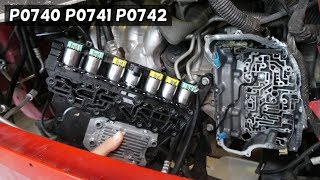
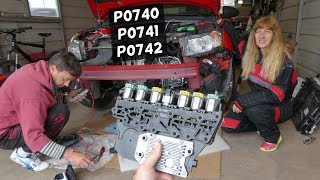
Symptoms: The owner identified issues corresponding to codes P0740, P0741, and P0742, specifically focusing on the TCC solenoid location on the valve body.
What fixed it: Replacement of the TCC solenoid located next to the shift solenoid on the 6T40/45 valve body.
Source hint: YouTube - CODE P0740 P0741 P0742 CHEVROLET BUICK GMC 6T30 6T40 6T45 TRANSMISSION
2014 GM Vehicle (6T40 Transmission)
Symptoms: TCC Circuit Malfunction (P0740) appearing alongside multiple other codes including P0753, P0758, P0785, and P1860.
What fixed it: Replacing a faulty ignition switch, which was a known issue causing multiple transmission circuit codes.
Source hint: GM-Trucks.com - P0740 TCC Circuit Malfunction
Related OBD-II Codes
Frequently Asked Questions
Does TSB 14-07-30-001 apply to the shifting issues I'm having with my 6T40 transmission?
My 2008-2012 Malibu suddenly lost power steering assist; is there a recall for this?
Can a faulty ignition switch cause a P0740 code on my Chevrolet Malibu?
What is the correct transmission fluid for a 2008-2016 Malibu 6T40/6T45 transmission?
How do I check the transmission fluid level on my Malibu if there is no dipstick?
Is the TCC solenoid resistance test something I can do myself to confirm P0740?
Helpful Videos

We Have This Part in Stock


The information in this article is provided for general reference and educational purposes only. Vehicle specifications, procedures, and part compatibility can vary by production date, trim level, and region. Always consult your vehicle's factory service manual and verify part numbers before purchasing or performing repairs. Safety-critical components such as airbags, seat belts, and braking systems should be installed by a qualified professional.
- Chevrolet Malibu:
- 🧭 Diagnostic Flowchart
- 🎬 Helpful Videos
- 🛍️ Shop This Part
- What's Unique About the 2008-2016 Chevrolet Malibu
- Symptoms You May Notice
- Most Likely Causes
- Rare But Worth Checking
- Diagnosis Steps
- Parts You'll Likely Need
- Related Codes That Often Appear With This One
- Technical Service Bulletins (TSBs) & Recalls
- Platform-Specific Known Issues
- Documented NHTSA Reports
- Mechanic-Grade Diagnostic Values
- Hidden / Shadow Codes Worth Checking
- Scan Tool Commands That Help
- Wiring & Ground Locations
- OEM Part Supersession History
- Model Year Variations Within This Range
- Other Known Issues on This Vehicle
- Used vs. New Parts: Buying Guide for This Vehicle
- Real Owner Stories
- 2014 Chevrolet Malibu (6T40 Transmission)
- 2014 GM Vehicle (6T40 Transmission)
- Related OBD-II Codes
- Frequently Asked Questions
- 🎟️ Get 5% Off