

P0740 on 2005-2010 Ford Mustang: Torque Converter Clutch Circuit Fixes
On a 2005-2010 Mustang with an automatic transmission, code P0740 is most often caused by a failed transmission solenoid block. This part is located inside the transmission pan and replacement by a professional is the most common and reliable fix. The updated OEM part number is 9L2Z-7G391-A.
- P0740 on a 2005-2010 Mustang almost always points to an electrical issue inside the 5R55S automatic transmission.
- The most likely cause is a failed solenoid block assembly, a known weak point on this transmission.
- The standard repair is to replace the entire solenoid block, along with the transmission filter and fluid (MERCON V).
- While you can continue driving, it's not recommended long-term as it will decrease fuel economy and increase heat and wear on the transmission.
- Due to the nature of the repair, professional service is recommended for most owners.
What's Unique About the 2005-2010 Ford Mustang
The 2005-2010 Ford Mustang, whether equipped with the 4.0L V6 or 4.6L V8, uses a 5R55S automatic transmission. This specific transmission is known for a high rate of failure of its solenoid block assembly. Over time, heat and vibration cause the internal printed circuit board on the solenoid block to develop cracks, or the solenoid coils themselves burn out, leading to an open circuit. Unlike some transmissions where the TCC solenoid is a separate, individual part, on the 5R55S it is integrated into a larger electronic block. Therefore, a P0740 code on this platform points very strongly to a failure of this entire solenoid assembly rather than just a single component.
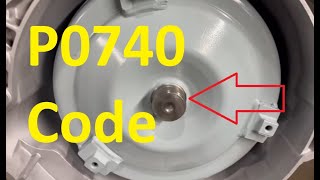
🎬 Watch: Understanding the P0740 code and common circuit fixes.Symptoms You May Notice
- Check Engine Light or flashing Overdrive (O/D) warning light
- Poor fuel economy
- Transmission failing to shift into overdrive or lock up at highway speeds
- Shuddering or vibration at highway speeds (like driving over rumble strips)
- Engine RPMs are higher than usual at a constant highway speed
- Harsh or delayed gear shifts
- Stalling when coming to a stop
- Replacing the entire torque converter when only the solenoid block has failed.
- Replacing the PCM before thoroughly testing the wiring and solenoid block.
- Replacing the entire transmission without first diagnosing the electrical circuit.
Most Likely Causes
- Faulty Transmission Solenoid Block Assembly 🔴 High Probability → Shop Transmission Assembly The solenoid block on the 5R55S transmission is a widely documented, high-failure part. Internal circuits on the integrated board crack or coils fail over time due to constant heat cycles and vibration.
How to confirm: After confirming external wiring is intact, a technician will drop the transmission pan to access the solenoid block. The TCC solenoid's resistance can be tested with a multimeter (should be between 9-16 Ohms), but given the high failure rate, replacement is the standard diagnostic step.
Typical fix: Replace the entire solenoid block assembly with the updated OEM part (9L2Z-7G391-A), 🎬 See this walkthrough on replacing the 5R55S solenoid block. the transmission filter, and the pan gasket, followed by a fluid refill with Motorcraft MERCON V.
Est. part cost: $200-$450 - Low or Dirty Transmission Fluid 🟡 Medium Probability → Shop Transmission Assembly
How to confirm: Check the transmission fluid level and condition via the dipstick. The fluid should be at the correct level, red in color, and not have a burnt smell. Burnt or contaminated fluid can contribute to solenoid failure.
Typical fix: Perform a transmission fluid and filter change using Motorcraft MERCON V fluid. This may be a temporary fix if the solenoid is already damaged.
Est. part cost: $80-$150 - Damaged Wiring or Connectors ⚪ Low Probability
How to confirm: Visually inspect the transmission wiring harness, especially the main electrical connector at the transmission case (C167/C1472), for corrosion, damage, or loose pins. Test for continuity from the PCM (Pin 54, Violet/Yellow wire) to the transmission connector to rule out a break in the wire. A manufacturer service bulletin for another Ford model, TSB Bulletin #SSM 46719, notes that before replacing components for a P0740, technicians should check specific connector pins for correct fitment.
Typical fix: Repair the damaged section of the wiring harness or clean/replace the faulty connector.
Est. part cost: $20-$100
Rare But Worth Checking
- Worn Servo Bores in Transmission Case: → Shop Transmission Assembly Ford TSB 09-12-12 notes that worn servo bores can cause pressure loss and shifting problems (loss of 2nd, 3rd, 5th gear) in the 5R55S. A severe pressure leak in related circuits could indirectly contribute to TCC performance issues, though it's not a direct cause of the P0740 electrical code. This is a major repair requiring transmission removal and case machining.
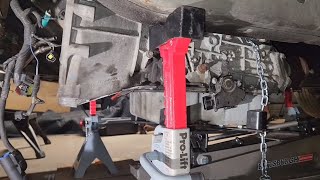
- Torque Converter Failure: → Shop Automatic Transmission Torque Converter In some cases, the internal clutch mechanism of the torque converter itself can fail mechanically. One owner on StangNet reported that replacing the solenoid pack did not resolve their P0740 code, making the torque converter the next likely culprit. 🎬 Watch: Complete guide to removing and installing the Mustang transmission. This is a major repair requiring transmission removal.
- Faulty Powertrain Control Module (PCM): → Shop Engine Control Module (ECM) It is possible for the driver circuit within the PCM to fail, but this is extremely rare. The PCM should only be suspected after all other possibilities (solenoid, wiring, fluid, and torque converter) have been exhaustively ruled out. A diagnostic case on a mechanically identical 2006 Mercury Mountaineer with the 5R55S transmission traced persistent P0740 and P0743 codes to a faulty PCM after all other components tested good.
Diagnosis Steps
- Verify the code with an OBD-II scanner.
- Check the transmission fluid level and condition. The fluid should be full, red, and not smell burnt. Address this first.
- Inspect the external transmission wiring harness and the main electrical connector (C167/C1472) for any signs of damage, corrosion, or loose connections.
- If tools are available, use a multimeter to check the resistance of the TCC solenoid circuit at the transmission connector. Per Ford's pinpoint test, the resistance for the TCC solenoid should be between 9-16 Ohms. Also check for continuity from the PCM connector (Pin 54, Violet/Yellow wire) to the transmission connector to rule out an external wiring issue.
- If external checks pass, the next step is to drain the fluid and remove the transmission pan.
- Visually inspect the fluid in the pan for excessive metal shavings, which could indicate a more severe mechanical failure requiring a rebuild.
- Remove and replace the 5R55S solenoid block assembly. It is highly recommended to use the updated Motorcraft part (9L2Z-7G391-A).
- Replace the transmission filter and pan gasket.
- Reinstall the pan, refill with the correct amount of Motorcraft MERCON V fluid, and re-check the level.
- Clear the codes and perform a test drive, ensuring the transmission reaches operating temperature and highway speeds to verify the torque converter locks up correctly. A scan tool can be used to command the TCC on and off to confirm the repair.
Parts You'll Likely Need
- Transmission Solenoid Block Assembly
(OEM #9L2Z-7G391-A (supersedes 4L2Z-7G391-AA))— This is the most common failure point for the P0740 code on the 5R55S transmission. The original part number was updated by Ford.
Trusted brands: Motorcraft (OEM), Bosch
OEM price range: $350-$480
Aftermarket price range: $150-$250 - Automatic Transmission Fluid (MERCON V)
(OEM #XT-5-QMC)— Required to refill the transmission after replacing the solenoid block. Approximately 6-8 quarts are needed for a pan drop.
Trusted brands: Motorcraft, Valvoline, Castrol
OEM price range: $8-$12 per quart
Aftermarket price range: $6-$10 per quart - Automatic Transmission Filter Kit
(OEM #FT145 (Motorcraft))— Should always be replaced when the transmission pan is removed for service.
Trusted brands: Motorcraft, Wix, ATP
OEM price range: $30-$50
Aftermarket price range: $15-$30
Related Codes That Often Appear With This One
- P0741 — P0741 indicates 'TCC Performance/Stuck Off', a mechanical/hydraulic problem, while P0740 is electrical. They can appear together if the electrical fault (P0740) prevents the lock-up, which the computer then flags as a performance issue (P0741).
- P0743 — This is a more specific electrical code for 'TCC Solenoid Electrical'. If you see this with P0740, it further confirms the issue is electrical and very likely related to the solenoid or its wiring.
- P0750, P0755, P0758, etc. — A string of multiple different solenoid codes (Shift Solenoid 'A', 'B', etc.) appearing at once often points to a common failure point, such as a bad ground, a problem with the main harness connector, or a faulty PCM, rather than multiple individual solenoids failing simultaneously.
Technical Service Bulletins (TSBs) & Recalls
- TSB 09-12-12: Addresses shift concerns (loss of 2nd, 3rd, 5th gear) in 5R55S transmissions due to servo pin bore wear. While not a direct cause for the electrical P0740 code, it highlights a known mechanical weakness of the transmission case that can cause related pressure and shifting problems.
- TSB Bulletin #SSM 46719: Notes that vehicles may exhibit an illuminated MIL with DTCs P0740 or P0743 stored in the PCM; it advises checking connector pins for correct fitment prior to replacing components.
Mechanic-Grade Diagnostic Values
- TCC Solenoid Resistance — expected: 9 - 16 Ohms. Failure: A reading outside this range (open circuit/OL or shorted/zero) indicates a failed solenoid coil.
- TCC Solenoid Control Circuit at PCM — expected: Voltage should toggle between near 0V (when commanded ON) and battery voltage (when commanded OFF).. Failure: Voltage remaining high when commanded ON, or low when commanded OFF, indicates a circuit fault or failed PCM driver.
- Scan Tool PID: TC_SLIP or TCCMACT — expected: Should drop to near 0 RPM when the TCC is commanded to lock at cruising speed.. Failure: RPM slip remains high after the TCC is commanded ON, indicating a hydraulic or mechanical lockup failure.
Scan Tool Commands That Help
- Ford IDS or equivalent professional scan tool: Output State Control / Active Command for TCC Solenoid — During a road test at steady speed (e.g., 30-45 mph), a technician can manually command the TCC solenoid ON and OFF. This allows them to feel for the torque converter clutch engaging and disengaging, directly confirming if the solenoid and hydraulic circuit are responding to commands from the PCM.
- Ford IDS, FORScan, or equivalent: Clear Transmission Adaptive Tables — After replacing the solenoid block or valve body, clearing the adaptive tables is recommended. This forces the PCM to relearn the hydraulic apply times for the new components, ensuring smooth shifting.
Wiring & Ground Locations
- PCM Connector Pin 54 (4.0L V6) — At the Powertrain Control Module (PCM), which is typically located in the engine bay near the firewall.. This is the specific pin for the TCC solenoid control circuit. The wire is typically Violet/Yellow. Testing for continuity and shorts on this wire between the PCM and the transmission is a key step to rule out an external wiring harness fault.
- Transmission Connector C167 / C1472 — The main 16-pin electrical connector on the outside of the transmission case.. This is the primary interface between the vehicle's wiring harness and the transmission's internal electronics, including the solenoid block. All electrical tests for the TCC solenoid (resistance, voltage) can be performed at this connector to isolate the problem between the external harness, internal harness, or the solenoid itself.
Real Owner Repair Stories
- StangNet Forums user 'Roont' (Ford Mustang (year not specified, but in S197 forum)) — Flashing O/D light and P0740 code at highway speeds. Also had harsh shifts from reverse-to-drive and in first gear.
✅ What actually fixed it Replacing the solenoid pack fixed the harsh shifting issues, but the P0740 code and O/D light at highway speeds remained. The next diagnostic step pointed towards a failure of the torque converter itself. - Reddit user in r/Mustang (2010 Mustang V6, ~150,000 miles) — Catastrophic transmission failure (overdrive planetary grenaded).
✅ What actually fixed it A complete transmission rebuild was required. This story highlights that while the solenoid is a common failure, major mechanical failures of the 5R55S are also a known issue at higher mileage. - NHTSA ODI #10191579 — An owner of a different Ford model reported a persistent P0740 code accompanied by a rough ride and stalling.
When the Usual Fixes Don't Work
- While the solenoid block is the most frequent cause of P0740, it is not a guaranteed fix. In a documented case on StangNet, an owner replaced the solenoid pack, which resolved their harsh shifting symptoms, but the P0740 code persisted. This indicates that the electrical circuit fault was not in the solenoid pack itself, and the next logical step was to diagnose the torque converter's internal lockup clutch, a much more significant mechanical repair. This serves as a critical reminder to perform full electrical diagnostics before assuming the solenoid pack is the only possible culprit.
OEM Part Supersession History
4L2Z-7G391-AA→9L2Z-7G391-A— Updated part from Ford, likely to improve reliability and address the known failure points of the original design.
Heads up: The new part number is a direct replacement for the old one.
Model Year Variations Within This Range
- 2009-2010: According to forum discussions, the 5R55S transmission used in 2009 and later Mustangs received an update to the fluid paths within the transmission case and valve body. While the solenoid pack may still be interchangeable, this internal difference is worth noting for anyone swapping entire transmissions between early (05-08) and late (09-10) models.
Diagnostic Flowchart
Other Known Issues on This Vehicle
Issues unrelated to this code that are worth knowing about as an owner of this generation:
- Passenger Footwell Water Leak 🔴 High — Very common, especially on vehicles parked outdoors. Debris clogs cowl drains, causing water to overflow through the cabin air filter opening. (Ref: While no specific TSB for the leak itself, it can damage the Smart Junction Box (SJB) located in the passenger kick panel, causing widespread electrical issues.)
- Premature Alternator Failure 🟠 Medium — Common on 2005-2009 models. The factory alternator is known for a high failure rate, often before 100,000 miles. (Ref: No TSB, but a common community recommendation is to upgrade to the more robust Denso alternator from the 2010 model year, which is a direct fit.)
- Variable Camshaft Timing (VCT) Solenoid Failure (4.6L 3V V8) 🟠 Medium — Frequent issue causing rough idle, poor acceleration, and stalling. Often triggered by oil contamination or sludge. (Ref: Ford has noted that some light ticking from the VCT system is normal, but loud noise accompanied by codes like P0011, P0012, P0021, or P0022 indicates a failure.)
- Hood Edge Corrosion 🟡 Low — Extremely common across S197 models. Paint bubbling and corrosion appear on the underside of the front hood seam, believed to be caused by a manufacturing defect.
- Plastic Thermostat Housing Failure (4.0L V6) 🟠 Medium — The plastic housing is prone to cracking and leaking coolant, a common failure point as the vehicle ages. Aftermarket metal replacements are a popular upgrade.
Used vs. New Parts: Buying Guide for This Vehicle
When a used part is the smart pick: Buying a used solenoid block is highly risky due to its nature as a high-failure item. It only makes sense if it's from a verified low-mileage donor vehicle (e.g., a rear-end collision) where the transmission's history is known and the part can be acquired very cheaply. For most repairs, the labor involved justifies using a new or quality-remanufactured part.
Donor-vehicle mileage cap: roughly under 80000 miles for the part to have meaningful remaining life.
What to inspect on the donor part:
- Verify the donor vehicle's mileage.
- If possible, inspect the transmission fluid from the donor; it should be bright red and not smell burnt.
- Check the electrical connector pins on the solenoid pack for any signs of corrosion, bending, or damage.
OEM-only on this vehicle (don't cheap out):
- Transmission Solenoid Block Assembly
Aftermarket brands forum-validated for this vehicle:
- Motorcraft (OEM)
- Bosch (often the original equipment manufacturer)
- Sonnax (remanufactured with an improved internal circuit board design)
Brands owners have reported issues with on this vehicle:
- Unbranded, low-cost solenoid packs from online marketplaces. Forum users frequently report these parts failing within a few months, leading to a repeat of the same repair.
Real Owner Stories
Aggregated from forums and TSBs cited above. Mileages and costs reflect what owners reported in those sources.
2005 Mustang GT
Symptoms: Multiple transmission error codes including P0740, P0743, P0750, P0753, and P0758. Warning light on the dashboard appears. If driven easy, the car shifts nicely and the warning disappears.
What fixed it: After replacing parts, the final fix was a replacement PCM.
Source hint: s197forum.com
Related OBD-II Codes
Frequently Asked Questions
Does TSB 09-12-12 explain why my 2005-2010 Mustang has the P0740 code?
What is the specific replacement part number for the solenoid block on my Mustang's 5R55S transmission?
Can a water leak in my passenger footwell cause transmission codes like P0740?
Is there a specific wire I should test between the PCM and the transmission to diagnose this?
Should I upgrade my alternator if I'm seeing electrical codes on my 2005-2009 Mustang?
What kind of transmission fluid should I use for my 2005-2010 Mustang?
Helpful Videos

We Have This Part in Stock

The information in this article is provided for general reference and educational purposes only. Vehicle specifications, procedures, and part compatibility can vary by production date, trim level, and region. Always consult your vehicle's factory service manual and verify part numbers before purchasing or performing repairs. Safety-critical components such as airbags, seat belts, and braking systems should be installed by a qualified professional.
- Ford Mustang:
- 🧭 Diagnostic Flowchart
- 🎬 Helpful Videos
- 🛍️ Shop This Part
- What's Unique About the 2005-2010 Ford Mustang
- Symptoms You May Notice
- Most Likely Causes
- Rare But Worth Checking
- Diagnosis Steps
- Parts You'll Likely Need
- Related Codes That Often Appear With This One
- Technical Service Bulletins (TSBs) & Recalls
- Mechanic-Grade Diagnostic Values
- Scan Tool Commands That Help
- Wiring & Ground Locations
- Real Owner Repair Stories
- When the Usual Fixes Don't Work
- OEM Part Supersession History
- Model Year Variations Within This Range
- Other Known Issues on This Vehicle
- Used vs. New Parts: Buying Guide for This Vehicle
- Real Owner Stories
- 2005 Mustang GT
- Related OBD-II Codes
- Frequently Asked Questions
- 🎟️ Get 5% Off