

P0740 on 2010-2017 GMC Terrain: Torque Converter Clutch Circuit Fixes
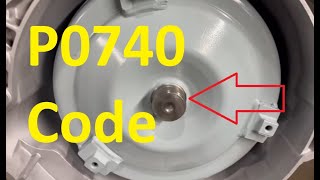
P0740 on a 2010-2017 GMC Terrain most often points to a faulty Torque Converter Clutch (TCC) solenoid or the entire Transmission Electro-Hydraulic Control Module (TEHCM), which includes the TCM. Replacing the solenoid is a moderate DIY job, while a TEHCM replacement is costly and requires professional programming.
- P0740 on a 2010-2017 Terrain indicates an electrical fault in the Torque Converter Clutch (TCC) circuit.
- The most likely culprits are a bad TCC solenoid or a failing Transmission Control Module (TCM).
- Always check transmission fluid level and condition first, as low or dirty fluid can cause numerous issues.
- Repair involves accessing internal transmission components, so it is best left to a professional or experienced DIYer.
- If the TCM is replaced, it will require programming to your vehicle's VIN.
What's Unique About the 2010-2017 GMC Terrain
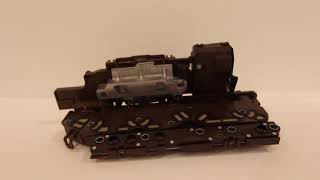
The first-generation GMC Terrain primarily uses the GM 6T40/6T45 series automatic transmission. For these specific transmissions, code P0740 is often linked directly to the TCC solenoid located on the valve body inside the transmission. A key design aspect of these transmissions is the integration of the Transmission Control Module (TCM), valve body, and solenoids into a single unit called the Transmission Electro-Hydraulic Control Module (TEHCM). This integrated unit is a common failure point. Its location inside the transmission exposes it to heat and vibration, which can lead to solder joint failure or other electronic faults within the TCM portion of the assembly, making it difficult to distinguish a simple solenoid failure from a more complex TEHCM failure without dropping the pan.
Symptoms You May Notice
- Check Engine Light is on
- Vehicle may shudder or vibrate at highway speeds, sometimes described as feeling like driving over rumble strips.
- Engine RPMs may be higher than usual at cruising speed (e.g., 2,500 RPM at 60 mph instead of 2,000 RPM).
- Reduced fuel economy by 5-10%.
- Harsh, delayed, or slipping shifts.
- Stalling when coming to a stop.
- Transmission overheating warning light may illuminate.
- Replacing the entire transmission when only a solenoid or the TEHCM is faulty.
- Replacing the torque converter when the issue is electrical (solenoid/TCM/wiring).
- Failing to check for software updates for the TCM before replacing hardware.
Most Likely Causes
- Faulty Torque Converter Clutch (TCC) Solenoid 🔴 High Probability → Shop Automatic Transmission Torque Converter The solenoid, located on the valve body, can fail electrically from internal coil burnout or mechanically by sticking due to age, heat, and contaminated fluid. This is a very common point of failure for the P0740 code in these transmissions.
How to confirm: A technician can use a scan tool to command the TCC solenoid on and off to check its response. The solenoid's resistance can also be tested with a multimeter after accessing the valve body; a reading outside the manufacturer's specified ohm range indicates failure.
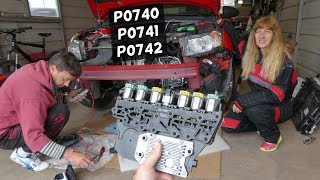
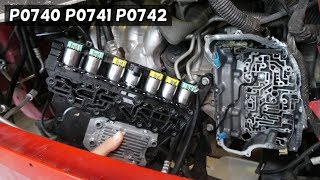
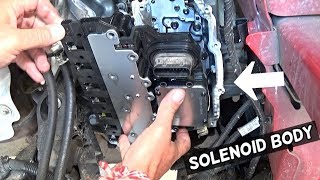
Typical fix: Replace the TCC solenoid. 🎬 See this walkthrough on removing the solenoid and TEHCM assembly. This requires removing the transmission oil pan and the valve body side cover to access the solenoid.
Est. part cost: $40-$80 - Faulty Transmission Control Module (TCM/TEHCM) 🟡 Medium Probability → Shop Transmission Assembly The TCM is integrated into the valve body assembly (TEHCM) and located inside the transmission, where it's exposed to constant heat and vibration. This can lead to internal electronic failure, such as cracked solder joints or corrupted software.
How to confirm: Diagnosis involves ruling out all other possibilities first (solenoid, wiring, fluid). If no other fault is found, the TEHCM is the likely culprit. A dealer or specialized shop must perform advanced diagnostics and check for software updates.
Typical fix: Replace the entire TEHCM assembly (valve body with TCM and solenoids). The new module must be programmed to the vehicle's VIN.
Est. part cost: $400-$800, with some remanufactured units available for less. - Low or Dirty Transmission Fluid 🟡 Medium Probability → Shop Transmission Assembly
How to confirm: Check the transmission fluid level and condition. The fluid should be red and clear, not brown, black, or burnt-smelling. Debris in the fluid can clog the filter and solenoid passages.
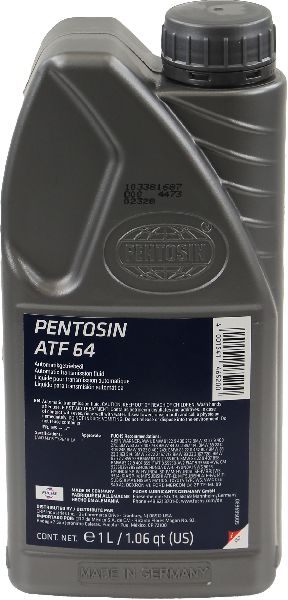
Typical fix: Perform a transmission fluid and filter change using DEXRON-VI fluid. In some cases of minor shudder, owners report temporary relief from using a friction modifier additive, though this is not a permanent fix.
Est. part cost: $100-$200 - Damaged Wiring or Connectors ⚪ Low Probability
How to confirm: Inspect the external transmission wiring harness for any visible damage. More thorough testing involves checking for continuity and shorts in the TCC solenoid circuit between the TEHCM and the main connector, which requires a wiring diagram and multimeter.
Typical fix: Repair or replace the damaged section of the wiring harness. This is less common since most of the critical wiring is inside the transmission case.
Est. part cost: $20-$150
Rare But Worth Checking
- Internal Torque Converter Failure: → Shop Automatic Transmission Torque Converter If the TCC solenoid and circuit are confirmed to be good, the lock-up clutch mechanism inside the torque converter itself may have failed mechanically. Finding excessive metal shavings in the transmission pan is a strong indicator. This is a major repair requiring transmission removal.
- Blocked Passages in the Valve Body: → Shop Transmission Valve Body Debris from normal wear or failing components can clog the small hydraulic passages in the valve body, preventing the TCC solenoid from controlling fluid flow correctly. This often necessitates a full TEHCM replacement.
Diagnosis Steps
- Check the transmission fluid level and condition. If it is low, dark, or has a burnt smell, address this first.
- Use an OBD-II scanner to check for any other transmission-related trouble codes. Note if multiple solenoid codes are present.
- Inspect the external transmission wiring harness and connectors for any obvious signs of damage, corrosion, or loose connections.
- With an advanced scan tool, monitor the live data for Torque Converter Clutch (TCC) slip speed while driving. A large slip RPM when the TCC is commanded 'on' indicates a problem.
- Command the TCC solenoid on and off using the scan tool to see if it responds. An audible click should be heard from the transmission pan area.
- If the solenoid does not respond or the circuit shows a fault, the next step is to drop the transmission pan to access the TEHCM (valve body).
- Test the resistance of the TCC solenoid with a multimeter. Compare the reading to the manufacturer's specification (e.g., a target of 4.9 ohms was mentioned for a similar solenoid). An out-of-spec reading indicates a bad solenoid.
- If the solenoid tests good, inspect the internal wiring harness (part of the TEHCM) for any damage.
- If the solenoid and wiring are good, the problem is likely with the Transmission Control Module (TCM) portion of the TEHCM or a mechanical issue within the valve body or torque converter.
Parts You'll Likely Need
- Torque Converter Clutch (TCC) Solenoid — This solenoid is the most common failure point in the circuit, either failing electrically or sticking mechanically. It is located on the main valve body.
Trusted brands: ACDelco, Bosch, Rostra
OEM price range: $60-$100
Aftermarket price range: $40-$80 - Transmission Control Module (TCM / TEHCM Assembly)
(OEM #24256523 (superseded by other numbers like 24287422, 24264683))— The TCM is the second most frequent cause and is sold as part of the complete TEHCM (valve body with all solenoids). This entire unit must be replaced and programmed. Failure is often due to its internal location leading to heat damage.
Trusted brands: ACDelco (OEM), Dorman (Remanufactured)
OEM price range: $600-$800
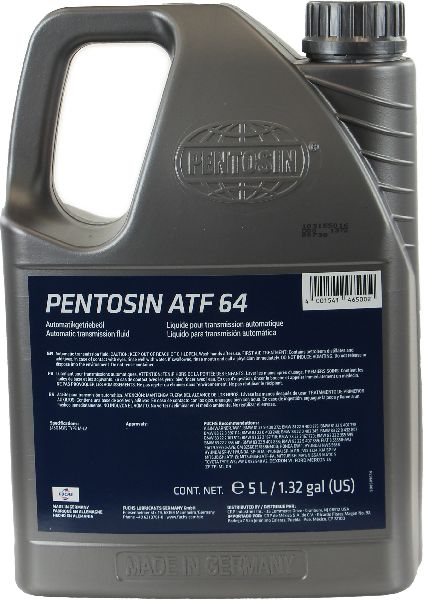
Aftermarket price range: $250-$500 (often remanufactured with a core charge). - Automatic Transmission Fluid — Required for any repair that involves opening the transmission, such as replacing a solenoid or the TEHCM. Must be DEXRON-VI specification.
Trusted brands: ACDelco DEXRON-VI, Valvoline DEXRON-VI/Mercon LV, Castrol Transmax Full Synthetic Multi-Vehicle
OEM price range: $10-$15 per quart
Aftermarket price range: $8-$12 per quart
Related Codes That Often Appear With This One
- P0741 — P0741 indicates 'TCC System Stuck Off,' which is a performance-related code, whereas P0740 is an electrical circuit code. They often appear together because an electrical fault (P0740) can prevent the clutch from engaging, leading to the 'stuck off' condition (P0741).
- P0753, P0758, P0785, P1860 — A set of multiple transmission solenoid circuit codes appearing at once, including P0740, can point to a faulty ignition switch on some GM vehicles. The switch provides power to the transmission solenoids, and its failure can cut power to all of them simultaneously.
Technical Service Bulletins (TSBs) & Recalls
- 16-NA-175: Addresses shake or shudder conditions related to the torque converter, which can help differentiate a mechanical shudder from the P0740 electrical fault.
Platform-Specific Known Issues
- A known issue on some GM vehicles involves a faulty ignition switch causing a loss of power to the transmission solenoids, which can trigger P0740 along with other solenoid codes (P0753, P0758, P0785, P1860).
Mechanic-Grade Diagnostic Values
- TCC Pressure Control (PC) Solenoid Resistance — expected: 3-5 ohms at 70°F (21°C). Failure: A reading of 0 ohms (short) or infinite/O.L. (open) indicates a failed solenoid.
- Shift Solenoid Resistance — expected: 16-20 ohms at 70°F (21°C). Failure: Readings outside this range suggest a faulty shift solenoid, which can sometimes be related to overall TEHCM health.
- TCM Voltage Check (Control Side) — expected: Should show battery voltage when the solenoid is commanded OFF and 0 volts when commanded ON (grounded by the TCM).. Failure: If the voltage does not change when commanded, it points to a problem with the TCM driver or the wiring.
Scan Tool Commands That Help
- GDS2 / Tech 2 (or equivalent professional scanner): Solenoid Cleaning Procedure — This automated process can be run before any disassembly. It cycles the solenoids while the system is pressurized to dislodge small debris that may be causing a solenoid to stick. It should be performed before diagnosing a potential hardware failure.
- GDS2 / Tech 2 (or equivalent professional scanner): Solenoid ON/OFF Cycling — Used to manually command the TCC solenoid on and off while listening for an audible click or monitoring pressure changes with gauges. If the solenoid doesn't respond, it confirms a fault in the solenoid or its circuit.
- ACDelco TIS2Web with a J2534 Interface Tool: TEHCM Programming and Setup — This is required after installing a new or remanufactured TEHCM. The module must be flashed with the correct calibration for the vehicle's VIN to ensure proper operation and communication.
Wiring & Ground Locations
- Transmission Wiring Harness Connector — The main electrical connector on the outside of the transmission case.. This is the primary point for testing the electrical circuit from outside the transmission. A wiring diagram is needed to identify the specific pins for the TCC solenoid circuit to test for continuity and shorts to ground between this connector and the TCM.
- VCM/TCM Connector — The electrical connector at the Vehicle Control Module (VCM) or Transmission Control Module (TCM). In the Terrain, the TCM is inside the transmission as part of the TEHCM.. A loose or pushed-back pin at the main vehicle computer connector can cause an open circuit, triggering a P0740 code even if all transmission components are good. This is a rare but critical check before condemning internal parts.
Real Owner Repair Stories
- GM-Trucks.com user 'TUFFTRUX' (2000 GMC Savana 2500 w/ 5.0L V8 and 4L60E (Note: Different transmission, but the electrical diagnostic principle is identical and cited in the context of P0740)) — Check Engine Light with code P0740. Van seemed to run and shift fine otherwise.
❌ Tried (didn't work) Took it to a transmission shop that verified the code but could not find the problem.
✅ What actually fixed it The owner had previously replaced the van's VCM (Vehicle Control Module). The TCC solenoid wire/pin at the VCM connector had become loose and was not making a solid connection. Pushing the pin back into the plug securely and ensuring a tight connection resolved the P0740 code.
OEM Part Supersession History
24256523→24287421, 24256797, and others.— GM updated the TEHCM hardware and software over the years to improve reliability and address common failures.
Heads up: Interchange Part Numbers include 24252423, 24252429, 24253556, 24256254, 24258562, 24260027. It is critical to use a TEHCM that is correct for the specific model year (Gen 1 vs. Gen 2) and to have it programmed to the vehicle's VIN.
Model Year Variations Within This Range
- 2012-2017: Starting in the 2012 model year, GM rolled out the "Gen 2" version of the 6T40/6T45 transmission. These updated units have significant changes to the control system, including a TEHCM that does not use pressure switches. Gen 1 (pre-2012) and Gen 2 TEHCMs and their internal components are generally not interchangeable.
- 2010 and earlier (in other GM models): A running change was made during the 2010 model year to the 3-5-Reverse/4-5-6 clutch drum and snap rings to improve snap ring retention. While this doesn't directly cause P0740, it's an example of internal design changes within the same transmission family.
Diagnostic Flowchart
Used vs. New Parts: Buying Guide for This Vehicle
When a used part is the smart pick: A used TEHCM assembly from a low-mileage donor vehicle can be a cost-effective option, but ONLY if you have access to a professional who can reprogram it to your vehicle's VIN. Buying just the individual TCC solenoid used is generally not recommended due to the high labor cost to access it and the unknown remaining lifespan.
Donor-vehicle mileage cap: roughly under 80000 miles for the part to have meaningful remaining life.
What to inspect on the donor part:
- Verify the donor vehicle's model year to ensure compatibility (Gen 1 vs. Gen 2).
- Ask for the donor vehicle's VIN to help with programming and compatibility checks.
- Inspect the transmission fluid from the donor car if possible. Dark, burnt, or metallic fluid is a major red flag.
- Check the electrical connector pins on the TEHCM for any corrosion or damage.
OEM-only on this vehicle (don't cheap out):
- Transmission Control Module (TEHCM): While remanufactured units from reputable brands like Dorman exist, a new ACDelco (GM OE) unit is the safest bet for avoiding programming headaches and ensuring you have the latest hardware/software revisions.
Aftermarket brands forum-validated for this vehicle:
- ACDelco (OEM for new parts)
- Dorman (Remanufactured TEHCMs)
- Rostra (Solenoids)
Brands owners have reported issues with on this vehicle:
- Unbranded, no-name TEHCMs or solenoids from online marketplaces can be risky due to a lack of quality control and a high failure rate after installation.
Real Owner Stories
Aggregated from forums and TSBs cited above. Mileages and costs reflect what owners reported in those sources.
2013 GMC Terrain
Symptoms: Check Engine Light was on with P0740, but also a host of other solenoid codes like P0753 and P0758.
What fixed it: The root cause was a faulty ignition switch that was cutting power to the transmission solenoid circuit.
Source hint: GM-Trucks.com forum thread titled 'P0740 code TCC Circuit Malfuntion'
2014 Chevrolet Equinox
Symptoms: Vehicle had Check Engine Light on with codes P0740, P0741, and P0742 stored.
What fixed it: The problem was a common failure of the TCC (Torque Converter Clutch) solenoid, which had to be replaced.
Source hint: YouTube video from Auto Repair Guys titled 'CODE P0740 P0741 P0742 TORQUE CONVERTER TRANSMISSION MALIBU EQUINOX SONIC CRUZE GMC TERRAIN BUICK'
Related OBD-II Codes
Frequently Asked Questions
My Terrain shudders at highway speeds. Is this related to P0740, and what does it feel like?
I have a P0740 code, but my scanner also shows P0753 and P0758. Does this point to a specific problem on my Terrain?
What is the most likely part to fail and cause a P0740 code on my 2010-2017 GMC Terrain?
Can I just replace the Transmission Control Module (TCM) by itself to fix P0740?
If I'm changing the transmission fluid to try and fix P0740, what type of fluid does my GMC Terrain need?
I saw TSB 16-NA-175 mentioned. Does this bulletin provide the fix for my P0740 code?
I have a 2015 Chevy Equinox with P0740. Is the repair information for the GMC Terrain applicable to my car?
Helpful Videos
We Have This Part in Stock

The information in this article is provided for general reference and educational purposes only. Vehicle specifications, procedures, and part compatibility can vary by production date, trim level, and region. Always consult your vehicle's factory service manual and verify part numbers before purchasing or performing repairs. Safety-critical components such as airbags, seat belts, and braking systems should be installed by a qualified professional.
- GMC Terrain:
- 🧭 Diagnostic Flowchart
- 🎬 Helpful Videos
- 🛍️ Shop This Part
- What's Unique About the 2010-2017 GMC Terrain
- Symptoms You May Notice
- Most Likely Causes
- Rare But Worth Checking
- Diagnosis Steps
- Parts You'll Likely Need
- Related Codes That Often Appear With This One
- Technical Service Bulletins (TSBs) & Recalls
- Platform-Specific Known Issues
- Mechanic-Grade Diagnostic Values
- Scan Tool Commands That Help
- Wiring & Ground Locations
- Real Owner Repair Stories
- OEM Part Supersession History
- Model Year Variations Within This Range
- Used vs. New Parts: Buying Guide for This Vehicle
- Real Owner Stories
- 2013 GMC Terrain
- 2014 Chevrolet Equinox
- Related OBD-II Codes
- Frequently Asked Questions
- 🎟️ Get 5% Off