

P0740 on 2007-2012 Hyundai Santa Fe: Torque Converter Clutch Circuit Fixes
On a 2007-2012 Santa Fe, P0740 is most often caused by a failed Torque Converter Clutch (TCC) solenoid inside the transmission. Before major repairs, always check the transmission fluid level and condition. Replacing the solenoid is a moderate DIY job requiring dropping the oil pan, with parts costing around $50-$150. The specific solenoid part number is typically 46313-39051.
- P0740 on your Santa Fe means there's an electrical fault in the torque converter clutch circuit, which hurts fuel economy.
- The most likely and cost-effective fix is replacing the TCC solenoid inside the transmission oil pan, not the whole transmission.
- Always start your diagnosis by checking the transmission fluid level and condition. Use only Hyundai SP-III specification fluid.
- This repair is DIY-possible for those comfortable with dropping the transmission pan, but professional service is recommended to ensure proper diagnosis.
- Do not ignore this code, as the extra heat generated can cause more expensive transmission damage over time.
What's Unique About the 2007-2012 Hyundai Santa Fe
For this generation of Santa Fe (primarily using the A5HF1 5-speed automatic transmission), the official Hyundai TSB (09-AT-018) for code P0740 presents a confusing and drastic repair path, suggesting a full transaxle replacement if the code reappears after being cleared. However, real-world experience from mechanics and owners shows that the issue is almost always a much simpler and cheaper component failure. The most common culprit is the TCC solenoid itself (Part No. 46313-39051), followed by the internal wiring harness, both of which are accessible after removing the transmission oil pan. This contradicts the TSB's expensive recommendation and points to a more targeted, affordable repair.
Symptoms You May Notice
- Check Engine Light is on
- Reduced fuel economy
- Engine RPM is higher than normal at highway speeds
- Shuddering or vibration at cruising speeds
- Harsh or delayed shifts
- Transmission may feel like it is slipping
- In some cases, the transmission may enter 'limp mode', stuck in 3rd gear
- Stalling when coming to a stop
- Replacing the entire transmission. While this is what a TSB suggests as a late-stage fix, it is rarely the necessary first step. The issue is almost always a much cheaper component like the TCC solenoid.
- Replacing the torque converter. While a faulty converter can cause similar symptoms, the P0740 code specifically points to an electrical circuit issue, which should be diagnosed first.
Most Likely Causes
- Low or Dirty Transmission Fluid 🔴 High Probability → Shop Transmission Assembly Fluid is the hydraulic medium that allows solenoids to function. Low levels or fluid contaminated with clutch material can cause erratic operation or clog solenoid passages, triggering a circuit code.
How to confirm: Check the transmission fluid dipstick (if equipped) with the engine warm and running in Neutral. Note the fluid's color and smell. It should be bright red and not have a burnt odor. Dark or burnt fluid indicates a problem.
Typical fix: Perform a transmission fluid drain and fill, or a full fluid exchange. Use only fluid that meets the Hyundai SP-III specification. Hyundai TSB 20-AT-010H warns that using non-specified fluid can cause shift quality issues.
Est. part cost: $60-$120 - Failed Torque Converter Clutch (TCC) Solenoid 🔴 High Probability → Shop Automatic Transmission Torque Converter The TCC solenoid (Hyundai Part #46313-39051) is a known high-failure item. As an electro-mechanical part constantly subjected to heat cycles, its internal coil windings can short out or break, creating the 'circuit malfunction' detected by the TCM.
How to confirm: After removing the transmission pan, the solenoid can be tested with a multimeter. Check its resistance against the manufacturer's specification. For this type of solenoid, the resistance should typically be between 12-28 Ohms. An out-of-spec reading (including open 'OL' or short '0') confirms failure.
Typical fix: Replace the faulty TCC solenoid. The solenoid is located on the valve body inside the transmission.
Est. part cost: $50-$150 - Damaged Internal Wiring Harness 🟡 Medium Probability → Shop Transmission Wiring Harness The wiring harness inside the transmission is constantly submerged in hot fluid, which can make the insulation brittle and prone to cracking over time, leading to shorts. This is a known issue, especially if multiple solenoid codes are present.
How to confirm: Visually inspect the wiring harness connected to the solenoids when the transmission pan is removed. Look for cracked insulation, bare wires, or damage to the connectors.
Typical fix: Replace the internal transmission wiring harness. The OEM part number is often 46307-39050.
Est. part cost: $70-$150 - Damaged External Wiring or Connectors ⚪ Low Probability
How to confirm: Inspect the main wiring harness connector at the transmission case for corrosion, pushed-out pins, or physical damage. Trace the wiring back toward the TCM as much as possible.
Typical fix: Repair the damaged section of wiring or clean/replace the connector.
Est. part cost: $10-$100
Rare But Worth Checking
- Faulty Transmission Control Module (TCM): → Shop Transmission Assembly While rare, the TCM itself can fail. This should only be considered after all solenoids and wiring have been tested and confirmed to be good. A Hyundai TSB does mention replacing the TCM as a final step.
- Internal Mechanical Failure: A clogged passage in the valve body or a failed torque converter can also trigger this code, though it's less common than an electrical fault. This is often accompanied by other symptoms like metal shavings in the pan. The TSB's recommendation to replace the entire transaxle points to this as a possible, though worst-case, scenario.
Diagnosis Steps
- Check and verify the transmission fluid level and condition. Ensure it is full and not burnt. Use only Hyundai SP-III compatible fluid.
- Scan for any other DTCs. Multiple solenoid codes point towards a wiring or TCM issue.
- Inspect the external transmission wiring harness and connectors for any visible damage, corrosion, or loose connections.
- If external checks are clear, drain the transmission fluid and remove the oil pan to access the internal components.
- Locate the Torque Converter Clutch (TCC) solenoid on the valve body.
- Disconnect the solenoid and test its resistance with a multimeter. Compare the reading to the manufacturer's specification, which is typically 12-28 Ohms. A reading of infinity (open) or zero (short) indicates a bad solenoid.
- While the pan is off, carefully inspect the internal wiring harness for any signs of cracking, brittleness, or damage. Pay close attention to the connector ends.
- If the solenoid or harness is faulty, replace the part, install a new pan gasket, and refill with the correct type and amount of transmission fluid.
- If the solenoid and wiring test good, the issue may be with the TCM or a mechanical fault in the valve body or torque converter, which typically requires professional diagnosis.
Parts You'll Likely Need
- Torque Converter Clutch (TCC) Solenoid
(OEM #46313-39051)— This solenoid is the most common failure point for the P0740 code. It is an electro-mechanical part that wears out, causing an open or short in the circuit.
Trusted brands: Hyundai (OEM), Rostra, Standard Motor Products, DACCO
OEM price range: $80-$150
Aftermarket price range: $50-$100 - Automatic Transmission Fluid (Hyundai SP-III) — The transmission must be drained to access the solenoid. It must be refilled with the correct fluid type to ensure proper operation. Using the wrong fluid can cause damage.
Trusted brands: Hyundai (OEM), Idemitsu, ENEOS, Valvoline MaxLife ATF (meets SP-III spec)
OEM price range: $15-$25 per quart
Aftermarket price range: $10-$18 per quart - Transmission Oil Pan Gasket
(OEM #45285-3B700 (example, varies by transmission))— The pan gasket should be replaced anytime the transmission pan is removed to prevent leaks.
Trusted brands: Hyundai (OEM), Fel-Pro, ATP
OEM price range: $20-$40
Aftermarket price range: $10-$25 - Internal Transmission Wire Harness
(OEM #46307-39050)— This harness is a known weak point and often replaced as a preventative measure or if multiple solenoid codes are present.
Trusted brands: Hyundai (OEM)
OEM price range: $70-$150
Aftermarket price range: $50-$100
Related Codes That Often Appear With This One
- P0741 — P0741 indicates 'TCC Performance or Stuck Off'. While P0740 is an electrical circuit code, P0741 is a performance code. They can appear together if an electrical fault (P0740) is causing the performance issue (P0741).
- P0750 - P0770 — These are codes for other shift solenoids (e.g., P0750, P0755, P0760). If multiple solenoid codes appear at once, it strongly suggests a common problem like a bad ground, a faulty internal wiring harness (Part #46307-39050), or a failing TCM.
Technical Service Bulletins (TSBs) & Recalls
- TSB-09-AT-018: HYUNDAI: ATA SOLENOID DIAGNOSTIC TROUBLE CODES P0740, P0741, P0742, P0743, P0746, P0748, P0750, P0755, P0760, P0765, P0770.
Platform-Specific Known Issues
- A Hyundai Technical Service Bulletin (TSB-09-AT-018) exists for this code, along with a broader solenoid diagno
Mechanic-Grade Diagnostic Values
- Torque Converter Clutch (TCC) Solenoid Resistance — expected: 12 - 28 Ohms. Failure: A reading of infinity (OL) indicates an open circuit, while a reading near zero indicates a shorted solenoid.
- TCC Solenoid Duty Cycle (via Scan Tool) — expected: Varies from ~30% (unlocked) to ~85% (locked) during operation.. Failure: If the scan tool shows a 100% duty cycle command but TCC slip RPM does not decrease, it indicates a mechanical or hydraulic lock-up failure. If the circuit shows no response to commands, it indicates an electrical fault.
Scan Tool Commands That Help
- Hyundai GDS (Global Diagnostic System) or equivalent advanced scan tool: Actuation Test / Bidirectional Control — This function allows a technician to command the TCC solenoid on and off while the vehicle is stationary. An audible click should be heard from the transmission pan area. The absence of a click strongly suggests a failed solenoid or an open circuit, helping to confirm the diagnosis before removing the transmission pan.
- Hyundai GDS (Global Diagnostic System): Reset Adaptive Values — After replacing transmission components like solenoids or performing a fluid service, it is recommended to reset the transmission's adaptive learning values. This forces the TCM to relearn shift pressures and clutch application points, which can prevent harsh shifting or other drivability issues after the repair.
Wiring & Ground Locations
- ATM Solenoid Connector — On the top or side of the transaxle case, where the main vehicle harness connects to the transmission's internal components.. This is the primary external connector to inspect for corrosion, pushed-out pins, or damage. A poor connection here can cause an open or short in the TCC solenoid circuit, triggering P0740.
- G39 / G52 — Located at the left rear of the engine compartment.. These are primary ground points for the engine and transmission electronics. A corroded or loose ground here can cause erratic voltage and false codes from the TCM.
- ATM Relay — Located in the under-hood fuse/relay box.. This relay supplies the main power to the transmission control circuits, including the solenoids. A failing relay can cut power intermittently or completely, leading to solenoid circuit codes.
OEM Part Supersession History
46313-39050→46313-39051— Standard part revision, likely for improved durability or material changes.
Heads up: The parts are interchangeable; 46313-39051 is the correct service replacement for the original.
Model Year Variations Within This Range
- 2007-2009: These years primarily used the 5-speed A5HF1 automatic transmission with the 2.7L and 3.3L V6 engines. The P0740 fault on these is almost always linked to the 46313-39051 solenoid.
- 2010-2012: The 2010 model year refresh introduced the 2.4L I4 and 3.5L V6 engines, paired with new 6-speed automatic transmissions (A6MF1/A6LF2). While P0740 can still occur, the TCC solenoid part number and location may differ from the earlier 5-speed models. Diagnosis remains similar, but verifying the correct part for the specific transmission is critical.
Diagnostic Flowchart
Other Known Issues on This Vehicle
Issues unrelated to this code that are worth knowing about as an owner of this generation:
- Faulty Fuel Level Sensor 🟠 Medium — Very common around 80,000-100,000 miles. The fuel gauge becomes erratic or reads empty, often triggering a Check Engine Light (P0463). (Ref: No recall, but a widely documented problem. Repair involves replacing one or both sending units inside the fuel tank.)
- Valve Cover Gasket Oil Leak 🟠 Medium — Common on V6 models (especially 3.3L). The front gasket leaks oil directly onto the alternator, causing alternator failure. (Ref: No recall, but a well-known pattern failure. Repair involves replacing the gasket and often the oil-soaked alternator.)
- Failing Clock Spring 🔴 High — Widespread issue leading to loss of steering wheel controls and a disabled driver's airbag (airbag light on). (Ref: Hyundai extended the warranty for the clock spring to 15 years/unlimited miles under TSB 21-BE-003H-1.)
- Malfunctioning Brake Light Switch 🔴 High — Affects a wide range of Hyundai models from this era. Can cause brake lights to fail or stay on, and may prevent the vehicle from shifting out of Park. (Ref: Subject of NHTSA Recall Campaign 09V122000.)
- Underbody Corrosion in Salt Belt States 🔴 High — Affects vehicles operated in states with heavy road salt usage, leading to premature rust of subframes and suspension components. (Ref: Hyundai initiated a service campaign (Campaign T3G) to apply rust-proofing materials to affected vehicles.)
Used vs. New Parts: Buying Guide for This Vehicle
When a used part is the smart pick: A used valve body assembly from a low-mileage donor vehicle can be a cost-effective option if the original is confirmed to be cracked or damaged, as a new valve body is extremely expensive. Buying individual used solenoids is generally not recommended due to their high failure rate and unknown history.
Donor-vehicle mileage cap: roughly under 75000 miles for the part to have meaningful remaining life.
What to inspect on the donor part:
- Verify the donor vehicle's mileage.
- Ask for photos of the transmission fluid color from the donor car, if possible. Avoid parts from vehicles with dark or burnt fluid.
- Inspect the electrical connectors on the part for any corrosion, cracks, or bent pins before purchasing.
OEM-only on this vehicle (don't cheap out):
- Internal Transmission Wire Harness: Aftermarket versions are rare and may have quality control issues. Given the labor to access it, using the OEM harness (46307-39050) is the safest choice.
Aftermarket brands forum-validated for this vehicle:
- Rostra
- Standard Motor Products (SMP)
- DACCO
Brands owners have reported issues with on this vehicle:
- Unbranded, no-name solenoids from online marketplaces often have high defect rates and may not meet OEM resistance specifications, causing the code to return immediately.
Real Owner Stories
Aggregated from forums and TSBs cited above. Mileages and costs reflect what owners reported in those sources.
2007-2012 Hyundai Santa Fe
Symptoms: Transmission problems including shiftability issues and common automatic transmission complaints.
What fixed it: Replacing transmission components such as solenoids as identified in common failure patterns for this generation.
Source hint: 1A Auto - Top 5 Problems Hyundai Santa Fe 2nd Generation 2007-13
2007-2012 Hyundai Santa Fe
Symptoms: P0740 code triggered; circuit malfunction detected by the TCM.
What fixed it: Replacing the TCC solenoid (46313-39051) and sometimes the internal wiring harness.
Source hint: Hyundai-Forums.com - Multiple P0740 Threads
Related OBD-II Codes
Frequently Asked Questions
Is there a Technical Service Bulletin for P0740 on my Hyundai Santa Fe?
What specific transmission fluid should I use to avoid shift quality issues and P0740 codes?
Can I replace the TCC solenoid myself, and what is the part number?
What is the correct resistance for the TCC solenoid on a 2007-2012 Santa Fe?
Could my Santa Fe's P0740 code be caused by a wiring issue instead of a mechanical failure?
Is the P0740 code related to the recall for the brake light switch?
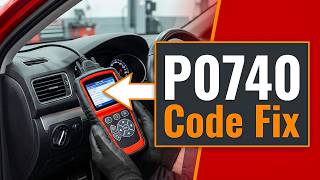
Helpful Videos
We Have This Part in Stock


The information in this article is provided for general reference and educational purposes only. Vehicle specifications, procedures, and part compatibility can vary by production date, trim level, and region. Always consult your vehicle's factory service manual and verify part numbers before purchasing or performing repairs. Safety-critical components such as airbags, seat belts, and braking systems should be installed by a qualified professional.
- Hyundai Santa Fe:
- 🧭 Diagnostic Flowchart
- 🎬 Helpful Videos
- 🛍️ Shop This Part
- What's Unique About the 2007-2012 Hyundai Santa Fe
- Symptoms You May Notice
- Most Likely Causes
- Rare But Worth Checking
- Diagnosis Steps
- Parts You'll Likely Need
- Related Codes That Often Appear With This One
- Technical Service Bulletins (TSBs) & Recalls
- Platform-Specific Known Issues
- Mechanic-Grade Diagnostic Values
- Scan Tool Commands That Help
- Wiring & Ground Locations
- OEM Part Supersession History
- Model Year Variations Within This Range
- Other Known Issues on This Vehicle
- Used vs. New Parts: Buying Guide for This Vehicle
- Real Owner Stories
- 2007-2012 Hyundai Santa Fe
- 2007-2012 Hyundai Santa Fe
- Related OBD-II Codes
- Frequently Asked Questions
- 🎟️ Get 5% Off