

P0767 on 2010-2015 Hyundai Sonata 2.4L: Shift Solenoid 'D' Stuck On Causes and Fixes
On a 2010-2015 Hyundai Sonata with the A6MF1 6-speed automatic transmission, code P0767 almost always points to a failed shift solenoid 'D' or a faulty internal transmission wiring harness. The most common fix, recommended by Hyundai in TSB 19-AT-015H, is to replace both the solenoid and the harness inside the transmission pan. This is a known issue, and the repair can cost between $400 and $750 at a shop.
- P0767 on a 2010-2015 Sonata is a serious code indicating a 'Stuck On' Shift Solenoid 'D'.
- The most common cause is a failed solenoid and/or the internal transmission wiring harness, a known issue addressed by Hyundai TSB 19-AT-015H.
- Do not ignore this code. Driving in 'limp mode' can cause further, more expensive transmission damage.
- The recommended repair is to replace both the solenoid and the internal wiring harness at the same time.
- Always check your transmission fluid level and condition first, as low or dirty fluid can cause shifting problems.
What's Unique About the 2010-2015 Hyundai Sonata
The 2010-2015 Hyundai Sonata (primarily the 'YF' generation from 2011-2014) with the 2.4L engine uses a 6-speed automatic transmission (A6MF1). Hyundai has issued a Technical Service Bulletin (TSB 19-AT-015H) that covers a range of solenoid-related trouble codes (P0741, P0743, P0748, P0753, P0758, P0763, P0768, P0773 & P2709), including those for Shift Solenoid 'D'. The TSB acknowledges issues with these solenoids and the internal wiring harness, specifically for the 'Generation 1' valve body which has 8 solenoids. This indicates that it's a recognized problem, and the official repair procedure involves replacing both the specific solenoid and the internal harness, not just the solenoid itself.
Generation note: The 2010-2015 year range covers the end of the fifth generation (NF, 2010) and the majority of the sixth generation (YF, 2011-2014) Sonata. The 2015 model year is part of the seventh generation (LF). However, the most relevant TSB (19-AT-015H) specifically covers the YF and LF generations, indicating the issue and fix are common across these models equipped with the 6-speed A6MF1 automatic transmission.
Symptoms You May Notice
- Check Engine Light is on
- Transmission gets stuck in one gear (limp mode)
- Harsh, erratic, or delayed shifting
- Vehicle feels sluggish or has poor acceleration
- Increased fuel consumption
- Transmission may feel like it's slipping
- Clunking or grinding noise from the transmission
- Replacing only the shift solenoid without replacing 🎬 Watch this before replacing your shift solenoid the internal wiring harness. The TSB recommends replacing both, and the harness is a frequent point of failure.
- Condemning the entire transmission. While the issue is internal, it's often limited to relatively inexpensive and accessible components on the valve body.
- Using the incorrect type of transmission fluid. The A6MF1 transmission is sensitive to fluid type, and using a non-specified fluid can cause shifting problems and damage.
Most Likely Causes
- Faulty Shift Solenoid 'D' 🔴 High Probability → Shop Transmission Valve Body This is a known issue acknowledged by Hyundai in TSB 19-AT-015H for this vehicle generation. The solenoids are electro-mechanical and can fail internally from an electrical short or mechanical sticking over time.
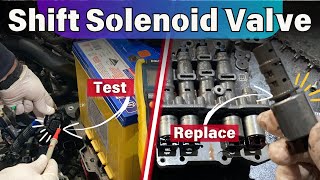
How to confirm: After accessing the solenoid inside the transmission pan, a technician can test its resistance with a multimeter. The linear solenoids in the A6MF1 should have a resistance of about 5.1 Ohms. An open or shorted reading confirms failure. 🎬 Watch: How to clean and test A6MF1 solenoids
Typical fix: Replace the faulty shift solenoid. It is located on the valve body inside the transmission. Per the TSB, it should be replaced along with the harness.
Est. part cost: $40-$80 - Faulty Internal Transmission Wiring Harness 🔴 High Probability → Shop Transmission Assembly The TSB for this issue explicitly recommends replacing the harness along with the solenoid. The harness is located inside the transmission where it is exposed to constant heat and fluid, which can cause the plastic and wires to become brittle and fail over time. Later versions of the harness integrate the temperature sensor.
How to confirm: Visual inspection of the harness after removing the transmission pan may reveal brittle, cracked, or broken wires. A continuity test can also be performed on each wire.
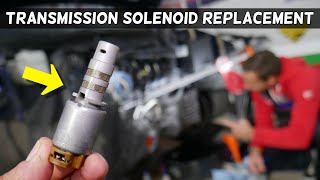
Typical fix: Replace the internal wiring harness (often called the valve body harness). This is typically done at the same time as the solenoid replacement. The OEM part number is often 46307-3B650 🎬 See this step-by-step solenoid replacement walkthrough or a similar variant.
Est. part cost: $70-$120 - Low or Dirty Transmission Fluid 🟡 Medium Probability → Shop Transmission Assembly Neglected maintenance can lead to fluid breakdown and contamination, which can clog the small passages in the valve body and solenoids, causing them to stick. This can also cause excess heat, accelerating wear on electrical components.
How to confirm: Check the transmission fluid level and condition. The fluid should be at the correct level, pinkish-red, and not smell burnt or contain excessive debris. This transmission does not have a traditional dipstick; level checking is done via a fill plug on the side of the case.
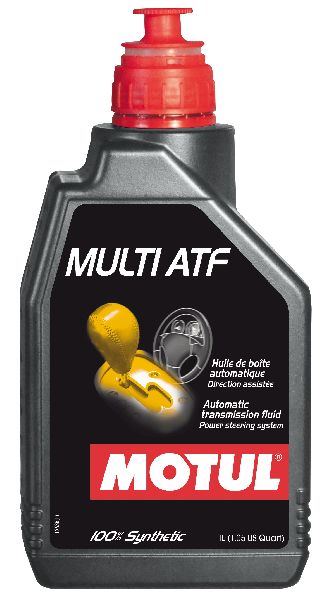
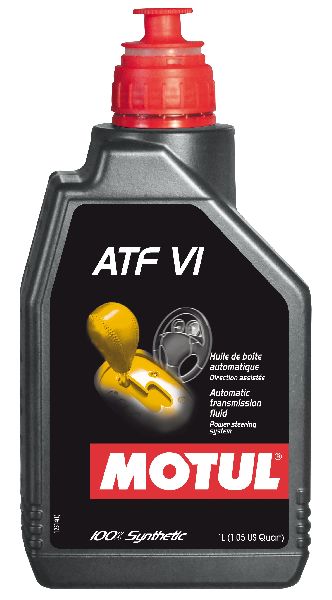
Typical fix: Perform a transmission fluid drain-and-fill. A full flush is generally not recommended by Hyundai. Use only Hyundai-specified SP-IV ATF.
Est. part cost: $100-$200 for fluid and filter
Rare But Worth Checking
- Faulty Transmission Control Module (TCM): → Shop Transmission Assembly This is rare and should only be considered after all other possibilities, including solenoids, wiring, and fluid, have been thoroughly ruled out. The TSB suggests this as a final step if the code returns after replacing the solenoid and harness. A faulty driver circuit in the TCM can keep the solenoid energized.
- Clogged Valve Body Passages: → Shop Transmission Valve Body Sludge and debris from old fluid can build up and restrict flow within the valve body itself, causing pressure issues that mimic a stuck solenoid. This often requires a valve body replacement or professional cleaning.
Diagnosis Steps
- Check the transmission fluid level and condition. If low, top it off and check for leaks. If dirty or burnt, a fluid and filter change is a good first step.
- Use an advanced scan tool to check for other transmission-related codes and to monitor the live data of the shift solenoids if possible.
- Inspect the external transmission wiring harness and connectors for any visible damage, corrosion, or loose connections.
- If external checks are inconclusive, drain the transmission fluid and remove the transmission oil pan to access the valve body.
- Visually inspect the internal wiring harness for signs of damage, such as brittle or cracked wires. Pay close attention to the connectors at the solenoids.
- Locate Shift Solenoid 'D' on the valve body. Test the solenoid's resistance with a multimeter. Compare the reading to the manufacturer's specification (approx. 5.1 Ohms for linear solenoids). An out-of-spec reading confirms a bad solenoid.
- Follow Hyundai TSB 19-AT-015H: Replace the faulty solenoid and the internal wiring harness.
- Reassemble the transmission with a new pan gasket and refill with the correct type of Hyundai-specified automatic transmission fluid (ATF SP-IV).
- Clear the trouble codes and perform a test drive, ensuring the transmission shifts smoothly through all gears.
- If the code returns, further diagnosis of the external harness or the TCM may be required.
Parts You'll Likely Need
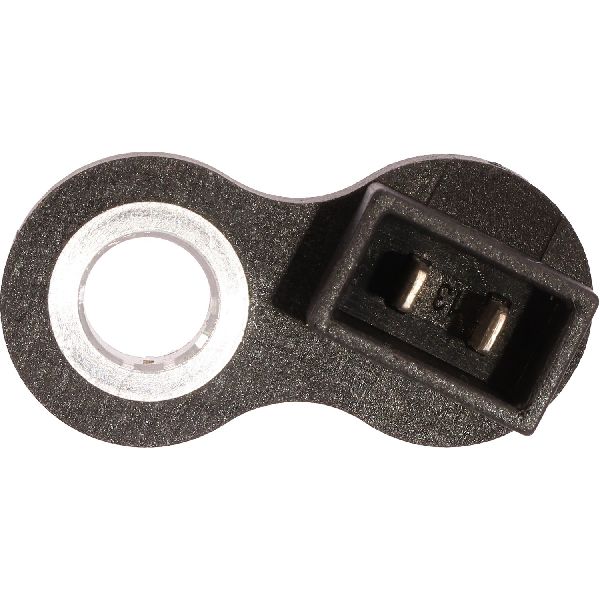
- Shift Solenoid 'D'
(OEM #46313-3B030 (Verify by VIN))— This is the component identified by the trouble code and is a common failure point.
Trusted brands: Hyundai OE, Mopar, Rostra
OEM price range: $60-$100
Aftermarket price range: $30-$60 - Valve Body Wiring Harness
(OEM #46307-3B650 (Verify by VIN))— Hyundai's TSB recommends replacing this part along with the solenoid, as it is a known point of failure due to heat and fluid exposure.
Trusted brands: Hyundai OE
OEM price range: $70-$120
Aftermarket price range: $50-$90 - Automatic Transmission Fluid
(OEM #Hyundai Genuine ATF SP-IV)— The transmission must be drained to perform the repair, requiring replacement fluid. Use only Hyundai-specified fluid (SP-IV) to prevent shifting issues.
Trusted brands: Hyundai OE, Idemitsu TLS-LV (SP-IV compatible), ENEOS Model T (SP-IV compatible)
OEM price range: $15-$25 per quart
Aftermarket price range: $10-$18 per quart - Transmission Oil Pan Gasket
(OEM #45285-3B010 (Verify by VIN))— The pan must be removed, and the gasket should always be replaced to prevent leaks.
Trusted brands: Hyundai OE, Fel-Pro, Mahle
OEM price range: $20-$40
Aftermarket price range: $15-$30
Related Codes That Often Appear With This One
- P0768 — This is a related code for Shift Solenoid D, often with a more specific electrical definition. Hyundai groups these codes together in TSB 19-AT-015H.
- P0753, P0758, P0763 — These are codes for other shift solenoids (A, B, C). If multiple solenoid codes appear together, it can point more strongly to a failing internal harness, a shared power/ground issue, or a problem with the TCM.
- P0741 — This code for the Torque Converter Clutch solenoid is also included in the same TSB (19-AT-015H) and often shares the same root cause of a bad harness or solenoid block.
Technical Service Bulletins (TSBs) & Recalls
- 19-AT-015H: AUTOMATIC TRANSAXLE SOLENOID DTC P0741, P0743, P0748, P0753, P0758, P0763, P0768, P0773 & P2709. This TSB corroborates that solenoid and harness issues are a recognized problem on the YF/LF Sonata and provides the official repair procedure.
Platform-Specific Known Issues
- A user on hyundai-forums.com with a 2011 Sonata 2.4L reported getting P0767 and other solenoid codes. The fix was replacing the internal wiring harness (part #46307-3B650) which had become brittle and cracked. The repair resolved all codes and shifting issues.
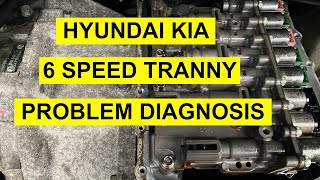
- A YouTube video by 'World Mechanics' demonstrates the solenoid replacement process on a 2013 Kia Optima, which uses the same A6MF1 transmission. The video highlights the importance of carefully removing the valve body cover and disconnecting the harness connectors without breaking them.
- TSB 19-AT-015H is the key document for this repair. It covers a wide range of Hyundai models with the 6-speed automatic and explicitly lists the solenoid codes that should be addressed by replacing both the solenoid and the harness.
Mechanic-Grade Diagnostic Values
- Shift Solenoid 'D' (Linear Type) Resistance — expected: 5.1 Ohms. Failure: A reading that is significantly higher (open circuit) or lower (short circuit) than 5.1 Ohms indicates a failed solenoid coil.
- On/Off Type Solenoid Resistance (for comparison) — expected: 10-11 Ohms. Failure: Not directly applicable to Shift Solenoid 'D', but useful for identifying other solenoids on the valve body.
- Valve Body Bolt Torque — expected: 7.2-8.7 lb-ft. Failure: Improper torque can lead to leaks or damage to the valve body.
Scan Tool Commands That Help
- Hyundai GDS (Global Diagnostic System): Actuation Test — To manually command Shift Solenoid 'D' on and off with the pan removed. A technician can listen for an audible 'click' to verify the solenoid is mechanically responding to the electrical command. This helps isolate an electrical fault from a mechanical (stuck) one.
- Hyundai GDS (Global Diagnostic System): Resetting Adaptive Values — This is a critical step after replacing the valve body, solenoids, or rebuilding the transmission. The TCM learns and adapts to the wear of components over time. This function erases the old learned values, forcing the TCM to relearn the shift points and clutch apply pressures with the new parts, ensuring smooth shifting.
Wiring & Ground Locations
- Main Chassis Ground Strap — On the driver's side frame rail in the engine compartment. The main negative battery cable connects here.. On 2011 Sonatas, there is a known issue where this ground strap is bolted to a painted surface from the factory, leading to poor contact over time. A weak ground can cause unpredictable behavior in various electronic modules, including the TCM, potentially leading to erratic solenoid operation or false codes. The fix is to unbolt the strap, grind the paint off the chassis to expose bare metal, and securely re-attach the ground.
OEM Part Supersession History
46307-3B610, 46307-3B620→46307-3B650— The original harness design had a separate transmission fluid temperature sensor that would disconnect from the harness. The updated design (46307-3B650) integrates the temperature sensor directly into the harness for improved reliability.
Heads up: While the old harness may physically connect, it is considered failure-prone. It is highly recommended to always use the updated 46307-3B650 part number when performing this repair, even on earlier models that came with the original design.
Model Year Variations Within This Range
- 2011: These models are particularly susceptible to a poor main chassis ground connection due to being bolted to a painted surface from the factory. This should be a primary check for any electrical or transmission-related code on this specific model year.
- 2010-2013 (approx.): These earlier models were likely equipped with the original, non-integrated temperature sensor wiring harness (e.g., 46307-3B610). Later models came with the updated, integrated harness (46307-3B650). Any repair should use the updated part.
Diagnostic Flowchart
Other Known Issues on This Vehicle
Issues unrelated to this code that are worth knowing about as an owner of this generation:
- Catastrophic Engine Bearing Failure (Theta II Engine) 🔴 High — Widespread on 2011-2014 models. Can occur at any mileage, but often between 60,000-120,000 miles. Caused by manufacturing debris restricting oil flow to rod bearings. (Ref: Multiple recalls (e.g., NHTSA 15V568000, 17V226000) and a major class-action lawsuit settlement (In re: Hyundai and Kia Engine Litigation) resulted in a lifetime warranty extension for the engine short block for affected vehicles that receive a Knock Sensor Detection System (KSDS) software update.)
- Excessive Oil Consumption 🟠 Medium — Common across all years, often starting around 80,000 miles. Can be caused by clogged oil control rings on the pistons or other issues related to the Theta II engine design. (Ref: While not a specific recall, this issue is often a precursor to the more serious engine failures covered by the class-action settlement and warranty extensions.)
- Worn Steering Coupler 🟠 Medium — Very common, typically noticeable after 60,000-80,000 miles. The small, flexible rubber coupler in the electronic power steering column disintegrates, causing a clicking or clunking noise in the steering wheel when turning. (Ref: Hyundai issued a warranty extension (TXX7) to 10 years/100,000 miles for this part. It is not a formal safety recall, but a widely recognized service campaign.)
- Steering Column Intermediate Shaft Failure 🔴 High — Less common than the coupler, but more severe. Affects early 2011 models. Improperly tightened bolts could lead to a complete loss of steering. (Ref: Recall Campaign 097 (NHTSA 10V423000) was issued for 2011 Sonatas to inspect and properly torque the steering column intermediate shaft bolts.)
Used vs. New Parts: Buying Guide for This Vehicle
When a used part is the smart pick: For this specific repair, using used parts is strongly discouraged. The primary failure components (solenoid, harness) are wear items or have known design flaws that were corrected in later revisions.
Donor-vehicle mileage cap: roughly under 50000 miles for the part to have meaningful remaining life.
What to inspect on the donor part:
- If considering a used valve body, it must come from a vehicle with very low mileage and a verifiable history of no transmission issues.
- Avoid parts from vehicles that show signs of poor maintenance or have been in accidents.
- There is no reliable way to visually inspect the key failure points (solenoid internals, harness brittleness, valve body bore wear) on a used part.
OEM-only on this vehicle (don't cheap out):
- Valve Body Wiring Harness: The OEM part (46307-3B650) is the updated design. Aftermarket or used versions may be the older, failure-prone style. This is a critical OEM-only recommendation.
- Transmission Fluid: Only use Hyundai Genuine ATF SP-IV or a fully certified equivalent from a reputable brand like Idemitsu or ENEOS. The transmission is highly sensitive to fluid properties.
Aftermarket brands forum-validated for this vehicle:
- Rostra (for solenoids)
- Idemitsu, ENEOS (for SP-IV compatible fluid)
Brands owners have reported issues with on this vehicle:
- Unknown or unbranded 'solenoid kits' from online marketplaces. The quality control is highly suspect, and they can fail quickly or be out-of-spec from the start, causing more diagnostic confusion.
Real Owner Stories
Aggregated from forums and TSBs cited above. Mileages and costs reflect what owners reported in those sources.
2011 Hyundai Sonata 2.4L
Symptoms: The vehicle was throwing P0767 and other solenoid codes. The owner noted the transmission was experiencing shifting issues.
What fixed it: Replacing the internal wiring harness (part #46307-3B650) which had become brittle and cracked.
Source hint: hyundai-forums.com thread titled '2011-sonata-2-4-transmission-solenoid-harness-replacement'
2013 Kia Optima 2.4L
Symptoms: The transmission required solenoid replacement; the process involved carefully removing the valve body cover and disconnecting harness connectors.
What fixed it: Solenoid replacement and careful handling of the internal harness connectors.
Source hint: YouTube video by 'World Mechanics' regarding A6MF1 transmission solenoid replacement
Related OBD-II Codes
Frequently Asked Questions
Does TSB 19-AT-015H apply to my 2011 Hyundai Sonata with the 2.4L engine?
What is the specific part number for the internal wiring harness mentioned in owner reports?
Can I check the transmission fluid level on my 2013 Sonata using a dipstick?
What type of transmission fluid should I use for my 2010-2015 Sonata 2.4L?
What is the expected resistance for the shift solenoids in the A6MF1 transmission?
Is the P0767 code related to the Theta II engine recall or the steering coupler warranty extension?
Helpful Videos


Used OEM Parts in Stock
New Aftermarket Parts Available



The information in this article is provided for general reference and educational purposes only. Vehicle specifications, procedures, and part compatibility can vary by production date, trim level, and region. Always consult your vehicle's factory service manual and verify part numbers before purchasing or performing repairs. Safety-critical components such as airbags, seat belts, and braking systems should be installed by a qualified professional.
- Hyundai Sonata:
- 🧭 Diagnostic Flowchart
- 🎬 Helpful Videos
- 🛍️ Shop This Part
- What's Unique About the 2010-2015 Hyundai Sonata
- Symptoms You May Notice
- Most Likely Causes
- Rare But Worth Checking
- Diagnosis Steps
- Parts You'll Likely Need
- Related Codes That Often Appear With This One
- Technical Service Bulletins (TSBs) & Recalls
- Platform-Specific Known Issues
- Mechanic-Grade Diagnostic Values
- Scan Tool Commands That Help
- Wiring & Ground Locations
- OEM Part Supersession History
- Model Year Variations Within This Range
- Other Known Issues on This Vehicle
- Used vs. New Parts: Buying Guide for This Vehicle
- Real Owner Stories
- 2011 Hyundai Sonata 2.4L
- 2013 Kia Optima 2.4L
- Related OBD-II Codes
- Frequently Asked Questions
- 🎟️ Get 5% Off