

P0872 on 2007-2011 Toyota Camry 3.5L V6: Transmission Pressure Sensor 'C' Circuit Low Fixes
This code typically points to a faulty transmission fluid pressure sensor, a wiring issue, or low transmission fluid. On the U660E transmission, the sensor is part of an internal wiring harness on the valve body, making replacement a moderately difficult DIY job requiring removal of the transmission pan. Expect to pay between $50-$150 for the part.
- P0872 on a 2007-2011 Camry V6 indicates a low voltage signal from a transmission fluid pressure sensor.
- Do not drive extensively with this code, as it can lead to poor shifting and internal transmission damage.
- The most common causes are a failed pressure sensor or a damaged wire shorting to ground.
- The sensor is inside the transmission oil pan, so replacing it is a labor-intensive job that requires draining the fluid and removing the pan.
- Always use Toyota Genuine ATF WS fluid when refilling the transmission.
What's Unique About the 2007-2011 Toyota Camry
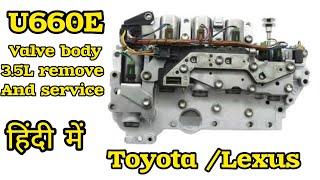
The 2007-2011 Camry with the 3.5L V6 engine is equipped with the U660E 6-speed automatic transmission. While generally reliable, this transmission's pressure sensors are not sold individually. They are integrated into a larger internal wiring harness that attaches to the valve body. 🎬 Watch: How to remove and service the U660E valve body This means that unlike a simple external sensor, replacement requires draining the fluid, removing the pan, and replacing the entire transmission wire assembly, which increases labor time, complexity, and part cost.
Symptoms You May Notice
- Check Engine Light is on
- Harsh, erratic, or delayed gear shifting
- Transmission slipping between gears
- Vehicle may be stuck in a single gear (limp mode)
- Reduced fuel economy
- A burning smell from overheated transmission fluid
- Transmission may not shift into or out of certain gears
- Replacing the Transmission Control Module (TCM) before verifying the sensor and wiring are good.
- Rebuilding or replacing the entire transmission when only an inexpensive external wire was at fault.
- Replacing just a single solenoid when the fault lies in the integrated pressure switch within the transmission wire harness.
Most Likely Causes
- Failed Transmission Fluid Pressure Sensor (Switch 'C') 🔴 High Probability → Shop Transmission Assembly The sensor operates in a harsh environment of heat and constant pressure changes, leading to eventual electronic failure. For the U660E, the sensor is part of the internal transmission wire harness, which can degrade over time.
How to confirm: After confirming the wiring external to the transmission is intact, the sensor itself is the most likely culprit. It can be tested with a multimeter for correct resistance at the transmission connector pins, but is often replaced as the primary suspect once the transmission pan is removed.
Typical fix: Replace the faulty pressure sensor, which is part of the internal transmission wire harness. This involves draining the transmission fluid, removing the oil pan, disconnecting the old harness from the valve body solenoids, and installing the new one.
Est. part cost: $100 - $180 - Wiring or Connector Issue 🟡 Medium Probability The wiring harness leading to the transmission can be exposed to road debris, heat, and moisture, causing wires to chafe, break, or connectors to corrode. A short to ground on the signal wire is a very common cause for a 'circuit low' code.
How to confirm: Visually inspect the wiring harness from the TCM to the transmission case connector 🎬 Watch: Technical highlights and internal components of the U660E for any signs of damage. Use a multimeter to check for continuity and for a short to ground on the signal wire between the TCM and the transmission connector.
Typical fix: Repair the damaged section of the wire or replace the corroded connector.
Est. part cost: $10 - $50 - Low or Dirty Transmission Fluid ⚪ Low Probability → Shop Transmission Assembly While less likely to cause a specific 'circuit low' code, extremely low or degraded fluid can cause erratic pressure readings, overheating, and shifting problems that may trigger various codes. The U660E is marketed as having 'lifetime' fluid, leading some owners to neglect service, increasing the risk of fluid-related issues at higher mileage.
How to confirm: Check the transmission fluid level and condition using the overflow plug procedure specific to the U660E transmission, which must be performed at a specific fluid temperature. The fluid should be bright red and not smell burnt.
Typical fix: Perform a transmission fluid drain-and-fill or a full fluid exchange. If the fluid is very dark or contains metal particles, internal damage is likely.
Est. part cost: $75 - $200 for fluid
Rare But Worth Checking
- Faulty Transmission Control Module (TCM): → Shop Transmission Assembly This is the least likely cause and should only be considered after all other possibilities (sensor, wiring, fluid) have been thoroughly ruled out. A failed TCM driver can mimic a sensor circuit fault.
- Internal Valve Body Issue: → Shop Transmission Valve Body A blockage, a sticking valve, or worn solenoid bores within the transmission valve body can cause pressure problems, but this is less common than a sensor or wiring failure for this specific code.
- Internal Transmission Case Wear: → Shop Transmission Assembly A known issue on some U660E transmissions involves wear in the case bore for the counter drive gear bearing. This allows the bearing to move, creating fine metal debris that contaminates the entire system, clogs solenoids, and causes various shifting problems and codes. This is a catastrophic failure requiring a transmission rebuild 🎬 See a full teardown of a failed U660 transmission or case replacement.
Diagnosis Steps
- Check the transmission fluid level and condition. This requires bringing the transmission to a specific temperature (usually 95-113°F) and removing a check plug. If you are not comfortable with this procedure, have a professional do it.
- Use an OBD-II scanner to check for any other transmission-related codes and review freeze-frame data to see the conditions when the code was set.
- Visually inspect the transmission wiring harness and the main connector at the transmission case for any signs of damage, corrosion, or loose connections.
- Using a wiring diagram for the U660E transmission, identify the wire for the 'C' pressure switch (also called ATF Pressure Switch No. 1).
- With the key on and engine off, back-probe the connector at the TCM to check for the correct reference voltage being sent to the sensor.
- Check for continuity on the signal wire between the TCM and the transmission. Test for a short to ground, which is a common cause for a 'circuit low' code.
- If external wiring and voltages are correct, the fault is almost certainly the pressure sensor itself, which is part of the internal transmission wire harness located inside the transmission pan.
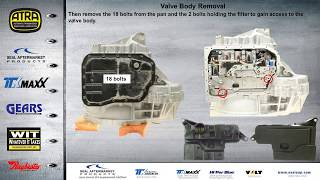
- Drain the transmission, remove the pan, and replace the entire transmission wire assembly. It connects to multiple solenoids on the valve body.
- While the pan is off, inspect the magnets for excessive metal debris. Fine, paste-like material is normal wear. Large shavings or chunks indicate a serious internal problem.
- Install a new pan gasket, reinstall the pan, and refill the transmission with the correct type of fluid (Toyota WS).
- Clear the codes and perform a test drive, allowing the transmission to shift through all gears to ensure the problem is resolved. It may be necessary to perform a TCM re-learn procedure with a capable scan tool.
Parts You'll Likely Need
- Transmission Wire (Internal Harness with Pressure Switches)
(OEM #82125-33530)— This is the most common component to fail. It contains the integrated pressure sensor 'C' that directly causes the P0872 code. The sensor is not sold separately.
Trusted brands: Toyota (OEM)
OEM price range: $120-$200 - Transmission Oil Pan Gasket
(OEM #35168-33080)— Must be replaced anytime the transmission oil pan is removed to prevent leaks.
Trusted brands: Toyota (OEM), Fel-Pro, Mahle
OEM price range: $20-$40
Aftermarket price range: $10-$25 - Toyota Genuine ATF WS (World Standard) Fluid
(OEM #00289-ATFWS)— The U660E transmission requires this specific fluid. Using incorrect fluid can cause damage. A drain and fill requires approximately 4-5 quarts.
Trusted brands: Toyota (OEM)
OEM price range: $12-$20 per quart
Related Codes That Often Appear With This One
- P0870, P0871, P0873, P0874 — These are all related codes for the transmission fluid pressure sensor 'C' circuit, indicating different types of faults (e.g., range/performance, high input) that may appear if the issue is intermittent or complex.
- P0746, P2714 — These codes relate to pressure control solenoids (like SL1 or SLT) within the same transmission. A problem affecting overall hydraulic pressure or a failing internal harness could potentially trigger these codes alongside the sensor fault.
- P0712, P0713 — These codes relate to the transmission fluid temperature sensor. Since the pressure switches are part of the same internal harness assembly as the temperature sensor, a failure in this harness can sometimes trigger codes for both components.
Technical Service Bulletins (TSBs) & Recalls
- TC007-07: Addresses a 2-3 shift flare on early 2007 U660E transmissions via an ECM software update.
- T-SB-0061-08: Pertains to a torque converter clutch shudder felt around 40 mph, often requiring torque converter replacement.
- LSC 90K (and others): A Limited Service Campaign to replace the original rubber-and-metal VVT-i oil line on the 2GR-FE engine with a full metal line to prevent catastrophic oil leaks.
- Warranty Enhancement Program ZE6: Extended warranty coverage for dashboards that were cracking or becoming sticky/melting due to heat and humidity.
Platform-Specific Known Issues
- Owner Experience with U660E Transmission Issues: → Shop Transmission Assembly Owners on forums like ClubLexus and Reddit discuss the common U660E issues. For early models, a 2-3 shift 'flare' (RPMs
Mechanic-Grade Diagnostic Values
- Resistance of individual linear solenoids (SL1, SL2, SL3, SL4, SLT, SLU) — expected: 5.0 to 5.6 Ohms at 68°F (20°C). Failure: A reading outside this range, or an open/short circuit, indicates a faulty solenoid. Note that some experienced technicians report that a reading a few ohms higher may still be acceptable.
- ATF Pressure Switch No. 1 (Causes P0872) test — expected: This is a simple on/off switch, not a variable sensor. It should show continuity to ground when pressure is applied and an open circuit when no pressure is applied. A 'Circuit Low' code implies it is shorted to ground constantly.. Failure: The switch shows continuity to ground at all times, even with the engine off, or has a resistance to ground below 10kΩ. This is tested at the TCM connector or the transmission case connector.
Scan Tool Commands That Help
- Toyota Techstream: Active Test: Control the Shift Position — This allows a technician to command individual solenoids to turn on or off to verify their mechanical operation and see if the command results in a pressure change, helping to isolate a faulty solenoid from a wiring or TCM issue.
- Toyota Techstream: Utility: Reset Memory (ECU/TCM Adaptations) — This must be performed after replacing the valve body, internal harness, or entire transmission. It clears the learned shift adaptations, allowing the TCM to relearn shift points with the new components to prevent harsh shifting.
- Toyota Techstream: Data List — Monitor the live status of the ATF pressure switches (On/Off) while driving. For P0872, the data for 'ATF Pressure Switch 1' would likely show 'On' (indicating low voltage/grounded) at all times, even when it should be 'Off'.
Wiring & Ground Locations
- TCM (Transmission Control Module) — On the U660E, the TCM is bolted directly to the transmission case and plugs into the solenoid case connector.. Its location exposes it to heat and vibration. Since it's the module interpreting the sensor signal, a fault in the TCM itself can mimic a sensor code. It is a 'plug-and-play' module, making swapping for diagnosis relatively easy.
- Engine to Chassis Ground (Main) — A primary ground strap runs from the top of the engine (valve cover area) to a bracket on the driver's side strut tower. Another ground point for the engine harness is on the side of the cylinder head, directly underneath the throttle body.. A poor ground connection can cause voltage drops and floating grounds, leading to incorrect sensor readings and spurious codes like P0872. Ensuring these grounds are clean and tight is a critical, often overlooked, first step.
- Transmission Case Connector Pin 10 — This is the pin for the ATF Pressure Switch No. 1 signal wire at the main connector on the transmission housing.. This is the primary external test point to check for a short to ground on the signal wire before dropping the transmission pan. If this pin shows continuity to ground with the connector unplugged, the fault is inside the transmission (harness or switch).
Real Owner Repair Stories
- YouTube user 'AutoTips Rhayjezt' (Toyota Camry V6 3.5L with U660E) — P0872 code present.
❌ Tried (didn't work) Initial diagnosis pointed to the internal harness, valve body, or TCM.
✅ What actually fixed it The technician replaced the internal transmission wire harness (which includes the pressure switches) and the valve body assembly. After replacement, the issue was resolved.
Model Year Variations Within This Range
- 2007-2011 vs 2012+: U660E transmissions up to 2011 typically used an internal harness with three pressure switches. Around 2012, this was changed to a design with only a single pressure switch. The valve bodies are physically the same, but the separator plate and harness are different. It is possible to use a later single-switch valve body on an earlier three-switch car, but you must use the corresponding single-switch plate and harness, and the TCM may not be compatible.
Diagnostic Flowchart
Other Known Issues on This Vehicle
Issues unrelated to this code that are worth knowing about as an owner of this generation:
- VVT-i Oil Line Rupture 🔴 High — Common on 2007-2009 models with the original rubber/metal hose. Can fail without warning at any mileage. (Ref: Toyota issued a Limited Service Campaign (LSC) to replace the original hose with an all-metal line (Part No. 15772-31030).)
- Melting/Cracked Dashboard 🟡 Low — Very common in regions with high heat and humidity. Affects the entire 2007-2011 model run. (Ref: Toyota issued a Warranty Enhancement Program (ZE6) to cover replacement.)
- U660E Transmission Shift Flare or Shudder 🟠 Medium → Shop Transmission Assembly — Shift flare was common on early 2007 models, while torque converter shudder can appear around 70k-120k miles. (Ref: TSB TC007-07 for shift flare (ECM reflash) and T-SB-0061-08 for torque converter shudder (converter replacement).)
- Water Pump Failure 🟠 Medium — Can fail prematurely, often noted by pink crusty residue from dried coolant in the drive belt area.
Used vs. New Parts: Buying Guide for This Vehicle
When a used part is the smart pick: A used valve body assembly from a low-mileage donor vehicle could be a cost-effective option if the original is confirmed to have worn bores. However, buying a used internal wiring harness is very risky, as it's a common failure item and its condition is impossible to verify visually.
Donor-vehicle mileage cap: roughly under 80000 miles for the part to have meaningful remaining life.
What to inspect on the donor part:
- Verify the donor vehicle's mileage.
- Ask for photos of the transmission fluid from the donor car; it should be bright red, not dark brown or black.
- If possible, inspect the pan magnets from the donor transmission for large metal chunks, which would indicate a catastrophic failure like case bore wear.
OEM-only on this vehicle (don't cheap out):
- Internal Transmission Wire Harness (82125-33530)
- Toyota Genuine ATF WS Fluid
Aftermarket brands forum-validated for this vehicle:
- Sonnax (For valve body repair kits, not complete harnesses)
Brands owners have reported issues with on this vehicle:
- Unbranded, no-name internal wiring harnesses from online marketplaces are a significant gamble and often fail prematurely.
Real Owner Stories
Aggregated from forums and TSBs cited above. Mileages and costs reflect what owners reported in those sources.
2007 Lexus ES350 3.5L V6 — ~5000 miles
Symptoms: Owner experienced a 2-3 shift 'flare' where RPMs would jump during the shift.
What fixed it: The issue was resolved by an ECM software update performed by the dealer under TSB TC007-07.
Source hint: ClubLexus.com - 'Newest U660E transmission TSIB'
Related OBD-II Codes
Frequently Asked Questions
My 2007 Camry V6 has a harsh shift between 2nd and 3rd gear. Is there a known fix for this?
I heard about a dangerous VVT-i oil line that can burst on the 3.5L V6. Does my Camry have this problem?
Is the pressure sensor that causes code P0872 located outside the transmission?
My dashboard is getting sticky and cracking. Was there a recall for this on the 2007-2011 Camry?
The manual says the transmission fluid is 'lifetime'. Should I ever change it?
What other vehicles share the same transmission and might have this P0872 issue?
What does the 'Circuit Low' part of the P0872 code mean?
Helpful Videos
We Have This Part in Stock

The information in this article is provided for general reference and educational purposes only. Vehicle specifications, procedures, and part compatibility can vary by production date, trim level, and region. Always consult your vehicle's factory service manual and verify part numbers before purchasing or performing repairs. Safety-critical components such as airbags, seat belts, and braking systems should be installed by a qualified professional.
- Toyota Camry:
- 🧭 Diagnostic Flowchart
- 🎬 Helpful Videos
- 🛍️ Shop This Part
- What's Unique About the 2007-2011 Toyota Camry
- Symptoms You May Notice
- Most Likely Causes
- Rare But Worth Checking
- Diagnosis Steps
- Parts You'll Likely Need
- Related Codes That Often Appear With This One
- Technical Service Bulletins (TSBs) & Recalls
- Platform-Specific Known Issues
- Mechanic-Grade Diagnostic Values
- Scan Tool Commands That Help
- Wiring & Ground Locations
- Real Owner Repair Stories
- Model Year Variations Within This Range
- Other Known Issues on This Vehicle
- Used vs. New Parts: Buying Guide for This Vehicle
- Real Owner Stories
- 2007 Lexus ES350 3.5L V6 — ~5000 miles
- Related OBD-II Codes
- Frequently Asked Questions
- 🎟️ Get 5% Off