

U0073 on 2010-2011 Saab 9-5: Control Module Communication Bus 'A' Off Explained
U0073 on a 2010-2011 Saab 9-5 indicates a total loss of communication on the main high-speed CAN bus. This is a serious electrical fault, often caused by a wiring issue (especially poor grounds), a failed module like the BCM, or low system voltage. Diagnosis is complex and should start with checking the battery and known ground points before suspecting expensive modules.
- U0073 is a critical network failure code indicating the main communication bus on your Saab 9-5 has shut down.
- Do not continue to drive the vehicle, as it may stall or have disabled safety systems.
- The most common causes are wiring damage, a failed control module, or a battery/charging system issue.
- Diagnosis is complex and not suitable for a typical DIYer. Professional help with advanced diagnostic tools is highly recommended.
- Before replacing any expensive modules, a thorough inspection of the wiring and a system voltage test are mandatory first steps.
What's Unique About the 2010-2011 Saab 9-5
The 2010-2011 Saab 9-5 (NG9-5) is built on the General Motors (GM) Epsilon II platform, sharing its core electrical architecture with the Buick LaCrosse and Cadillac XTS. Network communication issues are not uncommon on these platforms. A key issue highlighted in GM Technical Service Bulletins for platform mates is a poor ground connection for the Body Control Module (BCM) at a location known as G218, often found under the driver's side dash. The Saab-specific Workshop Information System (WIS) notes that this code often points to a fault that requires symptom-based diagnosis rather than being a simple 'current' fault.
Symptoms You May Notice
- Check Engine Light (MIL) is illuminated
- Transmission may be stuck in one gear or shift harshly ('default gears')
- Multiple other warning lights, such as ABS, Traction Control, or Stability Control may be on
- Engine may stall, run rough, or fail to start
- Loss of power or reduced performance
- Instrument cluster gauges may drop to zero or display dashes
- Electronic accessories like power door locks or interior lights may fail to operate
- No communication with OBD-II scanner, or intermittent connection
- Replacing the ECM or TCM without proper diagnosis. The biggest mistake is replacing an expensive module before thoroughly checking the battery, grounds, and wiring harness, which are more common and cheaper to fix.
Most Likely Causes
- Wiring Harness Damage or Corrosion 🔴 High Probability Complex wiring harnesses on the GM Epsilon II platform are susceptible to chafing and corrosion. Specific problem areas on platform mates include wiring under the driver's dash (especially the BCM ground G218), firewall pass-through connectors, and harnesses routed near the transmission or under carpets where moisture can collect.
How to confirm: Visually inspect the main CAN bus wiring harnesses for any signs of physical damage, rubbing, or green/white corrosion in connectors. Pay special attention to the BCM ground point. A multimeter can be used to check for shorts between CAN High/Low wires or shorts to ground/power.
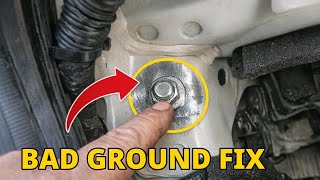
Typical fix: Repair the damaged section of the wiring harness and protect it from future damage. Clean or replace corroded connectors. Securing a loose or corroded ground bolt is a common, low-cost fix.
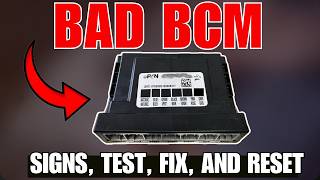
Est. part cost: $10-$100 - Failed Control Module 🟡 Medium Probability Any single module on the CAN bus (e.g., TCM, ABS, BCM) can fail internally, causing it to either stop communicating or flood the network with bad data, bringing the entire bus down. The Body Control Module (BCM) is a frequent culprit on related GM vehicles. 🎬 See common symptoms and testing steps for a bad BCM.
How to confirm: This requires a professional scan tool to see which modules are not responding. A technician may disconnect modules one by one to see if communication on the bus is restored. If disconnecting a specific module restores communication, that module is the likely cause.
Typical fix: Replace the faulty control module. Note that many modules on this platform, especially the BCM, require programming by a dealer or specialist with a tool like MDI after installation.
Est. part cost: $200-$1500 - Low System Voltage 🟡 Medium Probability Control modules require a stable voltage to operate. A weak or failing battery, or a faulty alternator, can cause voltage to drop during cranking or operation, leading to communication dropouts. This is a very common trigger for network codes on modern vehicles.
How to confirm: Test the battery with a load tester. Check the alternator output with a multimeter; it should be between 13.5 and 14.5 volts with the engine running. Ensure battery terminals are clean and tight.
Typical fix: Replace the battery or alternator.
Est. part cost: $150-$600
Rare But Worth Checking
- Failed Terminating Resistor: The CAN bus has a 120-ohm resistor at each end to prevent signal reflections. In most modern cars, including this platform, these resistors are not separate parts but are integrated inside the two modules at the physical ends of the bus (e.g., the ECM and BCM/Instrument Cluster). A failure of the resistor is a failure of the module itself. A healthy bus should read approximately 60 ohms between CAN High and Low at the DLC.
- Interference from Aftermarket Electronics: Improperly installed aftermarket alarms, remote starters, or audio equipment can interfere with the CAN bus wiring and cause communication errors.
- Software/Firmware Issues: Occasionally, a communication glitch can be caused by outdated or corrupt software within a control module. A dealer or specialist may need to perform a software update to resolve the issue.
Diagnosis Steps
- Verify the complaint and check for multiple symptoms.
- Connect a professional scan tool and attempt to communicate with all control modules. Note which modules are not responding.
- Check and record any and all stored DTCs in all accessible modules.
- Check battery state of charge and charging system performance. Ensure voltage is stable and above 12.4V with the engine off. Clean battery terminals.
- Disconnect the battery. Using a multimeter, measure the resistance between Pin 6 (CAN High) and Pin 14 (CAN Low) at the Data Link Connector (DLC). 🎬 Watch: How to test CAN bus resistance with a multimeter. A healthy bus should read approximately 60 ohms.
- If resistance is 120 ohms, there is an open circuit or a missing terminating resistor (faulty end module). If it is close to 0 ohms, there is a short between the CAN lines.
- Check for any Technical Service Bulletins (TSBs) for your vehicle related to communication codes. For this platform, pay attention to bulletins mentioning ground G218 or specific harness connectors.
- Visually inspect the main wiring harnesses for obvious signs of damage, chafing, or corrosion, paying close attention to the BCM area under the dash, firewall connectors, and under-seat harnesses.
- If the wiring appears intact, the next step is to isolate modules. Disconnect one module at a time and re-check bus resistance and communication to see if the fault clears. This is best performed by a professional.
- If a single module is identified as the cause, replace it. Note that programming will likely be required.
- After repair, clear all DTCs and perform a test drive to ensure the fault does not return.
Parts You'll Likely Need
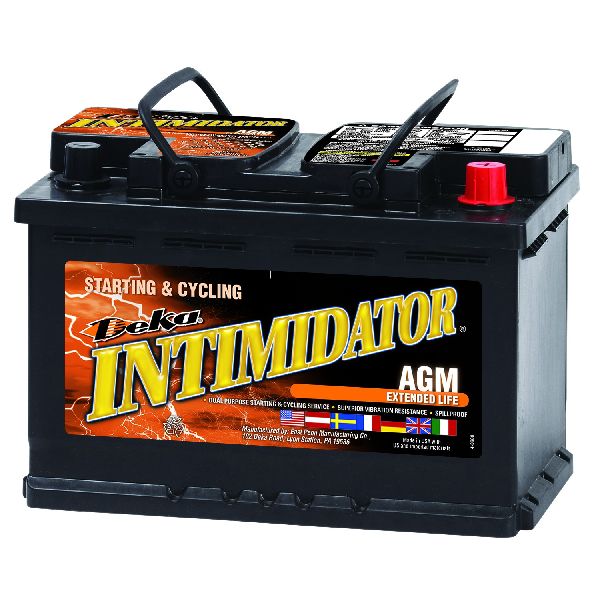
- Battery — A weak battery is a common cause of low system voltage, which can trigger network communication faults.
Trusted brands: ACDelco, Bosch
OEM price range: $200-$300
Aftermarket price range: $150-$250 - Body Control Module (BCM)
(OEM #13501739, 13579004)— The BCM is a central hub for many communication networks and a known failure point on this GM platform. A failure here can easily take down the entire CAN bus. Replacement requires programming.
Trusted brands: ACDelco, Genuine GM
OEM price range: $400-$700
Aftermarket price range: $250-$500 - Transmission Control Module (TCM) — As a critical module on the high-speed bus, an internal failure of the TCM can halt all communication and will directly cause limp mode.
Trusted brands: ACDelco, Genuine GM
OEM price range: $600-$1200
Related Codes That Often Appear With This One
- U0100 — Lost Communication With ECM/PCM
- U0101 — Lost Communication with TCM
- U0121 — Lost Communication With Anti-Lock Brake System (ABS) Control Module
- U0140 — Lost Communication With Body Control Module (BCM) 🎬 Watch: Understanding U0073 codes and how to fix communication bus errors.
Technical Service Bulletins (TSBs) & Recalls
- GM TSB #PIT5405C: While for other GM models, this TSB is highly relevant. It addresses U-codes and various electrical issues caused by a poor connection at the BCM ground G218.
- GM TSB #08-07-30-021H: Pertains to older GM models but highlights a common failure mode: bad connections in large harness connectors causing intermittent U0073 and other electrical symptoms.
Platform-Specific Known Issues
- Ground Point G218: On the related GM Epsilon II platform, a TSB (PIT5405C) frequently points to a poor ground connection at G218, located under the driver's side of the instrument panel, as a cause for widespread communication loss. This should be a primary inspection point.
- Water Intrusion: While not specific to Saab in the search results, platform-mate vehicles are known to have issues with water leaking into the cabin (from clogged sunroof drains or bad cowl seals) and corroding connectors in the footwells or under the seats, leading to CAN bus faults.
Mechanic-Grade Diagnostic Values
- CAN Bus Resistance — expected: Approximately 60 Ohms. Failure: 120 Ohms indicates an open circuit or one missing terminating module. Near 0 Ohms indicates a short between CAN High and CAN Low wires.
- DTC Set Condition — expected: Code sets after a module fails to establish communication more than 3 times in 5 seconds.. Failure: The presence of code U0073 itself.
Hidden / Shadow Codes Worth Checking
- U0073 71: ECU High Speed (HS) Bus Off. This specifies the failure is on the High Speed CAN bus. (see via GM Tech 2 or GDS2 with Saab-specific software.)
- U0073 72: ECU Low Speed (LS) Bus Off. This specifies the failure is on the Low Speed CAN bus (GMLAN). (see via GM Tech 2 or GDS2 with Saab-specific software.)
Scan Tool Commands That Help
- Tech 2 / GDS2 (SPS): BCM Body Control Module - Programming — Required after installing a new or used BCM to load the correct vehicle-specific software.
- Tech 2 / GDS2 (SPS): IMMO Immobilizer Learn - Setup — Required after BCM replacement to 'marry' the new module to the vehicle's keys and security system. The car will not start without this step.
- Tech 2: Vehicle Check / Read DTCs / All Systems — At the start of diagnosis, the Tech 2 can poll all modules on the bus and will display 'Missing' next to any module that is not responding, helping to isolate the source of the communication failure.
Wiring & Ground Locations
- G218 — Under the driver's side of the instrument panel, likely behind the kick panel. This is a known issue on the GM Epsilon II platform.. This is a primary ground point for the Body Control Module (BCM). A poor connection here is a very common cause of U0073 and other communication codes.
- BCM Location — Behind the instrument panel lower trim panel on the driver's side (LHD).. Knowing the physical location is essential for inspecting its connectors and the associated ground points (like G218, G33, G40).
- G33 — In the cabin, under the left-hand A-pillar.. This is another key interior ground point in the vicinity of the BCM and major harness pass-throughs. A loose or corroded ground here can disrupt communication.
- G40 / G41 / G42 — On or around the knee member/beam under the steering column.. These grounds serve various components in the dashboard area. A fault here can cause intermittent issues for any module grounded at these points.
- DLC (OBD-II Port) — Under the driver's side dashboard.. Pins 6 (CAN High) and 14 (CAN Low) are used for the primary bus resistance test (should be ~60 Ohms).
OEM Part Supersession History
13501739, 13579004→13580198, 13582396, 13583450, 13586856, 13582688, 13586278, 13577924, 13580773, 13583451— Standard part evolution and consolidation across the GM Epsilon II platform.
Heads up: These part numbers are for the BCM used across various GM models like the Buick LaCrosse/Regal, Chevy Volt/Cruze, and Cadillac SRX. While physically interchangeable, the module MUST be programmed with Saab-specific software via SPS to function correctly. Installing a module programmed for a Buick will not work properly.
Model Year Variations Within This Range
- 2010 vs 2011: In the US market, the 2010 model year was launched primarily with the 2.8L Turbo V6 and XWD (all-wheel drive). The 2.0L Turbo four-cylinder with FWD became the more common configuration for the 2011 model year. This means a 2010 model is more likely to have an XWD control module on the CAN bus, which could be a potential source of failure not present on a FWD 2011 model.
Diagnostic Flowchart
Used vs. New Parts: Buying Guide for This Vehicle
When a used part is the smart pick: A used Body Control Module (BCM) is a viable, cost-effective option, but ONLY if you have a plan for programming. It is not plug-and-play. Used wiring harnesses are also excellent choices if they are from a non-crashed vehicle and show no signs of corrosion or damage.
Donor-vehicle mileage cap: roughly under 120000 miles for the part to have meaningful remaining life.
What to inspect on the donor part:
- For a BCM: Ensure the part number is on the interchange list. Ask the seller if it comes from a vehicle that was running and driving, not one with existing electrical problems.
- For wiring harnesses: Inspect all connectors for bent or corroded pins. Check for any signs of previous repair (e.g., splices, electrical tape). Ensure the harness is from a vehicle in a dry climate if possible to minimize corrosion risk.
OEM-only on this vehicle (don't cheap out):
- Body Control Module (BCM)
- Transmission Control Module (TCM)
Aftermarket brands forum-validated for this vehicle:
- For control modules, there are no reliable 'aftermarket' brands. The best options are Genuine GM/ACDelco or a remanufactured OEM unit from a reputable rebuilder.
Brands owners have reported issues with on this vehicle:
- Avoid any no-name, unbranded electronic modules from online marketplaces. The risk of them being dead on arrival or causing further network issues is extremely high.
Real Owner Stories
Aggregated from forums and TSBs cited above. Mileages and costs reflect what owners reported in those sources.
2010 Saab 9-5 (and platform mates)
Symptoms: Widespread communication loss, multiple U-codes, and various other electrical issues.
What fixed it: Cleaning and securing the poor ground connection at G218, located under the driver's side of the instrument panel.
Source hint: GM TSB #PIT5405C
Related GM Platform Vehicle
Symptoms: U0073 code was present and the Body Control Module (BCM) appeared to be offline intermittently.
What fixed it: Repairing a pinched wiring harness found between the instrument panel carrier and a body mount.
Source hint: Kappa Performance Forum - 'U0073'
2011 Saab 9-5 (and platform mates)
Symptoms: Intermittent CAN bus faults and U0073 code, particularly after heavy rain.
What fixed it: Found and repaired corroded wiring connectors in the driver's side footwell caused by water leaking into the cabin from a clogged sunroof drain.
Source hint: Vehicle Specific Issues: Water Intrusion
Related OBD-II Codes
Frequently Asked Questions
I found a GM TSB, PIT5405C, that mentions ground G218. Does this apply to my 2011 Saab 9-5?
My mechanic says the Body Control Module (BCM) is bad. Can I use a cheaper one from a junkyard Buick LaCrosse?
Where is the most common place to look for a wiring problem causing U0073 on my 9-5?
My car has a U0073 code and the transmission is stuck in one gear. Are these two problems related?
Along with the Check Engine Light, my ABS and Traction Control lights are on. Is this part of the U0073 fault?
I'm testing the CAN bus at the OBD-II port with a multimeter. What resistance reading should I see on a healthy system?
Helpful Videos
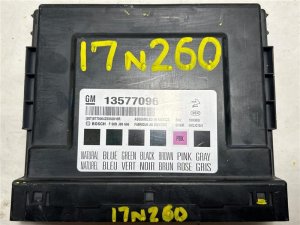
Used OEM Parts in Stock
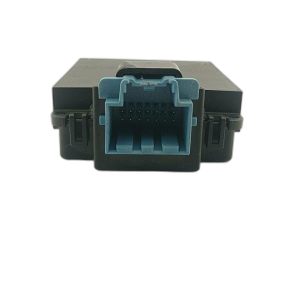
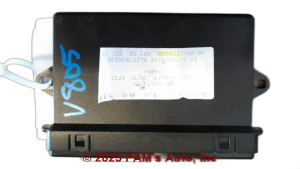
New Aftermarket Parts Available



The information in this article is provided for general reference and educational purposes only. Vehicle specifications, procedures, and part compatibility can vary by production date, trim level, and region. Always consult your vehicle's factory service manual and verify part numbers before purchasing or performing repairs. Safety-critical components such as airbags, seat belts, and braking systems should be installed by a qualified professional.
- Saab 9-5:
- 🧭 Diagnostic Flowchart
- 🎬 Helpful Videos
- 🛍️ Shop This Part
- What's Unique About the 2010-2011 Saab 9-5
- Symptoms You May Notice
- Most Likely Causes
- Rare But Worth Checking
- Diagnosis Steps
- Parts You'll Likely Need
- Related Codes That Often Appear With This One
- Technical Service Bulletins (TSBs) & Recalls
- Platform-Specific Known Issues
- Mechanic-Grade Diagnostic Values
- Hidden / Shadow Codes Worth Checking
- Scan Tool Commands That Help
- Wiring & Ground Locations
- OEM Part Supersession History
- Model Year Variations Within This Range
- Used vs. New Parts: Buying Guide for This Vehicle
- Real Owner Stories
- 2010 Saab 9-5 (and platform mates)
- Related GM Platform Vehicle
- 2011 Saab 9-5 (and platform mates)
- Related OBD-II Codes
- Frequently Asked Questions
- 🎟️ Get 5% Off