

U0101 on 2008-2009 Pontiac G8: Lost Communication With TCM Causes and Fixes
On a 2008-2009 Pontiac G8, code U0101 means the Transmission Control Module (TCM) has stopped communicating. This is most often caused by a weak battery, bad ground connection, or a faulty ignition switch. Before replacing any modules, fully charge and test the battery and inspect the main transmission electrical connector and grounds. On V8 models, the TCM is inside the transmission pan and is a more involved repair.
- U0101 on a G8 is a critical fault that makes the car unsafe to drive; the transmission can enter limp mode at any time.
- Before suspecting an expensive module failure, ALWAYS check the battery, charging system, fuses, and ground connections first.
- A unique G8 issue is a faulty ignition switch causing these exact symptoms. Wiggle the key while the car is running to test for this.
- Know your engine: V6 models have a separate TCM, while V8 models have it built into the main engine computer (ECM). The part to be replaced is different.
- Any replacement TCM or ECM will require professional programming to work with your car.
What's Unique About the 2008-2009 Pontiac G8
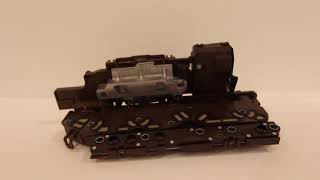
The Pontiac G8 has a critical difference between its V6 and V8 models. V6 models use a 5L40-E transmission with a separate, externally-mounted Transmission Control Module (TCM). V8 models (GT, GXP) use a 6L80E transmission where the TCM is integrated into the Transmission Electro-Hydraulic Control Module (TEHCM) located *inside* the transmission oil pan. This makes a 'bad TCM' on a V8 a much more labor-intensive job requiring pan removal. Additionally, G8 forums highlight a unique potential cause: a worn ignition switch can create widespread electrical havoc, mimicking a network failure and causing transmission limp mode and other strange electrical behavior.
Symptoms You May Notice
- Transmission stuck in one gear (limp mode, often 2nd or 3rd gear)
- Check Engine Light or other warning lamps (e.g., 'Stability Control Off') are on
- Harsh, erratic, or delayed shifting
- Vehicle will not shift out of Park
- Gear position indicator on the dashboard is blank, incorrect, or shows 'Error Miles'
- Engine may stall when shifting or coming to a stop
- Other electrical issues may occur simultaneously, like door locks cycling, speedometer freaking out, or chimes operating erratically
- Replacing the TCM/TEHCM before thoroughly checking the battery, grounds, 16-way transmission connector, and ignition switch. These are much more common failure points and are significantly cheaper to fix.
Most Likely Causes
- Weak or Failing Battery 🔴 High Probability → Shop Vehicle Battery Control modules require stable voltage to communicate. G8s are sensitive to low voltage, which can cause modules to drop off the GMLAN network temporarily, especially during startup.
How to confirm: Test the battery voltage with the engine off. It should be at least 12.4V. With the engine running, it should be ~13.7-14.7V. A load test is the most definitive way to confirm battery health. A low battery after sitting can be a primary suspect.
Typical fix: Recharge or replace the battery.
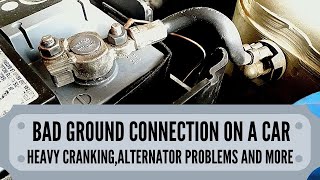
Est. part cost: $150-$250 - Poor TCM Power/Ground Connection 🟡 Medium Probability Vibration and age can lead to loose or corroded ground straps and power connections. Key grounds for the powertrain are G103 (passenger side cylinder head) and G112 (driver side rear cylinder head).
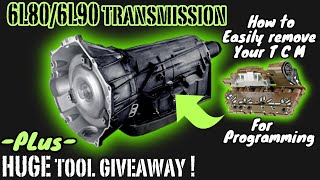
How to confirm: Inspect the main 16-way wiring harness connector at the transmission for corrosion or loose pins, a known issue on the 6L80E. 🎬 Watch: Troubleshooting no communication issues on the 6L80E transmission. Manufacturer service bulletin #PIP4990C advises technicians to specifically check the terminal pin fit at the transmission connector and the under-hood fuse block when U0101 is present. Locate and clean the main engine/transmission ground straps (G103, G112), ensuring they are tight and free of corrosion.
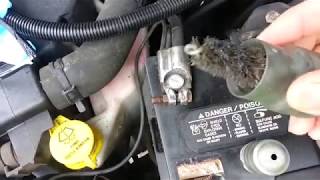
Typical fix: Clean connector pins with electrical contact cleaner and apply dielectric grease. Disassemble, clean to bare metal, and re-tighten corroded ground straps. 🎬 See how to properly clean battery terminals and engine grounds.
Est. part cost: $5-$50 - Worn Ignition Switch 🟡 Medium Probability → Shop Ignition Switch A documented issue on G8 forums where a loose or worn internal ignition switch mechanism causes intermittent power loss to multiple modules when the key is wiggled or the car goes over a bump.
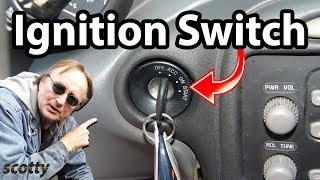
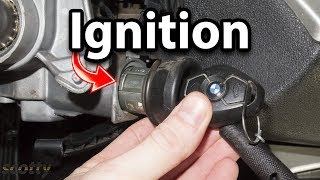
How to confirm: With the engine running, carefully wiggle the ignition key (without turning it). If this causes the dashboard to flicker, the transmission to act up, or other electrical symptoms to appear (like door locks cycling), the switch is likely faulty.
Typical fix: Replace the ignition switch (ACDelco D1432D is a common part number) and/or lock cylinder housing.
Est. part cost: $70-$200 - Damaged Wiring Harness ⚪ Low Probability
How to confirm: Visually inspect the wiring harness leading to the transmission for any signs of chafing, melting on the exhaust, or rodent damage. TSB #08-07-30-021H notes that harnesses can chafe over the transmission bell housing. Check for continuity on the CAN bus wires (typically Tan and Tan/Black) using a multimeter.
Typical fix: Repair the damaged section of the wiring harness.
Est. part cost: $10-$100 - Failed Transmission Control Module (TCM/TEHCM) ⚪ Low Probability → Shop Transmission Assembly
How to confirm: This is diagnosed by exclusion. If all wiring, power, and grounds are confirmed to be good, and the module still won't communicate with a professional scan tool, the module itself is condemned. A technician may test for voltage drop at the TCM connector; a significant drop when connected points to an internal short.
Typical fix: Replace the faulty module. For V6 models, this is the separate external TCM. For V8 models, the entire internal TEHCM must be replaced. The new module must be programmed to the vehicle.
Est. part cost: $200-$900
Diagnosis Steps
- Check Battery Health: Ensure the battery is fully charged (12.4V+ engine off) and the charging system is working correctly (~14V engine on). A weak battery is a primary cause of random communication codes.
- Scan for All Codes: Use a quality scan tool to check for codes in ALL modules (ECM, BCM, ABS, etc.). Note which modules are reporting a loss of communication with the TCM. Multiple 'U' codes point to a network-wide issue. Manufacturer bulletin #PIP4990D recommends that technicians gather all other diagnostic trouble codes in the vehicle when investigating a U0101 fault.
- Check Fuses: Inspect all fuses related to the transmission (TCM, TRANS) and engine computer (ECM) in the under-hood fuse block. On some GM platforms, these are fuses #4 and #42.
- Inspect Connectors and Grounds: Visually inspect the main 16-way electrical connector on the transmission. Disconnect it and check for corrosion, moisture, or backed-out pins. Locate, clean, and tighten the main engine grounds G103 (passenger side head) and G112 (driver side head).
- Test the Ignition Switch: With the vehicle running in Park, carefully wiggle the ignition key. If this triggers any electrical faults, warning lights, or limp mode, the ignition switch is a likely culprit.
- Test CAN Bus Network: If the above steps don't reveal the issue, a professional will need to test the CAN bus wiring for proper resistance (should be ~60 ohms between Pin 6 and Pin 14 of the OBD-II port) and check for shorts to power or ground.
- Diagnose the Module: If all wiring and power inputs are confirmed good, the TCM (V6) or TEHCM (V8) is likely faulty and requires replacement and programming.
Parts You'll Likely Need
- Ignition Switch
(OEM #ACDelco D1432D)— A documented weak point on the G8 platform that can cause intermittent power loss to multiple modules, leading to communication codes and limp mode.
Trusted brands: ACDelco, Standard Motor Products
OEM price range: $100-$150
Aftermarket price range: $70-$120 - Transmission Control Module (V6 Only)
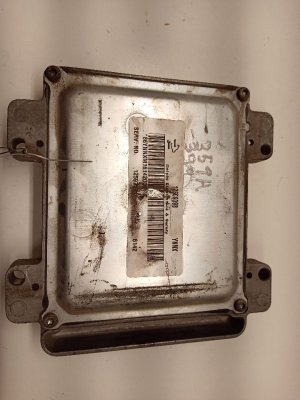
(OEM #24244411 (supersedes 24239402, 92196977))— If the external module itself fails on a V6 model after all wiring and power issues are ruled out.
Trusted brands: ACDelco
OEM price range: $300-$500
Aftermarket price range: $200-$400 - Transmission Electro-Hydraulic Control Module (TEHCM) (V8 Only)
(OEM #24256861 (supersedes earlier numbers like 24252114))— On V8 models, the TCM is integrated into this assembly inside the transmission pan. If the transmission control portion fails, the entire TEHCM must be replaced.
Trusted brands: ACDelco (Genuine GM)
OEM price range: $450-$900
Aftermarket price range: N/A (OEM recommended) - Engine Control Module (E38 - V8 Only)
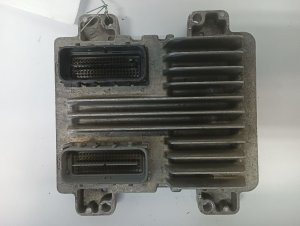
(OEM #12612384)— Incorrectly diagnosed in place of the TEHCM. While the E38 ECM can fail, it is a separate component from the transmission controller on the V8. It should only be replaced if it has its own specific failure codes or fails diagnostic tests.
Trusted brands: ACDelco
OEM price range: $400-$700
Related Codes That Often Appear With This One
- P0700 — P0700 means 'TCM Requested MIL Illumination'. The ECM sets this code to turn on the Check Engine Light whenever the TCM has a fault. It will almost always be present alongside a specific transmission code like U0101.
- U0073 — Control Module Communication Bus 'A' Off. This indicates a general GMLAN network failure, strongly suggesting a wiring or ground issue rather than a single module failure.
- U0100 — Lost Communication with ECM. If the wiring fault is severe or related to a main power/ground issue, communication with the engine computer can also be lost.
- U0140 — Lost Communication with Body Control Module (BCM). This can indicate a wider network problem, often pointing back to a wiring, power, or ignition switch issue rather than a single failed module.
Technical Service Bulletins (TSBs) & Recalls
- GM TSB #08-07-30-021H: While officially for the GMT900 truck/SUV platform, this TSB is highly relevant as it addresses U0101 and other communication codes on vehicles with the same 6L80E transmission used in the G8 GT/GXP. It highlights the 16-way transmission harness connector and chafed wiring as primary causes, rather than module failure.
- GM TSB #PIP4653E: This bulletin, mentioned in relation to other transmission codes like P1621 and P0604 on the G8, points to internal failure of the TCM as a known issue, corroborating that module failure is a possibility after wiring is ruled out.
- GM TSB #PIP4990C: This manufacturer communication advises that vehicles may have a service engine soon lamp with U0101 stored in history; technicians are instructed to check the terminal pin fit at the transmission connector and the under-hood fuse block.
- GM TSB #PIP4990D: This bulletin provides information for technicians regarding vehicles where the service engine soon lamp is illuminated with DTC U0101, suggesting a review of appropriate service diagnostics and gathering all other vehicle trouble codes.
Platform-Specific Known Issues
- V8 models (GT/GXP) have the TCM integrated into the TEHCM inside the 6L80E transmission pan, while V6 models have a separate, external TCM for the 5L40E transmission. This is the most significant difference for diagnosis and repair.
- A worn ignition switch is a known, owner-documented cause of intermittent electrical faults that mimic a U0101 code, including transmission limp mode and erratic gauge/lock behavior.
- The main engine-to-chassis ground points, G103 and G112, are critical. A poor connection at these locations can cause unstable voltage and disrupt module communication.
Mechanic-Grade Diagnostic Values
- High-Speed GMLAN Bus Resistance — expected: Approximately 60 Ohms when measured between Pin 6 (CAN-H) and Pin 14 (CAN-L) of the OBD-II Data Link Connector (DLC) with the battery disconnected.. Failure: A reading of ~120 Ohms indicates an open circuit or a single missing termination resistor. A reading of 0 Ohms indicates a direct short between the CAN High and Low wires.
- High-Speed GMLAN Bus Voltage (Key On, Engine Off) — expected: Both CAN High (Pin 6) and CAN Low (Pin 14) should show approximately 2.5V at rest (recessive state). During active communication, CAN High will toggle to ~3.5V and CAN Low will toggle to ~1.5V.. Failure: Voltages stuck high or low, or a lack of toggling, indicates a bus fault, short to power/ground, or a module flooding the network.
- TCM/TEHCM Ground Circuit Voltage Drop — expected: Less than 0.2 - 0.3 Volts.. Failure: A reading higher than 0.3V indicates excessive resistance in the ground circuit, which can cause the module to drop offline under load even if a simple resistance test passes.
- TCM/TEHCM Power Supply Voltage — expected: Greater than 12.0 Volts at the module connector with the key on.. Failure: Voltage significantly below battery voltage indicates a high-resistance fault in the power supply wire or a failing fuse/relay.
Scan Tool Commands That Help
- Tech2 / GDS2 or equivalent professional scanner: Module Status / Communication Test — After confirming basic power and grounds, use this function to actively 'ping' the TCM. The scan tool sends a request expecting a response. If the TCM does not respond while other modules on the same bus do, it helps isolate the fault to the TCM itself or its direct wiring, rather than a whole-network failure.
Wiring & Ground Locations
- X209 (V8) / X1 (V6) — The main 16-way round electrical connector on the passenger side of the transmission case (for the 6L80E V8).. This is the single point of connection for all power, ground, and communication to the TCM/TEHCM. It is a known failure point for backed-out pins, corrosion, and poor terminal tension (fretting), as detailed in GM TSB 08-07-30-021H.
- G103 — In the engine compartment, on the passenger side, mounted to the ABS module bracket.. This is a primary engine and chassis ground point. Pass 2 incorrectly listed it on the cylinder head; it is on the ABS bracket. Poor connection here can affect multiple systems, including the ECM and its ability to communicate with the TCM.
- G112 — From the rear of the driver's side (LH) cylinder head to the engine harness.. This is a critical engine harness ground. A loose or corroded connection here can directly impact the powertrain modules.
- G101 / G102 — Located in the engine compartment on the passenger side (RH) front chassis rail.. These are main chassis grounds for the vehicle's electrical system. G101 specifically grounds the ECM and TCM.
- Harness Chafe Point — Where the engine wiring harness routes over the top of the transmission bell housing.. GM TSB 08-07-30-021H specifically calls out this area for potential chafing, where vibration can cause the harness conduit to rub through and damage the GMLAN wires inside, leading to intermittent shorts and communication loss.
Real Owner Repair Stories
- YouTube video 'Don't Make The Same Mistake I Did - U0101 CAN Network Failure Diagnosis' (General Motors vehicle with 6L80E transmission, exhibiting identical symptoms to the Pontiac G8.) — Harsh gear engagement, stuck in 3rd gear (limp mode), no communication with TCM via scan tool, multiple U0101 codes in other modules (ABS, Instrument Cluster).
❌ Tried (didn't work) Initial check of CAN bus wiring with piercing probes showed a normal network, leading to a potential misdiagnosis of a bad TCM.
✅ What actually fixed it The root cause was poor pin tension (fretting corrosion) on a single pin within the female side of the 16-way transmission connector. The connection was so poor that a simple continuity test didn't detect it, but it failed under the micro-vibrations of normal operation. The problem was discovered when inserting a back-probe to test the circuit temporarily re-seated the pin and restored communication. The permanent fix is to replace the affected terminal or the entire connector pigtail.
"I Checked Everything" — The Actual Cause
- In the context of a network code, the equivalent of a 'smoke test clean' scenario is when all wiring continuity and resistance tests appear normal. A documented case showed that even with correct 60-ohm resistance and no visible shorts, the U0101 code was caused by poor pin tension (fretting) inside the main transmission connector. A multimeter test doesn't load the circuit enough to reveal this micro-interruption, but it's enough to drop communication. The fault was only found because physically probing the connector for a voltage test temporarily restored the connection.
OEM Part Supersession History
24256861 (and others like 24252114)→19431596— Product update/revision by GM after a long period of supply shortage and backorder for the original part.
Heads up: The new module requires programming to the vehicle's VIN using a dealer-level tool like GDS2. It is not a plug-and-play part.
Model Year Variations Within This Range
- 2009: Late 2009 models (often called 2009.5) received factory Bluetooth connectivity. More importantly for reliability, forum sources indicate that later 2009 models received internal transmission updates to the 6L80E to address a common 2-3 shift flare issue, suggesting part changes within the transmission during the production run.
- 2009: The high-performance GXP model was introduced for 2009, featuring a 6.2L LS3 engine and different final drive ratios (3.27 for auto, 3.70 for manual) compared to the 2008 GT's 6.0L L76 with a 2.92 ratio. While the core TEHCM is similar, programming and calibrations are specific.
Diagnostic Flowchart
Used vs. New Parts: Buying Guide for This Vehicle
When a used part is the smart pick: A used part is a reasonable choice for easily accessible, non-programmable components like the ignition switch. For the V6 model with its external TCM, a used module could be considered if a warranty is offered, but programming will still be required.
Donor-vehicle mileage cap: roughly under 80000 miles for the part to have meaningful remaining life.
What to inspect on the donor part:
- For any electrical part, inspect connectors for zero signs of corrosion (no green or white powder).
- Ensure connector housings are not cracked and locking tabs are intact.
- For an ignition switch, try to get one with the key to feel for wear or excessive looseness.
OEM-only on this vehicle (don't cheap out):
- Transmission Electro-Hydraulic Control Module (TEHCM) for V8 models. The high labor cost to access this internal part makes the risk of a faulty used part financially unwise. Furthermore, these parts require specific programming to the vehicle's VIN, which is best done with a new OEM part.
Aftermarket brands forum-validated for this vehicle:
- ACDelco (OEM for modules and switches)
- Standard Motor Products (for ignition switch)
Brands owners have reported issues with on this vehicle:
- Unknown or unbranded TEHCMs sold on marketplaces. Given the complexity and programming requirements, using a non-OEM TEHCM is highly risky and not recommended by professional technicians.
Real Owner Stories
Aggregated from forums and TSBs cited above. Mileages and costs reflect what owners reported in those sources.
2009 Pontiac G8 GT
Symptoms: The car would randomly go into limp mode with a U0101 code, but the strangest symptoms were the speedometer freaking out, door locks cycling constantly, and the dash info screen flickering between 'Park' and 'Drive' even while moving.
What fixed it: The problem was traced to a worn internal ignition switch. Wiggling the key while the engine was running would trigger all the electrical chaos, confirming the diagnosis. Replacing the ignition switch resolved all the issues.
Source hint: reddit.com/r/Pontiac: 'Severe help with code U0101'
2008 Pontiac G8 GT
Symptoms: The car threw a U0101 code and the transmission was stuck in 3rd gear (limp mode). The 'Stability Control Off' message also appeared on the dash.
What fixed it: After checking the battery, the issue was found to be a poor ground connection. The main engine grounds at G103 and G112 on the cylinder heads were removed, cleaned to bare metal, and re-tightened, which restored communication with the TCM.
Source hint: g8board.com thread titled 'Grounds??'
2009 Pontiac G8 GXP
Symptoms: Intermittent U0101 code causing harsh shifting and the transmission getting stuck in one gear. The gear position indicator on the dashboard would sometimes go blank.
What fixed it: Following the guidance related to TSB #08-07-30-021H, the 16-way electrical connector on the side of the transmission was inspected. The pins were cleaned with electrical contact cleaner and dielectric grease was applied, which fixed the intermittent connection.
Source hint: GM TSB #08-07-30-021H and related forum discussions
Related OBD-II Codes
Frequently Asked Questions
I have a G8 GT with a U0101 code. Is the transmission controller (TCM) inside or outside the transmission?
My G8 is showing U0101 and the door locks are cycling and speedometer is going crazy. Is this related?
How can I test if the ignition switch is causing my U0101 problem?
Where are the most important ground locations to check for a U0101 code on my Pontiac G8?
I found TSB #08-07-30-021H for trucks. Does it apply to my G8 GT?
Could a weak battery really cause my G8 to get stuck in gear with a U0101 code?
Helpful Videos


Used OEM Parts in Stock
New Aftermarket Parts Available

The information in this article is provided for general reference and educational purposes only. Vehicle specifications, procedures, and part compatibility can vary by production date, trim level, and region. Always consult your vehicle's factory service manual and verify part numbers before purchasing or performing repairs. Safety-critical components such as airbags, seat belts, and braking systems should be installed by a qualified professional.
- Pontiac G8:
- 🧭 Diagnostic Flowchart
- 🎬 Helpful Videos
- 🛍️ Shop This Part
- What's Unique About the 2008-2009 Pontiac G8
- Symptoms You May Notice
- Most Likely Causes
- Diagnosis Steps
- Parts You'll Likely Need
- Related Codes That Often Appear With This One
- Technical Service Bulletins (TSBs) & Recalls
- Platform-Specific Known Issues
- Mechanic-Grade Diagnostic Values
- Scan Tool Commands That Help
- Wiring & Ground Locations
- Real Owner Repair Stories
- "I Checked Everything" — The Actual Cause
- OEM Part Supersession History
- Model Year Variations Within This Range
- Used vs. New Parts: Buying Guide for This Vehicle
- Real Owner Stories
- 2009 Pontiac G8 GT
- 2008 Pontiac G8 GT
- 2009 Pontiac G8 GXP
- Related OBD-II Codes
- Frequently Asked Questions
- 🎟️ Get 5% Off