

U2101 on 2010-2011 Saab 9-5: Control Module Configuration Incompatible Causes and Fixes
U2101 on a 2010-2011 Saab 9-5 means a control module (like the ECU, BCM, EBCM, or radio) was replaced but not programmed to the car. This is not a DIY fix; it requires a specialized shop with Saab/GM programming tools (GlobalTIS/Techline Connect) to 'marry' the new part to the vehicle's network. The car may not start or may enter limp mode until this is resolved.
- U2101 means a part needs to be programmed, not replaced. Do not buy another module if you see this code after a repair.
- This is not a DIY-friendly fix. You cannot solve this with a standard code reader or by disconnecting the battery.
- You must find a qualified independent Saab specialist or a GM dealer with experience on the Epsilon II / Global A platform who has the correct SPS programming tools (GlobalTIS or Techline Connect).
- Always address the U2101 code first before chasing any other 'Lost Communication' (U-series) codes, as the configuration error is the root cause of them.
What's Unique About the 2010-2011 Saab 9-5
The 2010-2011 Saab 9-5 (generation 9650 or YS3G) is built on the General Motors Epsilon II platform, which is part of the larger 'Global A' architecture. Because of this GM parentage, all major electronic modules are 'married' to the car using a GM-based Service Programming System (SPS). Unlike older vehicles where some modules could be swapped, on this platform, replacing almost any control unit—from the Engine Control Module (ECM) and Body Control Module (BCM) to the Electronic Brake Control Module (EBCM) and even the radio—is guaranteed to trigger a U2101 code until it is professionally programmed with software like GlobalTIS or its successor, ACDelco's Techline Connect.
Symptoms You May Notice
- Check Engine Light or other malfunction indicators are on
- Vehicle will not start or cranks but fails to fire
- Transmission may not shift or may be stuck in 'limp mode'
- Loss of function for the replaced module (e.g., radio, climate control, ABS/Traction Control disabled)
- Multiple other 'U' (network) communication codes stored in various modules
- Specific error messages on the Driver Information Center (DIC) related to the failed system (e.g., 'Service StabiliTrak')
- Key not detected or immobilizer active message on the dash
- Replacing the control module again. The problem is almost never the part itself, but the lack of programming. Swapping it for another unprogrammed module will not fix the issue.
- Attempting to clear the code with a basic scanner. U2101 is a configuration status code and cannot be cleared until the underlying configuration mismatch is resolved through programming.
- Replacing unrelated parts. Because a U2101 can cause many other communication codes, a technician might mistakenly chase a 'Lost Communication with TCM' code by replacing the transmission module, when the root cause is an unprogrammed radio.
Most Likely Causes
- Control Module Replacement without Programming 🔴 High Probability The vehicle's architecture is based on GM's Global A platform, which requires mandatory programming for all major control modules to combat theft and ensure component compatibility. This applies to the ECM, BCM, EBCM, radio, and others.
How to confirm: Confirm if any electronic modules (ECM, BCM, TCM, Radio, EBCM, etc.) have been recently replaced. The presence of U2101 immediately after such a repair is definitive. A professional scan tool will show the U2101 code logged against the newly installed, unconfigured module.
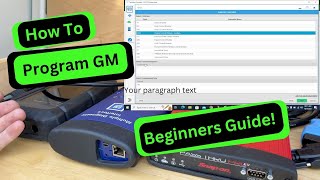
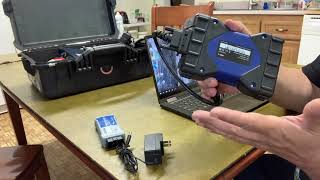
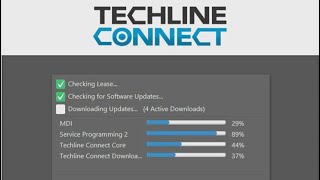
Typical fix: The newly installed module must be programmed and configured using the Saab/GM Service Programming System (SPS) 🎬 Watch: How to program a new module using Techline Connect with GlobalTIS software or the newer ACDelco Techline Connect system, using a J2534 or MDI/MDI2 interface.
Est. part cost: $0 - Corrupted Module Software ⚪ Low Probability Significant voltage fluctuations, such as from a failed battery, improper jump-start, or alternator failure, can corrupt the configuration data within a module, making it 'forget' its identity on the network.
How to confirm: This is a diagnosis of exclusion. If no modules have been replaced, but the vehicle suffered a major electrical event prior to the code appearing, software corruption is a possibility. A user on a Ford forum experienced this after a faulty scanner write, resulting in a U2101 and a no-start condition.
Typical fix: Attempt to reprogram the existing module using the SPS/GlobalTIS/Techline Connect procedure. If reprogramming fails, the module itself may be internally damaged and require replacement, followed by programming.
Est. part cost: $0
Rare But Worth Checking
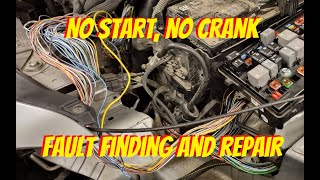
- CAN Bus Wiring Fault: While less common for this specific code, a short or open in the CAN bus wiring can prevent a module from communicating, which could potentially be misinterpreted by other modules as a configuration issue. This is more likely to be accompanied by a host of other 'Lost Communication' codes. A wiring loom short on a platform-mate Opel Insignia caused a non-runner 🎬 See how to diagnose wiring faults on this shared platform with multiple electrical faults.
Diagnosis Steps
- Verify the battery is fully charged (12-16V) and the charging system is working correctly. Low or fluctuating voltage can cause communication errors and failed programming attempts.
- Scan all modules for codes using a professional-grade tool (like a GM MDI with GDS2). Note which module is logging the U2101 code and which other modules are logging 'Lost Communication' codes pointing to the suspect module.
- Identify if any control modules have been recently replaced. This is the most critical diagnostic question. The invoice for a recent repair is often the biggest clue.
- If a module was replaced, the only next step is to perform the Service Programming System (SPS) procedure using appropriate GM/Saab tools.
- If no module was replaced, inspect the wiring and connectors for the suspect module for any visible damage, corrosion, or loose pins. Check for voltage drops or shorts on the CAN bus lines.
- If wiring is intact, attempt to reprogram the original module. If reprogramming fails repeatedly, the module may have an internal fault and require replacement, which must then be followed by programming.
Parts You'll Likely Need
- No parts typically needed for the fix — This code indicates a software programming issue, not a hardware failure. The cost is in the specialized labor to program a module that has already been installed.
OEM price range: $0
Aftermarket price range: $0 - Electronic Brake Control Module (EBCM) - A common module to be replaced that then requires programming.
(OEM #GM 20953095 (Replaces: 13291987, 22758235))— The EBCM is a frequent failure point on this platform. When it is replaced, it must be programmed, or it will set a U2101 code.
Trusted brands: ACDelco, GM Genuine Parts
OEM price range: $200 - $450
Aftermarket price range: $150 - $300
Related Codes That Often Appear With This One
- U2100 — U2100 means 'Control Module Not Programmed'. It often appears with U2101. U2100 indicates the module is essentially 'blank,' while U2101 means its configuration is incompatible with the vehicle's master list.
- U0101, U0121, U0140, etc. — These are 'Lost Communication' codes with specific modules (TCM, EBCM, BCM, etc.). The U2101 configuration error is the root cause, preventing other modules from talking to the improperly configured one. For example, if a new radio is installed without programming, the BCM might log a U0184 (Lost Communication With Radio) and the radio itself will log U2101.
Platform-Specific Known Issues
- Due to Saab's bankruptcy, finding a dealership with the correct, active tooling (GlobalTIS/Techline Connect) can be challenging. Many owners rely on independent Saab specialists or GM-focused shops who have maintained this equipment.
- The GM Global A architecture used on this car is notoriously difficult for installing used modules. Many modules store the original vehicle's VIN and an 'environment security password' which cannot be overwritten, making used parts from a junkyard unusable without specialized 'virginizing' services.
Mechanic-Grade Diagnostic Values
- High-Speed GMLAN Bus Resistance — expected: Approximately 60 Ohms when measured between Pin 6 and Pin 14 of the DLC.. Failure: A reading of 120 Ohms indicates an open in the circuit or a fault in one of the two terminating resistors. A reading of 0 Ohms indicates the CAN High and CAN Low wires are shorted together.
- High-Speed GMLAN Bus Voltage (Key On, Engine Off) — expected: CAN High (Pin 6) should be biased to ~2.5V and toggle up to ~3.5V. CAN Low (Pin 14) should be biased to ~2.5V and toggle down to ~1.5V.. Failure: Voltages that are stuck high, low, or do not toggle indicate a short to power/ground or a module pulling the bus down.
- Low-Speed GMLAN Bus Voltage (Key On, Engine Off) — expected: This is a single-wire bus on Pin 1 of the DLC. It should toggle between 0V and 5V.. Failure: A voltage stuck at 0V or 5V indicates a short to ground or power.
- Programming System Voltage — expected: Stable voltage between 12.0V and 16.0V must be maintained during the entire SPS programming event.. Failure: Any voltage fluctuation, spike, or drop below 12.0V can interrupt programming and potentially damage the module.
Scan Tool Commands That Help
- GlobalTIS / Tech2: SPS (Service Programming System) — This is the main function used to download the correct software from GM/Saab servers and program a new or existing control module. It is required after any module replacement.
- Tech2: Add/Remove Module (Marriage/Divorce) — This function is used specifically for certain modules like the radio/head unit. The old unit must be 'divorced' from the car's security system before removal, and the new unit must be 'married' after installation to link its VIN and security data with the car.
- GDS2 (Global Diagnostic System 2): Module Setup — After SPS programming is complete, some modules require a 'Module Setup' or 'Configuration' function to be run. This learns specific vehicle options or performs calibrations necessary for the module to function correctly within that specific car.
- GDS2: Immobilizer Learn — If the BCM, ECM, or other immobilizer-related module is replaced or reprogrammed, this procedure is required to relearn the keys and security environment variables, allowing the car to start.
Wiring & Ground Locations
- EBCM (Electronic Brake Control Module) — Lower left rear of the engine compartment.. A commonly replaced module that requires programming. A bad connection at its main connector can cause communication loss, mimicking a configuration issue.
- BCM (Body Control Module) — On the left side where the A-pillar meets the floor, behind the interior kick panel.. The BCM is a central hub for multiple CAN networks. A fault here or its replacement will trigger U2101 and cause widespread system failures.
- DLC (Data Link Connector) — Under the driver's side dashboard.. This is the primary access point for diagnostics. The High-Speed GMLAN is on pins 6 & 14; Low-Speed GMLAN is on pin 1. All diagnostic measurements start here.
- G102 / G109 — G102 is on the right strut tower, G109 is on the left strut tower in the engine compartment.. These are major engine compartment ground points. Corrosion or looseness here can affect the ECM and EBCM, causing communication faults.
- G304 — Located in the left kick panel area, near the BCM.. This is a critical interior ground point for the Body Control Module and other dash components. A poor connection can cause various network errors.
OEM Part Supersession History
13291987, 22758235→20953095— Standard part revision and consolidation by GM for the Electronic Brake Control Module (EBCM).
Heads up: While the newer part number is the correct service replacement, it absolutely requires SPS programming upon installation. Installing any of these part numbers, new or used, without programming will result in a U2101 code and non-functional ABS/StabiliTrak systems.
Model Year Variations Within This Range
- 2011: For 2011, a 220-hp 2.0-liter turbo four-cylinder engine with front-wheel drive was introduced alongside the 300-hp 2.8-liter turbo V6 with AWD that was the only option for 2010. This adds different ECMs and TCMs to the potential list of modules that could be involved, but the underlying Global A architecture and programming requirements remain identical.
Diagnostic Flowchart
Used vs. New Parts: Buying Guide for This Vehicle
When a used part is the smart pick: For this specific vehicle and code, a used module is almost never a smart choice for a DIY or standard shop repair. The only time it makes sense is if you have access to a specialist service that can 'virginize' the used module (wipe its VIN and security data) before you attempt to install and program it. Without this step, the part is unusable.
Donor-vehicle mileage cap: roughly under 120000 miles for the part to have meaningful remaining life.
What to inspect on the donor part:
- Verify the exact part number matches, but be aware this is not enough.
- Ensure the donor vehicle had similar options (RPO codes) if possible.
- Ask the seller if the module was properly 'divorced' with a Tech2/GDS2 before removal (most junkyards do not do this).
- Inspect connectors for corrosion, bent pins, or damage.
OEM-only on this vehicle (don't cheap out):
- ANY control module (ECM, BCM, EBCM, TCM, Radio, SDM, etc.). Due to the GM Global A security architecture, used modules are locked to the donor car's VIN and cannot be reprogrammed with standard dealer tools. A new, unprogrammed OEM module is the only guaranteed path to a successful repair in a normal shop environment.
Aftermarket brands forum-validated for this vehicle:
- For electronic control modules on this platform, there are no known-good aftermarket alternatives. The repair requires an OEM/ACDelco part followed by OEM software programming.
Brands owners have reported issues with on this vehicle:
- Any 'plug-and-play' or 'pre-programmed' modules from non-specialist online sellers. They often fail because they cannot replicate the vehicle-specific security environment required by the Global A platform.
Real Owner Stories
Aggregated from forums and TSBs cited above. Mileages and costs reflect what owners reported in those sources.
Opel Insignia (Platform Mate)
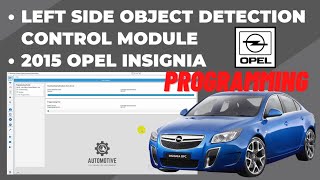
Symptoms: After replacing a side object detection module with a used part, the module remained non-functional and the vehicle stored a B101E configuration error code.
What fixed it: The attempt to program the used module with the Service Programming System (SPS) failed. The used part could not be configured to the vehicle.
Source hint: MHH AUTO - Thread Title: 'Opel Insignia - Side object detection programming doesn't work'
Ford vehicle (example of software corruption)
Symptoms: The vehicle would not start and had a U2101 code immediately after a faulty scanner write operation.
What fixed it: The issue was diagnosed as corrupted module software caused by the improper scanner write. The fix would involve attempting to reprogram the original module.
Source hint: A user on a Ford forum cited in the 'Corrupted Module Software' cause.
Ford F-150 (Cross-Manufacturer Reference)
Symptoms: An owner reported issues with the steering wheel position when turning. A dealer inspection found codes C1B00 and U2101 present.
What fixed it: NHTSA ODI #10694215 notes the dealer stated the vehicle required the replacement of the electronic steering rack.
Source hint: NHTSA ODI #10694215
Ford Focus (Cross-Manufacturer Reference)
Symptoms: An owner reported paying out of pocket for repairs involving codes P219A, U0121, U0140, U0256, U0452, and U2101. The vehicle produced a strange beeping noise similar to a warning chime without any dashboard lights.
What fixed it: NHTSA ODI #11581420 describes these symptoms occurring in conjunction with multiple communication and configuration codes.
Source hint: NHTSA ODI #11581420
Related OBD-II Codes
Frequently Asked Questions
I just replaced the radio in my 2011 Saab 9-5 and now the car won't start and shows code U2101. What happened?
Can I use a used Body Control Module (BCM) from a junkyard to fix my 2010 Saab 9-5?
My mechanic's scanner can't fix the U2101 code. What special tools are needed for my Saab 9-5?
After a battery failure and a jump-start, my Saab 9-5 has a U2101 code but no parts were replaced. What's the issue?
Why is it so hard to find a shop that can program modules on my 2010 Saab 9-5?
The dashboard says 'Service StabiliTrak' and the check engine light is on with code U2101. Are these related?
Helpful Videos
We Have This Part in Stock

The information in this article is provided for general reference and educational purposes only. Vehicle specifications, procedures, and part compatibility can vary by production date, trim level, and region. Always consult your vehicle's factory service manual and verify part numbers before purchasing or performing repairs. Safety-critical components such as airbags, seat belts, and braking systems should be installed by a qualified professional.
- Saab 9-5:
- 🧭 Diagnostic Flowchart
- 🎬 Helpful Videos
- 🛍️ Shop This Part
- What's Unique About the 2010-2011 Saab 9-5
- Symptoms You May Notice
- Most Likely Causes
- Rare But Worth Checking
- Diagnosis Steps
- Parts You'll Likely Need
- Related Codes That Often Appear With This One
- Platform-Specific Known Issues
- Mechanic-Grade Diagnostic Values
- Scan Tool Commands That Help
- Wiring & Ground Locations
- OEM Part Supersession History
- Model Year Variations Within This Range
- Used vs. New Parts: Buying Guide for This Vehicle
- Real Owner Stories
- Opel Insignia (Platform Mate)
- Ford vehicle (example of software corruption)
- Ford F-150 (Cross-Manufacturer Reference)
- Ford Focus (Cross-Manufacturer Reference)
- Related OBD-II Codes
- Frequently Asked Questions
- 🎟️ Get 5% Off