

P0500 on 2013-2016 Mazda CX-5: Vehicle Speed Signal Fault Causes and Fixes
On a 2013-2016 Mazda CX-5, code P0500 is almost always caused by a single faulty ABS wheel speed sensor, not a traditional transmission sensor. The PCM uses the four ABS sensors to determine vehicle speed. A scan tool that can read ABS codes is essential to identify which sensor has failed. Expect to pay $40-$90 for an aftermarket sensor, with DIY difficulty rated at 2/5.
- P0500 on your 2013-2016 CX-5 means there is a problem with an ABS wheel speed sensor, not a transmission sensor.
- A scanner that can read ABS codes is the most important tool for diagnosis, as it can pinpoint which of the four sensors is faulty.
- Expect to see the ABS and Traction Control lights on along with the Check Engine Light.
- The most likely fix is replacing a single, faulty ABS wheel speed sensor, which is an accessible DIY job for many.
- Do not buy a 'Vehicle Speed Sensor' for the transmission; it does not exist for your vehicle.
What's Unique About the 2013-2016 Mazda CX-5
The most critical thing to understand about the 2013-2016 Mazda CX-5 is that it does NOT have a traditional Vehicle Speed Sensor (VSS) mounted on the transmission, a common part on older vehicles. Many generic guides will incorrectly point you to look for this non-existent part. On this platform, the vehicle speed signal is derived entirely from the four ABS wheel speed sensors. This is why a P0500 code is almost always accompanied by ABS and Traction Control warning lights, as the fault originates in that system.
Symptoms You May Notice
- Check Engine Light is on
- ABS warning light is on
- Traction Control/Dynamic Stability Control (DSC) warning light is on
- Tire Pressure Monitoring System (TPMS) warning light may come on
- Speedometer may work erratically or not at all
- Transmission may shift harshly or at incorrect times
- Cruise control will be disabled
- Searching for or attempting to replace a traditional Vehicle Speed Sensor (VSS) on the transmission. This part does not exist on the 2013-2016 CX-5.
- Replacing all four ABS sensors without proper diagnosis. A scan tool that reads live ABS data can pinpoint the single faulty sensor, saving time and money.
Most Likely Causes
- Faulty ABS Wheel Speed Sensor 🔴 High Probability → Shop ABS Wheel Speed Sensor The sensors are exposed to the elements at the wheel hubs, making them susceptible to damage from water, dirt, and road debris over time. Corrosion can build up and damage the sensor or its connection.
How to confirm: Use an OBD-II scanner capable of reading ABS module data (C-codes). Monitor the live data for all four wheel speed sensors while driving. The faulty sensor will show a speed reading that is erratic, lagging, or stuck at zero compared to the others. A specific ABS code like C0031 (Front Left), C0034 (Front Right), C0037 (Rear Left), or C003A (Rear Right) will often be present and directly point to the failed sensor.
Typical fix: Identify and replace the specific faulty ABS wheel speed sensor. There is one at each wheel. In some cases, the sensor can seize in the knuckle, requiring it to be drilled out, which may necessitate replacing the wheel hub assembly as well.
Est. part cost: $40-$90 for aftermarket, $100-$180 for OEM - Damaged Wiring or Corroded Connector for an ABS Sensor 🟡 Medium Probability The wiring harness runs down to the wheel hub and is subject to flexing, impacts from road debris, and corrosion, especially in regions with snow and road salt. A YouTube video showed a P0500 on a Mazda3 caused by the sensor wire rubbing through on the tire after being routed incorrectly.
How to confirm: After identifying the suspect corner with a scan tool, perform a close visual inspection of the wiring from the sensor back into the wheel well. Check for chafed wires, breaks, or green/white corrosion inside the connector plug. Use a multimeter to check for continuity and for shorts to ground on the sensor wiring.
Typical fix: Repair the broken section of wire or clean/replace the corroded connector. Pigtail connectors are available for this repair. Ensure the harness is properly secured away from moving parts.
Est. part cost: $5-$50 for wiring repair supplies or a new pigtail connector - Faulty ABS Control Module ⚪ Low Probability → Shop ABS Control Module While not common, electronic failure of the module itself can occur, preventing it from correctly processing the sensor inputs. This is more likely if communication-related 'U' codes are present with the P0500.
How to confirm: This is typically a diagnosis of exclusion. If all four wheel speed sensors and their wiring have been tested and are confirmed to be good, but the code persists (often with communication-related 'U' codes like U0121 or internal fault codes like U3000), the ABS module becomes the primary suspect. This requires advanced diagnostics.
Typical fix: Replace the ABS control module and have it programmed to the vehicle.
Est. part cost: $500-$1500+
Rare But Worth Checking
- Damaged Tone Ring: The ABS sensor reads a toothed or magnetic ring (tone ring) that is integrated into the wheel bearing/hub assembly on the CX-5. If this ring is cracked, has debris on it, or the bearing has excessive play, it can cause an erratic signal. This is less common than sensor failure but should be inspected when the sensor is replaced. A faulty wheel bearing may also produce a humming noise. 🎬 Watch: Replacing a seized wheel hub and ABS sensor
- Incorrect Tire Size: If tires of a significantly different size than the OEM specification are installed without recalibrating the system, it can cause the wheel speed sensors to report data that conflicts with other vehicle parameters, potentially triggering a P0500 code.
Diagnosis Steps
- Connect an OBD-II scanner that can read ABS/Chassis codes. Generic, parts-store scanners may only show the P0500 and not the more specific 'C' code that points to the problem wheel.
- Check for any 'C' codes (e.g., C0031 for LF, C0034 for RF, etc.). This will tell you exactly which wheel sensor circuit is having a problem.
- If no 'C' codes are present, access the live data stream for the ABS module.
- Monitor the speeds of all four wheels simultaneously while driving slowly in a straight line. The reading from the faulty sensor will differ from the other three (e.g., it will read 0 mph or be erratic).
- Once the suspect wheel is identified, raise and safely support that corner of the vehicle.
- Visually inspect the ABS sensor and its wiring for any obvious damage, like breaks, chafing, or corrosion.
- Inspect the sensor's electrical connector for corrosion or loose pins.
- Remove the sensor (typically held by a single 10mm bolt) and inspect the sensor tip and the tone ring inside the hub for debris or damage. The tone ring is part of the wheel bearing assembly. Soaking the sensor and bolt with penetrating oil beforehand is highly recommended as they often seize.
- If no visual faults are found, the most common and effective next step is to replace the sensor on the corner that showed the fault in the live data scan. Be prepared for the sensor to be seized in the knuckle, which can complicate removal.
Parts You'll Likely Need
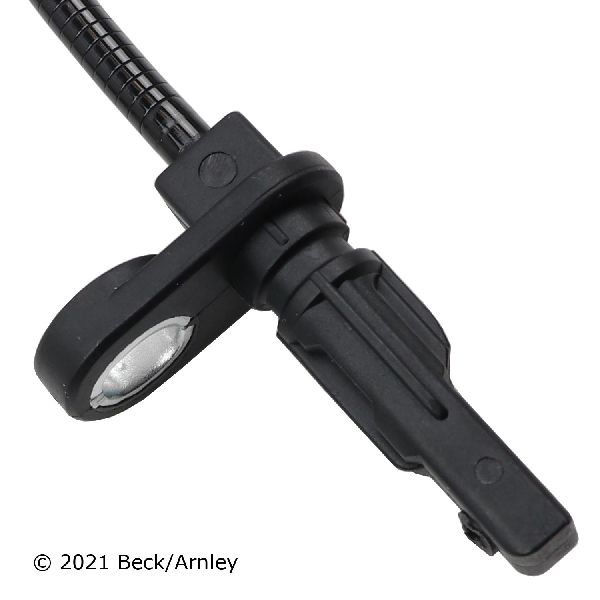
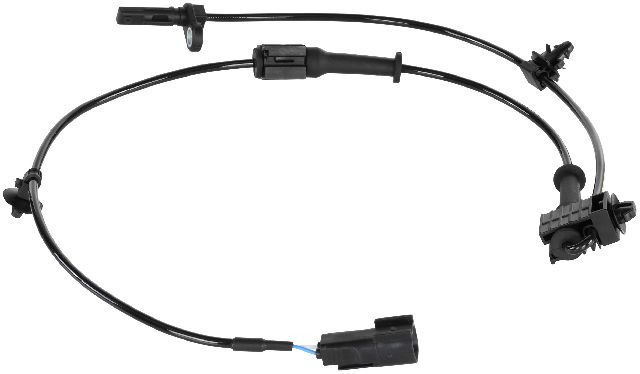
- ABS Wheel Speed Sensor
(OEM #Front Left: KD45-43-73XA, Front Right: KD45-43-70XA, Rear Left (FWD): KA0G-43-7EYA, Rear Right (FWD): KA0G-43-7EXA, Rear Left (AWD): KA0K-43-7EYA, Rear Right (AWD): KA0K-43-7EXA)— This is the most common failure point for a P0500 code on this vehicle, as the entire vehicle speed reading depends on the input from these four sensors.
Trusted brands: Bosch, NTK, Duralast, Beck/Arnley, Mazda OEM
OEM price range: $130-$180
Aftermarket price range: $40-$90
Related Codes That Often Appear With This One
- C0031, C0034, C0037, C003A — These are specific ABS codes for each wheel speed sensor circuit (e.g., C0031 for Front Left). A P0500 code is often a secondary code triggered by one of these primary ABS faults. A good scanner will show both.
- U0121 — This code indicates a loss of communication with the ABS module. If you see this alongside P0500, it could point to a more serious issue like a faulty ABS module or a wiring problem affecting the entire system, rather than just a single sensor.
Platform-Specific Known Issues
- The primary platform-specific issue is the diagnostic confusion caused by the lack of a traditional VSS. Owners and shops unfamiliar with this Mazda system may waste time and money looking for a part that isn't there.
- A forum user on Mazdas247 reported getting a P0500 code only when driving above 70 MPH, indicating an intermittent failure at high speeds that can be harder to diagnose.
- A Reddit user reported the P0500 and associated lights appeared immediately after a transmission swap, suggesting the wiring harness near the transmission is vulnerable to being damaged or disconnected during major service.
Mechanic-Grade Diagnostic Values
- ABS Wheel Speed Sensor Resistance — expected: Generally 1000 - 1500 Ohms (1.0 - 1.5 kOhms) for passive sensors. Some sources indicate modern magneto-resistive sensors may have much higher resistance, in the Mega-Ohm range.. Failure: A reading of infinite resistance (open circuit), zero resistance (short circuit), or a value that is significantly different from the other sensors on the vehicle.
- ABS Wheel Speed Sensor AC Voltage Output (Passive Sensors) — expected: 0.25V to 2.0V AC when rotating the wheel at approximately one revolution per second.. Failure: No voltage or very low voltage output while the wheel is spinning indicates a failed sensor or a problem with the tone ring.
Scan Tool Commands That Help
- FORScan: ABS Module Reset — After replacing a component in the ABS system, such as the module itself, or to clear stubborn internal faults that don't clear with a standard DTC erase. This can re-initialize the module.
- FORScan: ABS Service Bleed — If the ABS hydraulic unit (HCU) has been replaced or if air is suspected to be trapped in the module. This procedure cycles the internal solenoids and pump to purge trapped air, which is necessary after certain repairs.
Wiring & Ground Locations
- ABS Sensor Wiring Harness — Runs from the wheel hub, up the suspension strut, through the wheel well, and connects to the main chassis harness.. This harness is a common failure point. A YouTube video on a similar Mazda platform showed the wire rubbing through its insulation against the tire due to improper routing, causing a short and triggering a P0500 code. Always check for chafing and ensure the wire is secured in its factory clips.
- ABS Module Connector — The main electrical connector on the ABS hydraulic control unit in the engine bay.. A poor connection, corrosion, or backed-out pin at this central connector can cause a loss of communication or signal from one or more wheel speed sensors, potentially leading to a P0500 code, often accompanied by 'U' (communication) codes.
Real Owner Repair Stories
- Reddit user in r/CX5 (2015 Mazda CX-5 AWD) — TPMS, ABS, and TCS lights would come on, eventually followed by a P0500 Check Engine Light.
❌ Tried (didn't work) Replacing the front two ABS sensors (had to drill them out due to corrosion)., Replacing the rear two ABS sensors.
✅ What actually fixed it The user's story was unresolved but highlights a critical pitfall: using cheap 'Amazon sourced' sensors. After replacing all four sensors, the problem persisted and was sometimes worse, suggesting one of the new parts was likely defective out of the box. This underscores the importance of using reputable aftermarket or OEM sensors. - Mazdas247 forum user (2013 Mazda CX-5 Touring) — Check Engine Light with code P0500 would only appear when driving at or above 70 MPH.
❌ Tried (didn't work) Replacing all four ABS sensors with OEM parts.
✅ What actually fixed it The thread did not have a final resolution, but it represents a high-value edge case. The fact that replacing all four OEM sensors did not fix the high-speed-only fault strongly suggests the problem was not the sensors themselves, but rather a failing wheel bearing/hub causing tone ring runout at high RPM, or a wiring issue that only manifests with high-speed vibration. - NHTSA ODI #10895729 — An owner reported a long list of codes including P0500, U0121, and P0685, most of which were connected to a loss of communication. Even after two hours of diagnostics, a dealership was unable to find the root cause of the communication failure.
OEM Part Supersession History
KA0G-43-7EY→KA0G-43-7EYA— Part revision or manufacturer change. The 'A' suffix typically denotes a minor update.
Heads up: The parts are interchangeable. KA0G-43-7EYA is the current replacement for the older part number.
Model Year Variations Within This Range
- 2016: The 2016 model year received a facelift with revised exterior styling, suspension tuning, and an updated infotainment system. An electronic parking brake was introduced. While the core ABS/VSS system function remained the same, these changes could affect wiring harness routing or connector types in adjacent systems.
- 2016.5: A mid-year update for 2016 models (often called 2016.5) made a backup camera standard on automatic transmission models and added navigation as standard to Touring and Grand Touring trims. These changes primarily affect infotainment and display systems, not the P0500 fault logic itself.
Diagnostic Flowchart
Other Known Issues on This Vehicle
Issues unrelated to this code that are worth knowing about as an owner of this generation:
- LED Daytime Running Light (DRL) Failure 🟡 Low — Very common on 2016 models. The LED strip flickers or fails completely due to a faulty sealing gasket causing corrosion. (Ref: Recall 4320A / NHTSA 20V063000 for 2016 models.)
- Leaking Serpentine Belt Tensioner 🟠 Medium — Common across many model years. The hydraulic tensioner leaks oil, leading to rattling noises and eventual belt failure. (Ref: TSB 01-019/19 covers 2013-2019 models, acknowledging the issue and an updated part.)
- Cracked Cylinder Head (2.5L Non-Turbo) 🔴 High — A known issue, though not exceptionally common, where a casting flaw can lead to a crack on the exhaust side of the cylinder head, causing a coolant leak. (Ref: TSB 01-002/23 applies to later models but describes the failure mechanism relevant to this generation.)
- Infotainment System Glitches ('Ghost Touch') 🟡 Low — Common on early models. The screen may freeze, reboot, or register phantom touches.
- Premature/Uneven Rear Brake Wear 🟠 Medium — Frequently reported by owners. Corrosion on the caliper brackets can cause pads to bind and wear out quickly.
Used vs. New Parts: Buying Guide for This Vehicle
When a used part is the smart pick: A used ABS Control Module from a donor vehicle can be a smart choice, potentially saving over $800 compared to a new OEM unit. However, it is critical to match the part number exactly and factor in the cost of professional programming, as it is not a plug-and-play part.
Donor-vehicle mileage cap: roughly under 100000 miles for the part to have meaningful remaining life.
What to inspect on the donor part:
- For an ABS module, ensure the part number on the used unit is an exact match to your original.
- Verify the donor vehicle was not in a major collision, especially one that could have damaged the module or its wiring.
- Ask the seller for the VIN of the donor car to check its history and options.
- Avoid buying used ABS wheel speed sensors. They are wear items exposed to harsh conditions, and the labor to replace a failed used one negates any initial cost savings.
OEM-only on this vehicle (don't cheap out):
- While not strictly 'OEM-only', it is highly recommended to use either OEM or top-tier aftermarket brands for ABS wheel speed sensors. Cheap, unbranded sensors have a high failure rate out of the box, which can lead to a frustrating and costly misdiagnosis.
Aftermarket brands forum-validated for this vehicle:
- NTK (often an OEM supplier for Japanese vehicles)
- Bosch
- Beck/Arnley (often repackages OEM parts)
- Delphi
Brands owners have reported issues with on this vehicle:
- Generic, unbranded sensors from online marketplaces like Amazon or eBay are frequently cited in forums as being dead-on-arrival or failing prematurely.
Real Owner Stories
Aggregated from forums and TSBs cited above. Mileages and costs reflect what owners reported in those sources.
2013 Mazda CX-5 Touring
Symptoms: The Check Engine Light would only come on when driving at speeds above 70 MPH.
What fixed it: Diagnosis confirmed the P0500 was related to the ABS sensor system, which the vehicle uses to calculate speed instead of a traditional VSS.
Source hint: mazdas247.com/forum/index.php?threads/p0500-code-check-engine-light-above-70-mph-2013-mazda-cx-5-touring.123876698/
2013 Mazda CX-5
Symptoms: P0500 code appeared along with a C0031 code.
What fixed it: Replacement of the Front Left ABS wheel speed sensor.
Source hint: mazdas247.com/forum/index.php?threads/issue-with-my-2013-cx-5.1238774788/
2013 Mazda CX-5
Symptoms: P0500 and associated warning lights appeared immediately after a transmission swap.
What fixed it: Inspection of the wiring harness near the transmission, which is vulnerable to damage or disconnection during major service.
Source hint: reddit.com/r/MechanicAdvice/comments/1b32f2u/p0500_vss_a_2013_mazda_cx5/
2015 Mazda CX-5
Symptoms: Experienced a 'saga' of TPMS, TCS, and ABS lights along with the P0500 code.
What fixed it: Replacing multiple sensors; the owner noted the difficulty of removal due to sensors seizing in the knuckle.
Source hint: reddit.com/r/CX5/comments/18n9v6p/2015_cx5_p0500_tpms_tcs_abs_light_saga/
NHTSA ODI #10895729
Symptoms: An owner reported a long list of codes, with most being connected to loss of communication, specifically citing U0121, P0500, and P0685.
What fixed it: The dealer was unable to find the problem after two hours of diagnostics.
Source hint: NHTSA ODI #10895729
Related OBD-II Codes
Frequently Asked Questions
Where is the Vehicle Speed Sensor (VSS) located on my 2013-2016 Mazda CX-5?
Why is my TPMS light on along with the P0500 code?
Can a faulty ABS sensor cause my CX-5 to shift harshly?
Is there a recall for the LED lights that might be related to my electrical issues?
What should I do if the ABS sensor is seized in the knuckle during replacement?
Does the P0500 code affect my cruise control?
Helpful Videos
We Have This Part in Stock


The information in this article is provided for general reference and educational purposes only. Vehicle specifications, procedures, and part compatibility can vary by production date, trim level, and region. Always consult your vehicle's factory service manual and verify part numbers before purchasing or performing repairs. Safety-critical components such as airbags, seat belts, and braking systems should be installed by a qualified professional.
- Mazda CX-5:
- 🧭 Diagnostic Flowchart
- 🎬 Helpful Videos
- 🛍️ Shop This Part
- What's Unique About the 2013-2016 Mazda CX-5
- Symptoms You May Notice
- Most Likely Causes
- Rare But Worth Checking
- Diagnosis Steps
- Parts You'll Likely Need
- Related Codes That Often Appear With This One
- Platform-Specific Known Issues
- Mechanic-Grade Diagnostic Values
- Scan Tool Commands That Help
- Wiring & Ground Locations
- Real Owner Repair Stories
- OEM Part Supersession History
- Model Year Variations Within This Range
- Other Known Issues on This Vehicle
- Used vs. New Parts: Buying Guide for This Vehicle
- Real Owner Stories
- 2013 Mazda CX-5 Touring
- 2013 Mazda CX-5
- 2013 Mazda CX-5
- 2015 Mazda CX-5
- NHTSA ODI #10895729
- Related OBD-II Codes
- Frequently Asked Questions
- 🎟️ Get 5% Off