

U0415 on 2012-2018 Volkswagen Golf: Causes for Invalid ABS Module Data
This code usually means a wheel speed sensor has failed, which is a relatively inexpensive fix. Scan for other codes first. If no other codes are present, the ABS control module itself may be faulty, which is a more expensive repair. It's critical to diagnose correctly to avoid replacing the wrong part.
- U0415 means the ABS module is sending bad data, but the module itself may not be the root cause.
- The most likely cause is a faulty wheel speed sensor. Always scan for more specific 'C' codes before considering an ABS module replacement.
- This fault disables critical safety systems (ABS, ESC), so the vehicle should be repaired promptly.
- If the ABS module does need replacement, it will require special programming to match it to your car's VIN and options.
- Check for weak batteries and bad grounds, as low voltage can cause this communication code.
What's Unique About the 2012-2018 Volkswagen Golf
Volkswagen Golfs of this era, particularly the Mk6, have a known history of ABS module issues. An earlier recall for the 2009-2010 model years addressed internal module failures, establishing a pattern for the platform. The U0415 code is often a secondary fault; a single failing wheel speed sensor can send bad data to the ABS module, which then broadcasts that invalid data across the network, making the module appear as the source of the problem. It's crucial to check for wheel speed sensor codes before condemning the expensive ABS module.
Generation note: This range covers two Golf generations in North America: the Mk6 (2012-2014) and Mk7 (2015-2018). The Mk6 uses an ATE MK61 ABS unit, which is known for communication failures and internal pump motor faults. The Mk7 uses a newer ATE MK100 unit, which can also fail and may sometimes cause brakes to bind or lock up due to sticking internal valves. While the root causes are similar, the specific part numbers for the ABS module and sensors will differ between generations.
Symptoms You May Notice
- ABS warning light illuminated
- Traction Control (ESC/ESP) warning light illuminated
- Brake warning light may be on or flashing
- TPMS (Tire Pressure Monitoring System) warning light (especially on Mk7)
- Multiple other warnings may appear on the instrument cluster, such as for hill hold assist, blind spot monitoring, and adaptive lighting
- Loss of anti-lock braking function during hard stops (wheels may lock up)
- Brake pedal feels different, spongy, or less responsive
- Speedometer may stop working if the ABS module is responsible for processing vehicle speed data from the wheel sensors
- Replacing the ABS control module when the actual fault is a single faulty wheel speed sensor. This is a costly mistake. Always check for wheel speed sensor codes first.
Most Likely Causes
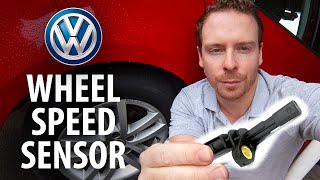
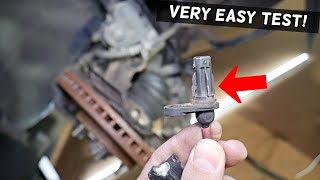
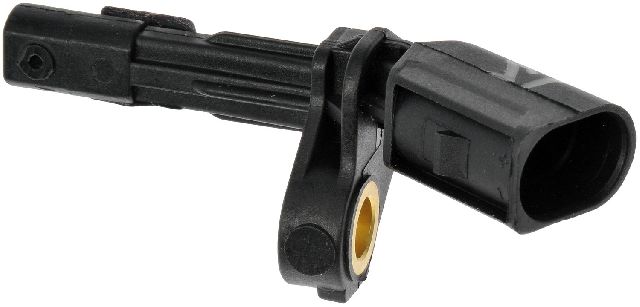
- Faulty Wheel Speed Sensor 🔴 High Probability → Shop ABS Wheel Speed Sensor Wheel speed sensors are exposed to the elements and can fail from contamination, corrosion, or damage to their wiring. They are a very common failure point on the Mk6 Golf. 🎬 Watch this guide on testing and replacing Mk6 wheel sensors.
How to confirm: Scan all vehicle modules for codes. A U0415 code is very often accompanied by a 'C' code (e.g., C0031-C0050) that points to a specific wheel speed sensor circuit. Use a scan tool to monitor live data from all four wheel speed sensors while driving; the faulty sensor will show an erratic or zero reading compared to the others.
Typical fix: Replace the faulty wheel speed sensor and its wiring pigtail if corroded. Clear all codes after replacement.
Est. part cost: $30-$80 - Failed ABS Control Module 🟡 Medium Probability → Shop ABS Control Module VW has a history of ABS module failures due to internal electronic faults, sometimes related to bad solder joints or ground connections. The ATE MK61 (Mk6) and MK100 (Mk7) units are both known to fail, causing communication issues, pump motor faults, or hydraulic problems.
How to confirm: This is often a diagnosis of exclusion. If there are no wheel speed sensor codes, the battery and charging system are healthy, and the wiring to the ABS module has been inspected and tested for proper power, ground, and CAN bus signals, the module itself is the likely culprit. Specific internal failure codes for the module or pump may also be present.
Typical fix: Replace the ABS pump and module assembly. The new module must be coded to the vehicle's VIN and specific options using a compatible diagnostic tool (like VCDS). Alternatively, the original module can be sent to a specialist like ECU Testing or XeMODeX for repair and reinstallation, which avoids the need for coding.
Est. part cost: $800-$1500 for a new unit, $200-$500 for a repair service. - Wiring Harness or Connector Issue ⚪ Low Probability Wiring near the wheels can be damaged by debris or improper repairs. The main connector at the ABS module can also suffer from corrosion or pushed-out pins.
How to confirm: Visually inspect the wiring harness leading to each wheel speed sensor and the main harness connector at the ABS module. Check for continuity and resistance on the power, ground, and CAN bus wires at the ABS module connector using a multimeter.
Typical fix: Repair the damaged section of the wiring harness or clean/replace the faulty connector.
Est. part cost: $10-$50 for repair materials. - Weak Battery or Poor Ground Connection ⚪ Low Probability → Shop Vehicle Battery Modern VWs are highly sensitive to system voltage. An aging battery can cause unpredictable communication errors between modules. A poor ground connection for the ABS module itself can also cause intermittent faults.
How to confirm: Test the battery's state of health and voltage (should be >12.4V at rest). Check the charging system output (should be ~13.8-14.4V when running). Inspect the main battery terminals, chassis ground points, and the ground connection for the ABS module for corrosion or looseness.
Typical fix: Replace the weak battery or clean/tighten the faulty ground connection.
Est. part cost: $150-$250 for a new battery.
Diagnosis Steps
- Connect a high-quality OBD-II scanner capable of accessing all vehicle modules (ABS, Engine, Gateway, etc.), such as VCDS or OBDeleven. 🎬 Watch a walkthrough on replacing and coding the ABS module.
- Scan the entire vehicle for fault codes. Do not just check the engine module.
- If any 'C' codes or VAG-specific codes for wheel speed sensors are present, diagnose and fix that specific sensor circuit first. This is the most likely cause.
- If no other codes are present, check the battery and charging system. Ensure voltage is stable and within specification.
- Inspect the main electrical connector at the ABS module for any signs of corrosion, moisture, or damaged pins.
- Inspect the wiring harnesses to all four wheel speed sensors for any visible damage, chafing, or poor repairs.
- Using your scan tool, monitor the live data from all four wheel speed sensors while driving. Look for any sensor that drops out, reads erratically, or doesn't match the others.
- If all sensors and wiring appear good, the final step is to test the power, ground, and CAN bus signal wires directly at the ABS module connector with a multimeter to rule out a wiring issue.
- If all external inputs and wiring are confirmed to be good, the ABS control module is likely faulty and requires replacement or repair.
Parts You'll Likely Need
- Wheel Speed Sensor
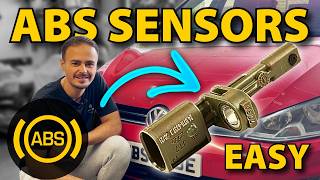
(OEM #WHT003856 (Front Mk6), WHT003857 (Rear Mk6), WHT003860/861/862/863 (Mk7, position specific))🎬 See how to replace a faulty Mk7 ABS sensor. — This is the most frequent cause of U0415. A faulty sensor sends invalid data that the ABS module then relays to the rest of the car.
Trusted brands: Bosch, ATE, Delphi
OEM price range: $60-$100
Aftermarket price range: $30-$80 - ABS Pump and Control Module Assembly
(OEM #1K0907379AD / 1K0907379AN (Mk6), 5Q0614517AA / 3Q0614517F (Mk7) - Note: Many variations exist, always verify by VIN.)— If wheel sensors and wiring are good, the module itself is the next likely point of failure due to known issues on this platform.
Trusted brands: ATE (OEM), Bosch
OEM price range: $1200-$1800
Aftermarket price range: N/A (Typically only available as OEM or remanufactured)
Related Codes That Often Appear With This One
- U0121 — U0121 means 'Lost Communication With ABS Module'. If you see this instead of or with U0415, it points to a more severe problem like a complete power/ground loss to the module or a total CAN bus wiring failure, as the module is not communicating at all.
- C0031 - C0050 — These are specific codes for wheel speed sensor circuits. Seeing one of these alongside U0415 is a strong indicator that the named wheel speed sensor is the root cause of the problem.
- 01276 (VAG) — This is a VAG-specific code for 'ABS Hydraulic Pump (V64)'. If seen with U0415, it points strongly to an internal failure of the pump motor within the ABS module assembly, a known issue on ATE MK61 units.
Technical Service Bulletins (TSBs) & Recalls
- NHTSA 16V-913 / VW 45F2
Platform-Specific Known Issues
- A recall (NHTSA 16V-913 / VW 45F2) was issued for 2009-2010 VWs, including the Golf, for ABS module failure due to an internal ground connection issue caused by an incorrect solder compound. While this is just outside the specified year range, it highlights a history of module reliability problems from the manufacturer, Continental. The remedy was a software update to better detect the fault, and replacement of the module if it failed the new diagnostic test.
Mechanic-Grade Diagnostic Values
- CAN Bus Voltage (Drivetrain CAN) — expected: Recessive State: ~2.5V on both CAN High and CAN Low. Dominant State: CAN High rises to ~3.5V, CAN Low drops to ~1.5V.. Failure: Voltages that are stuck high, low, or at 2.5V on both lines indicate a short or open in the CAN harness.
- Passive Wheel Speed Sensor Resistance — expected: Approximately 1,000 - 1,700 Ohms (1.0 - 1.7 kOhms).. Failure: An open circuit (infinite resistance) or a reading far outside the expected range indicates a failed sensor. Compare with a known-good sensor on the same axle.
- Active Wheel Speed Sensor Harness Voltage (Mk7) — expected: Approximately 10.5V with key-on, engine-off.. Failure: No voltage at the harness connector points to a wiring issue or a fault within the ABS module's power supply to the sensor.
- ABS Module Ground Connection Resistance — expected: < 5.0 Ohms between the ground pin on the module connector and a clean chassis ground point.. Failure: High resistance indicates a corroded or loose ground connection, which can cause intermittent and difficult-to-diagnose module behavior.
Hidden / Shadow Codes Worth Checking
- 01130 - ABS Operation: This is a VAG-specific fault code that means 'Implausible Signal' from the ABS system. It is functionally equivalent to the generic U0415 and often appears when scanning with VW-specific tools like VCDS, pointing directly to an internal module or data processing fault. (see via VCDS (VAG-COM), OBDeleven, or other professional scanners with enhanced VW-group diagnostics.)
Scan Tool Commands That Help
- VCDS or OBDeleven: Module Coding — This is mandatory after replacing the ABS control module. The new or used module must be programmed with a 'soft coding' value that matches the vehicle's specific equipment (engine, transmission, brake system, etc.) to function correctly.
- VCDS or OBDeleven: Login / Security Access (Function 11) — Required before performing basic settings on the ABS module. A common login code for many VW/Audi Bosch ABS units is '40168' to enable the basic settings function.
- VCDS or OBDeleven: Basic Settings (Function 04) — After coding a new module or if certain sensors have been disturbed. This is used to calibrate the Steering Angle Sensor (G85), Lateral Acceleration Sensor (G200), and others. Failure to perform basic settings will leave warning lights on.
- VCDS or OBDeleven: ABS Brake Bleeding — After replacing the hydraulic unit (pump) or opening the hydraulic brake lines. This function cycles the ABS pump motor and valves to purge trapped air from the hydraulic block, which cannot be done with a manual bleed alone.
Wiring & Ground Locations
- Main Engine Bay Ground Point (Mk7) — On the firewall/bulkhead, located above and slightly behind the battery. It is a threaded stud with multiple brown wires attached to it.. This is a primary grounding location for many components in the engine bay. A loose or corroded connection here can cause intermittent power issues for the ABS module, leading to communication faults.
- Ground Point 652 (Mk7) — In the engine compartment on the front of the left longitudinal member (frame rail), near the ABS control unit (J104).. This is a dedicated chassis ground point very close to the ABS module. Corrosion or damage at this specific point is a likely cause of a grounding issue isolated to the ABS system.
- ABS Module Connector (J104) — The large multi-pin electrical connector that plugs directly into the ABS control module assembly.. This is the single point of failure for all power, ground, and communication signals to the module. Technicians must test for Battery Power (Pin for Terminal 30), Ignition Power (Pin for Terminal 15), Ground (Pin for Terminal 31), and CAN High/Low signals directly at this connector to rule out wiring harness issues.
Real Owner Repair Stories
- Ross-Tech Forum user (Volkswagen Golf 6) — ABS light on with VCDS fault '01130 - ABS Operation / 008 - Implausible Signal'.
❌ Tried (didn't work) Replacing the original ABS pump (Part No. 1K0907379AD) with a used pump from a scrap yard that had a different part number (1K0907379BL).
✅ What actually fixed it The repair was unsuccessful because the replacement module could not be coded to the car. The story serves as a critical lesson: the part number for the replacement ABS module must be an exact match or a verified superseded number for the original. Even modules that look identical can have different internal hardware or software, making them incompatible.
OEM Part Supersession History
1K0907379AD→Varies, must be checked by VIN.— Revisions for hardware and software.
Heads up: Extreme caution is required. As documented in forums, a visually identical module with a different suffix (e.g., 'BL' instead of 'AD') may not be codable to the vehicle, rendering it useless. Always confirm compatibility with a dealer or specialist using the vehicle's VIN before purchasing a replacement.
Model Year Variations Within This Range
- 2015-2018 (Mk7): The Tire Pressure Monitoring System (TPMS) is an indirect system that uses the ABS wheel speed sensors to detect a low tire. Therefore, a U0415 fault on a Mk7 is very frequently accompanied by a TPMS warning light, which may not be as common on the Mk6.
Diagnostic Flowchart
Other Known Issues on This Vehicle
Issues unrelated to this code that are worth knowing about as an owner of this generation:
- Timing Chain Tensioner Failure (TSI Engines) 🔴 High — Common on pre-2013 2.0T TSI engines (CCTA/CBFA). Failure can occur at mileage as low as 30,000-60,000 miles, leading to catastrophic engine damage. (Ref: A class-action lawsuit resulted in an extended warranty for this part on affected vehicles. VW TSB 1512-01 also applies.)
- Water Pump / Thermostat Housing Leaks (TSI Engines) 🟠 Medium — Very common across both Mk6 and Mk7 generations with EA888 engines. The plastic housing tends to crack or warp, causing coolant leaks, typically between 30,000 and 60,000 miles.
- Intake Valve Carbon Buildup (TSI Engines) 🟠 Medium — Inevitable on all direct-injection TSI engines due to the PCV system. Symptoms like rough idle, misfires, and reduced power typically appear after 60,000 miles. Requires manual cleaning (walnut blasting).
- Intake Manifold Runner Flap Motor Failure (Mk6) 🟡 Low — The position sensor for the intake runner flaps can fail, requiring replacement of the entire intake manifold.
- Sunroof Leaks/Rattles (Mk7) 🟡 Low — The panoramic sunroof on the Mk7 is prone to developing rattles and leaks, often due to clogged drain tubes or faulty seals.
- DSG Mechatronic Unit Failure 🔴 High — The 7-speed dry clutch (DQ200) and 6-speed wet clutch (DQ250) DSG transmissions can suffer from mechatronic (control unit) failure, causing harsh shifting, jerking, or complete loss of drive. Often occurs between 60,000-100,000 km.
Used vs. New Parts: Buying Guide for This Vehicle
When a used part is the smart pick: A used ABS module from a salvage yard is a viable, cost-saving option if a new OEM unit is prohibitively expensive. However, this is only recommended if you can obtain a unit with the EXACT same part number as the one being replaced.
Donor-vehicle mileage cap: roughly under 100000 miles for the part to have meaningful remaining life.
What to inspect on the donor part:
- Verify the part number on the used unit matches your original module precisely, including all suffix letters.
- Inspect the electrical connector pins for any signs of corrosion, moisture damage, or being bent/pushed in.
- If possible, get the VIN of the donor car to cross-reference its original equipment and increase the chance of compatibility.
- Avoid units with any physical damage to the housing or hydraulic block.
OEM-only on this vehicle (don't cheap out):
- ABS Pump and Control Module Assembly: While used OEM is an option, there are no reliable 'new' aftermarket clones of the entire assembly. The choice is between New OEM, Used OEM, or sending your original unit to a specialist for remanufacturing/repair.
Aftermarket brands forum-validated for this vehicle:
- For Wheel Speed Sensors: Bosch, ATE, and Delphi are OEM suppliers or offer equivalent quality and are highly recommended.
Brands owners have reported issues with on this vehicle:
- Unbranded, 'white-box' wheel speed sensors. While cheaper, they have a higher failure rate and can cause repeat diagnostic headaches for a safety-critical system.
Real Owner Stories
Aggregated from forums and TSBs cited above. Mileages and costs reflect what owners reported in those sources.
2012 Volkswagen Golf (Mk6)
Symptoms: The ABS and Traction Control (ESC) warning lights were illuminated on the instrument cluster.
What fixed it: A scan revealed a code for a specific wheel speed sensor. Replacing the faulty wheel speed sensor cleared the U0415 code and turned off the warning lights.
Source hint: golfmk6.com/forums/index.php?threads/known-mk6-common-issues.332755/
2010 Volkswagen Golf
Symptoms: Multiple warning lights appeared, including ABS and Brake warnings, due to an internal ABS module fault.
What fixed it: The ABS module failure was traced to an internal ground connection issue. The module was replaced as part of a recall campaign.
Source hint: NHTSA 16V-913 / VW 45F2
Related OBD-II Codes
Frequently Asked Questions
My 2013 Golf has the ABS and traction control lights on with a U0415 code. Is it more likely a sensor or the whole module?
I heard about a recall for VW ABS modules. Does NHTSA recall 16V-913 apply to my 2012 Golf?
If my ABS module has failed, do I have to buy an expensive new one from the dealer?
My speedometer stopped working at the same time the ABS light came on. How are these related?
Can a weak battery really cause all these ABS, ESC, and TPMS warning lights on my Golf?
My mechanic says the new ABS module needs to be 'coded'. What does that mean?
Helpful Videos
Used OEM Parts in Stock
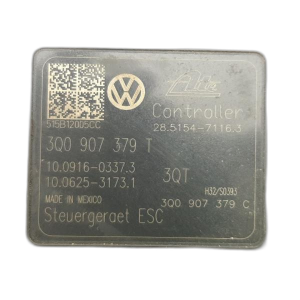
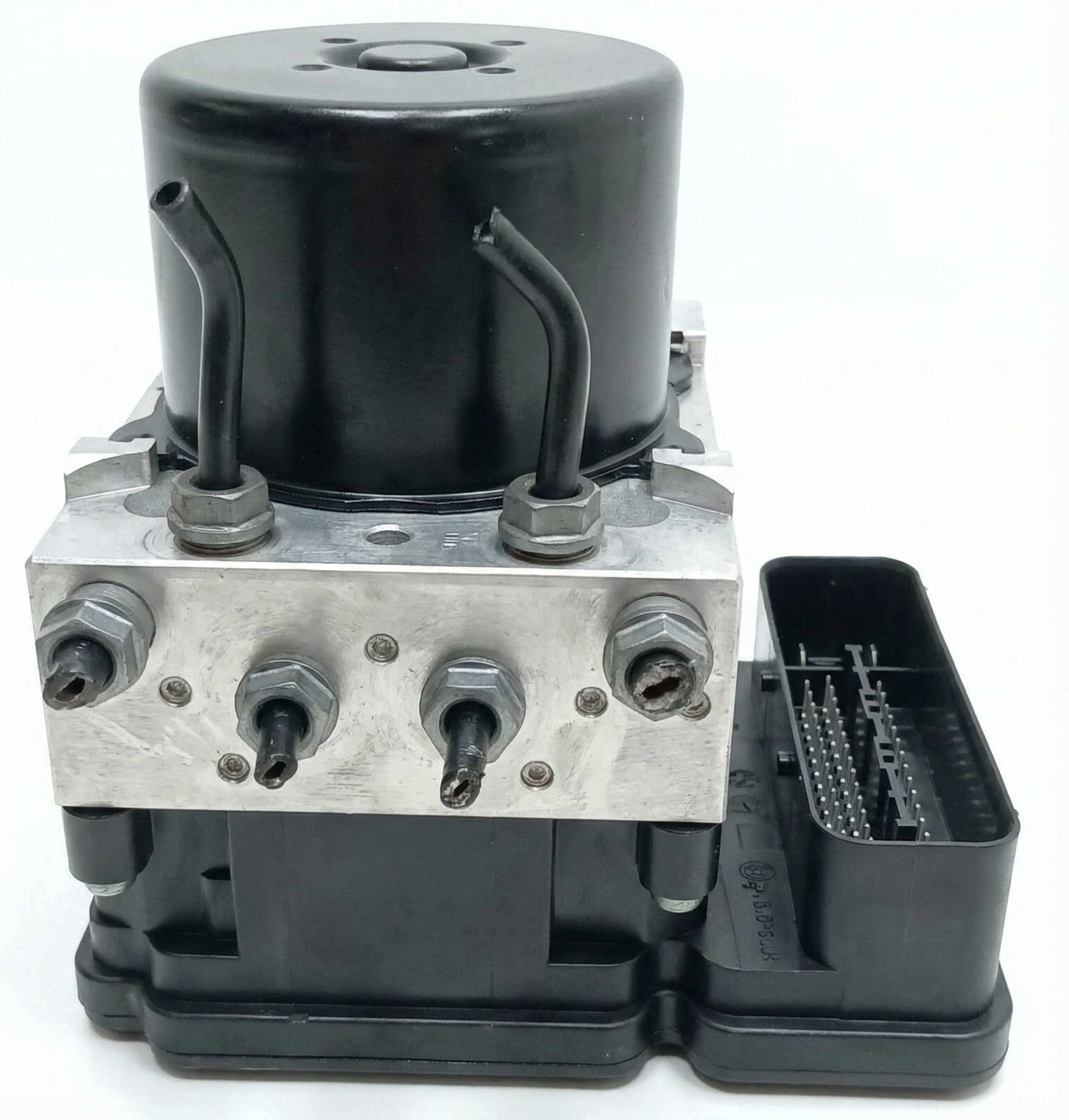
New Aftermarket Parts Available
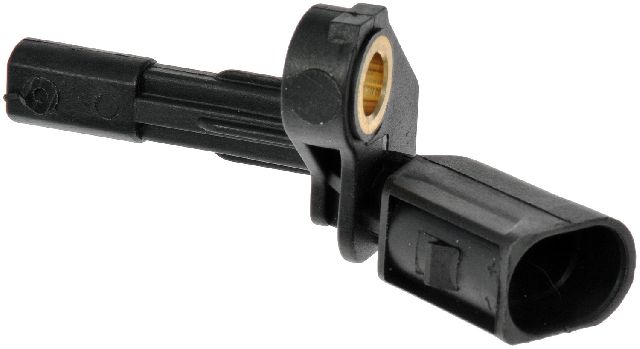

The information in this article is provided for general reference and educational purposes only. Vehicle specifications, procedures, and part compatibility can vary by production date, trim level, and region. Always consult your vehicle's factory service manual and verify part numbers before purchasing or performing repairs. Safety-critical components such as airbags, seat belts, and braking systems should be installed by a qualified professional.
- Volkswagen Golf:
- 🧭 Diagnostic Flowchart
- 🎬 Helpful Videos
- 🛍️ Shop This Part
- What's Unique About the 2012-2018 Volkswagen Golf
- Symptoms You May Notice
- Most Likely Causes
- Diagnosis Steps
- Parts You'll Likely Need
- Related Codes That Often Appear With This One
- Technical Service Bulletins (TSBs) & Recalls
- Platform-Specific Known Issues
- Mechanic-Grade Diagnostic Values
- Hidden / Shadow Codes Worth Checking
- Scan Tool Commands That Help
- Wiring & Ground Locations
- Real Owner Repair Stories
- OEM Part Supersession History
- Model Year Variations Within This Range
- Other Known Issues on This Vehicle
- Used vs. New Parts: Buying Guide for This Vehicle
- Real Owner Stories
- 2012 Volkswagen Golf (Mk6)
- 2010 Volkswagen Golf
- Related OBD-II Codes
- Frequently Asked Questions
- 🎟️ Get 5% Off